An artist FAQ should answer the questions a real listener, editor, booker, or collaborator is likely to ask without turning every response into a slogan. The best version is short enough to scan, specific enough to verify, and easy for one person to update when a release date, credit, link, or project status changes.
Build the FAQ from approved source material rather than memory. If the basic story is still scattered, start with the IHHR independent artist bio workflow and verify the same names, locations, roles, and release titles across both pages.
Choose an audience before choosing questions
Write one sentence naming the page's primary reader. A listener may need a starting release and a verified listening link. A journalist may need name pronunciation, location, genre language, and a press contact. A booker may need the live format and technical-contact route. One FAQ can serve several readers, but the order should reflect the person most likely to arrive first.
Collect questions from real email, interview preparation, booking conversations, and team reviews. Do not invent popularity questions to imply demand. Remove anything that would expose private contact details, unreleased negotiations, home addresses, legal names that are not public, or collaborator information that has not been approved.
Create a verified answer sheet
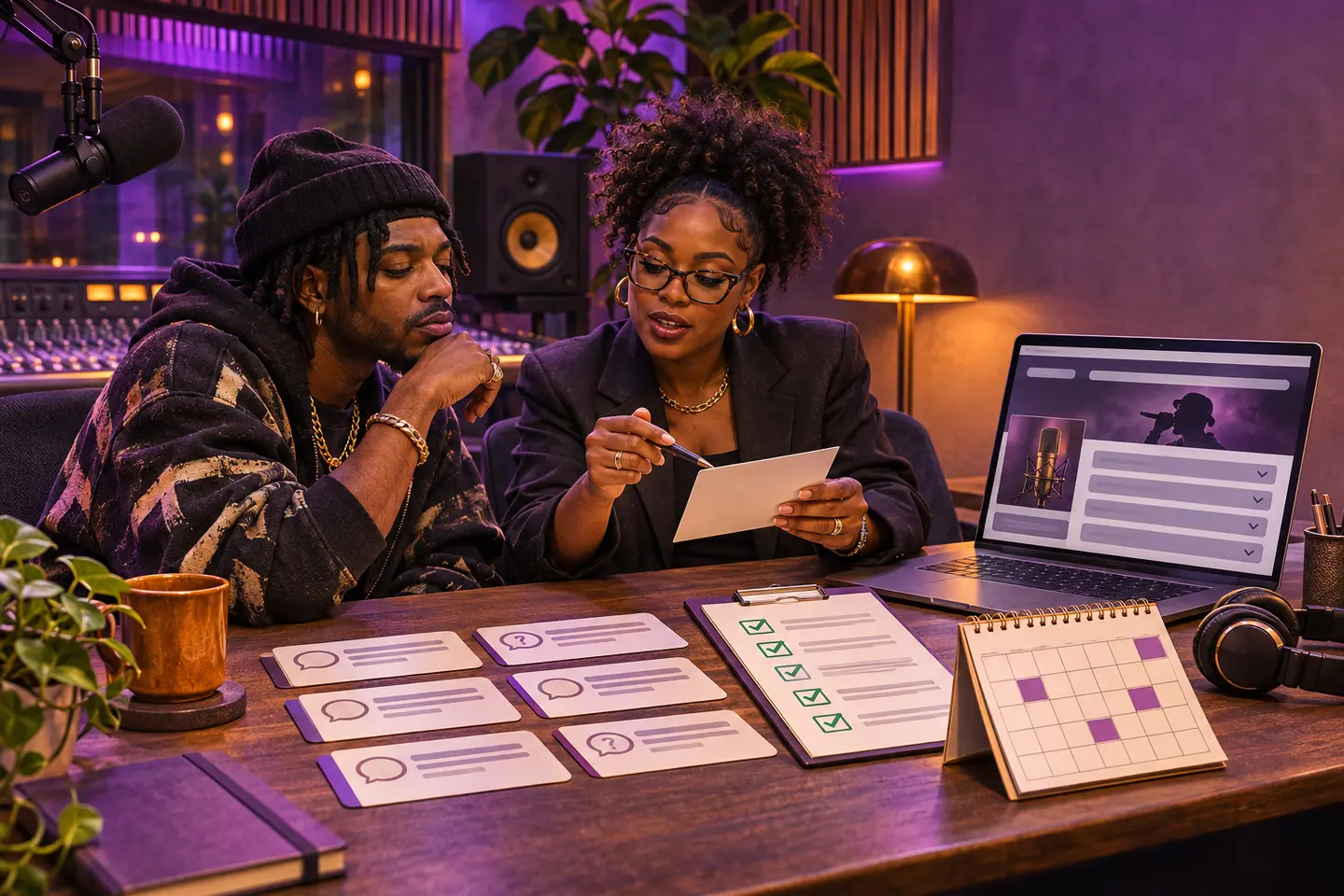
Before drafting the page, make a small source table with four fields: question, approved answer, evidence, and review date. Evidence might be a distributor page, signed credit sheet, approved biography, release announcement, or direct confirmation from the authorized person. Label uncertain facts for review instead of polishing them into confidence.
Keep date-sensitive claims concrete. “The new single arrives November 20, 2026” is maintainable; “the next big record is coming soon” is not. Avoid unverified listener counts, rankings, awards, hometown claims, and collaborator credits. If a number matters, identify its source and the date it was checked.
Answer directly, then add context
Lead each answer with the information the question requests. Follow with one useful sentence of context when needed. A question about name pronunciation should start with the pronunciation. A question about the current project should name the project and status before describing its inspiration.
Use the artist's approved voice, but separate first-person quotation from editorial summary. Do not put quotation marks around language assembled by a publicist or AI tool unless the artist has approved those exact words as a quote. Keep sponsored opportunities labeled honestly; the IHHR Artist Spotlight is a paid profile service, not an independent editorial endorsement.
Build a short, navigable structure
Group related questions under descriptive headings such as “Music and credits,” “Live performance,” and “Press and contact.” W3C's Web Accessibility Initiative recommends meaningful page structure and logically nested headings so readers and assistive technologies can navigate efficiently. Its writing guidance also recommends informative page titles and link text that describes the destination.
Use real heading and paragraph elements rather than a screenshot of text. Write descriptive link labels instead of “click here.” Keep answers in plain language, expand an unfamiliar abbreviation on first use, and test the page at phone width and increased zoom.
Set boundaries for contact and submissions
Give each request one appropriate route: press, booking, licensing, collaboration, or general contact. A public role-based address is easier to maintain than a personal number. State what the route is for and what material is accepted. Do not promise a response time or opportunity the team cannot reliably provide.
If the artist does not accept unsolicited beats, features, or private messages, say so respectfully. A boundary is useful information. Never collect sensitive personal data through an ordinary FAQ page, and do not publish someone else's messages as proof that a question is common.
Assign an owner and review trigger
Put the page in a review calendar and name the person responsible for it. Review after every announced release, lineup change, contact change, major credit correction, or shift in live format. Also run a scheduled check even when nothing obvious has changed.
During review, open every link, compare every proper noun to the approved source, confirm that future dates are still future, and remove expired language. Keep a simple change log with the date, field changed, reason, and approver. The log prevents an old answer from returning during a later redesign.
Run a seven-question launch check
- Does every question serve the intended reader?
- Can every factual answer be traced to an approved source?
- Are quotations exact and approved?
- Are paid or sponsored opportunities disclosed?
- Do headings and links describe their purpose?
- Do contact routes protect personal information?
- Is one person responsible for the next review?
A strong FAQ reduces repeated work because it is dependable, not because it is long. Publish the smallest accurate version, link it from the artist's official press materials, and improve it when a real question reveals a genuine gap.
References: W3C WAI, Page Structure Tutorial; W3C WAI, Writing for Web Accessibility. Checked November 9, 2026.
Press Play above to hear IHHR or visit the official Live365 station page.