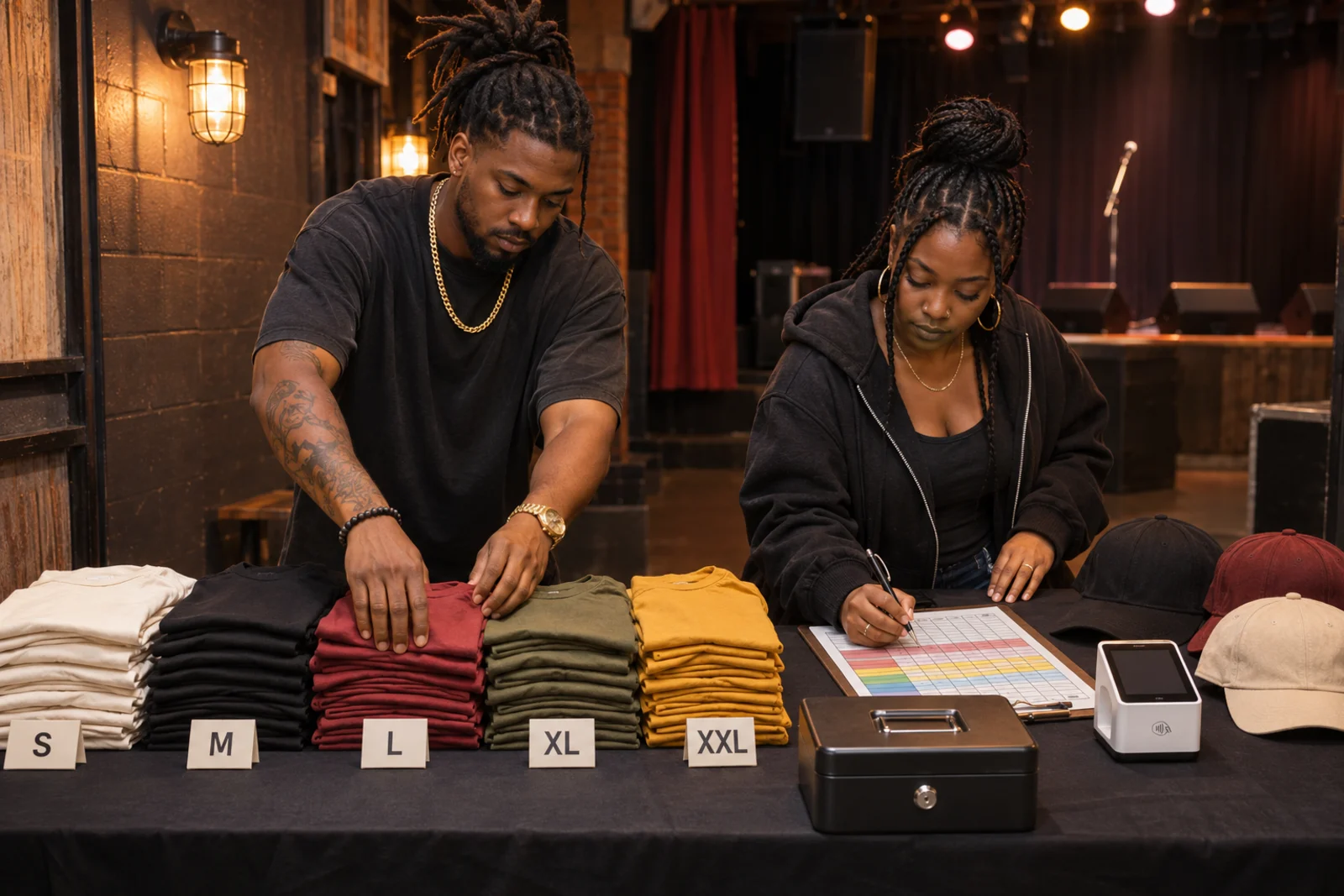
Independent live-show workflow · 9 min read01
Give every shirt size, color, format, and bundle one stable identifier, one approved price, and one clear sales trail from load-in through settlement.
Read the story ↗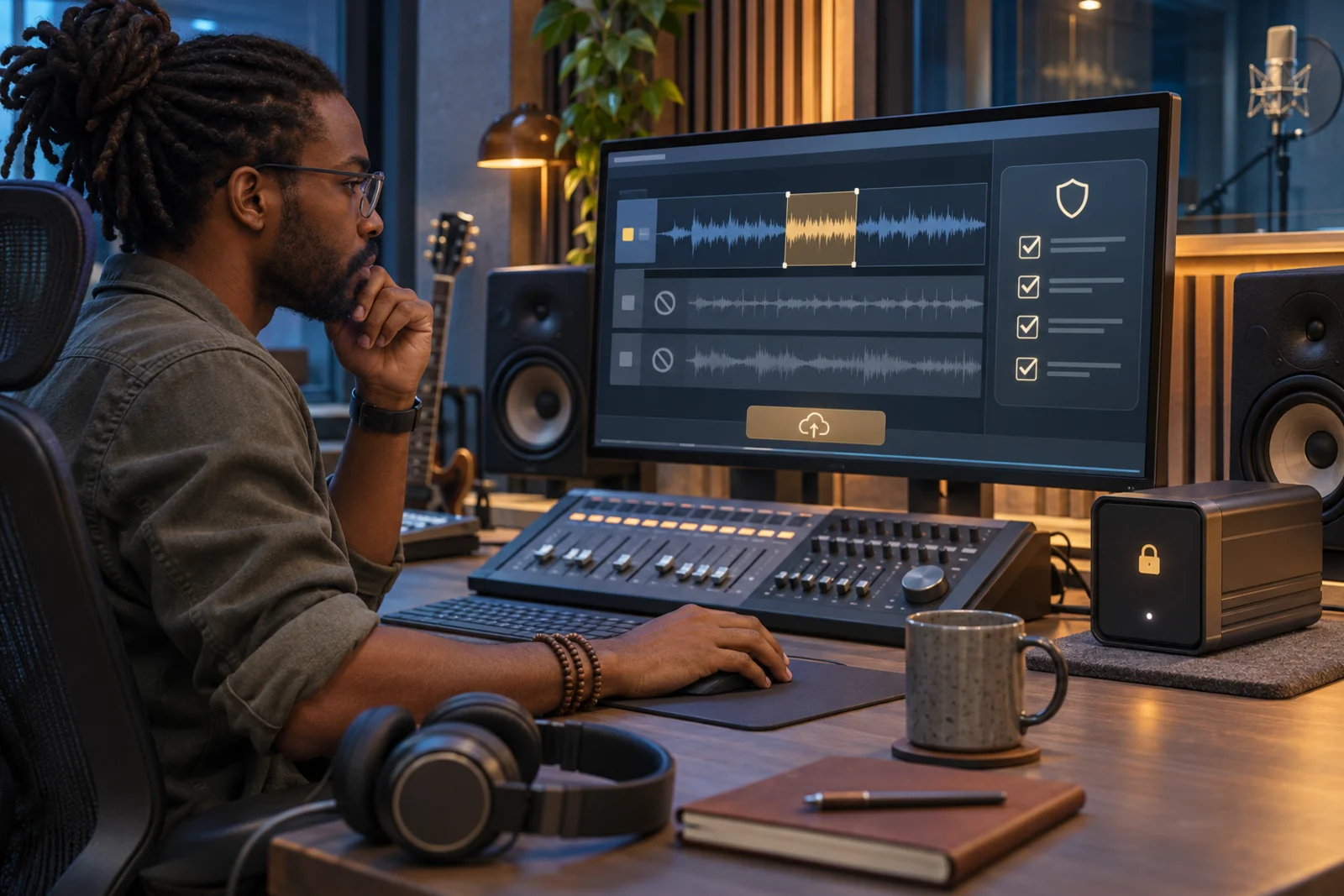
Responsible AI music workflow · 9 min read02
Reduce an AI-audio input to the smallest authorized material needed for the job, remove unrelated data, and document what still crosses the upload boundary.
Read the story ↗
Rap and R&B listening · 8 min read03
Separate kick, backbeat, subdivision, bass, and vocal placement, then hear how their different patterns cooperate without collapsing every offbeat into syncopation.
Read the story ↗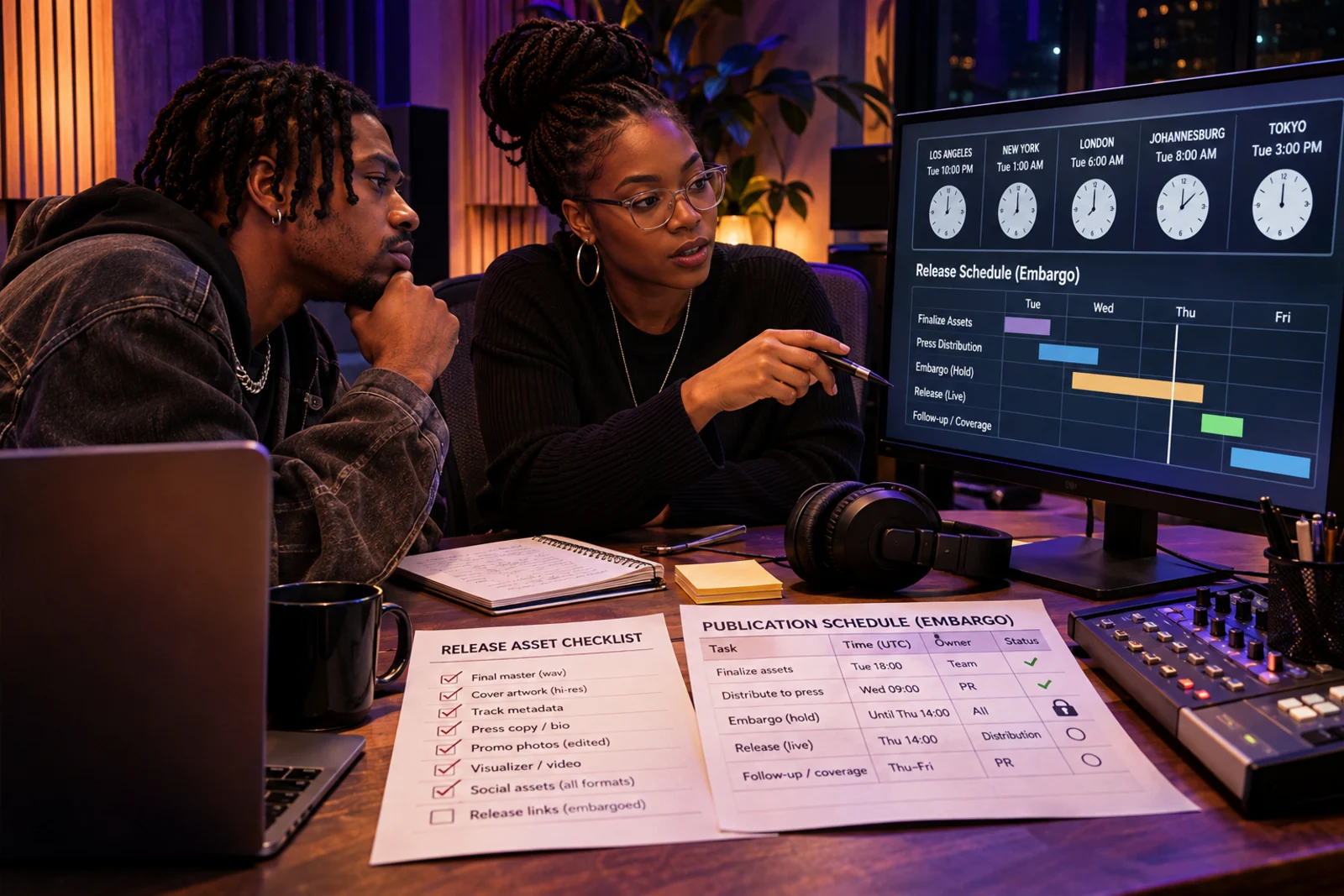
Independent release workflow · 9 min read04
Coordinate one release moment across outlets and time zones with exact timestamps, approved assets, contact rules, and a correction path that does not depend on ambiguous local-time shorthand.
Read the story ↗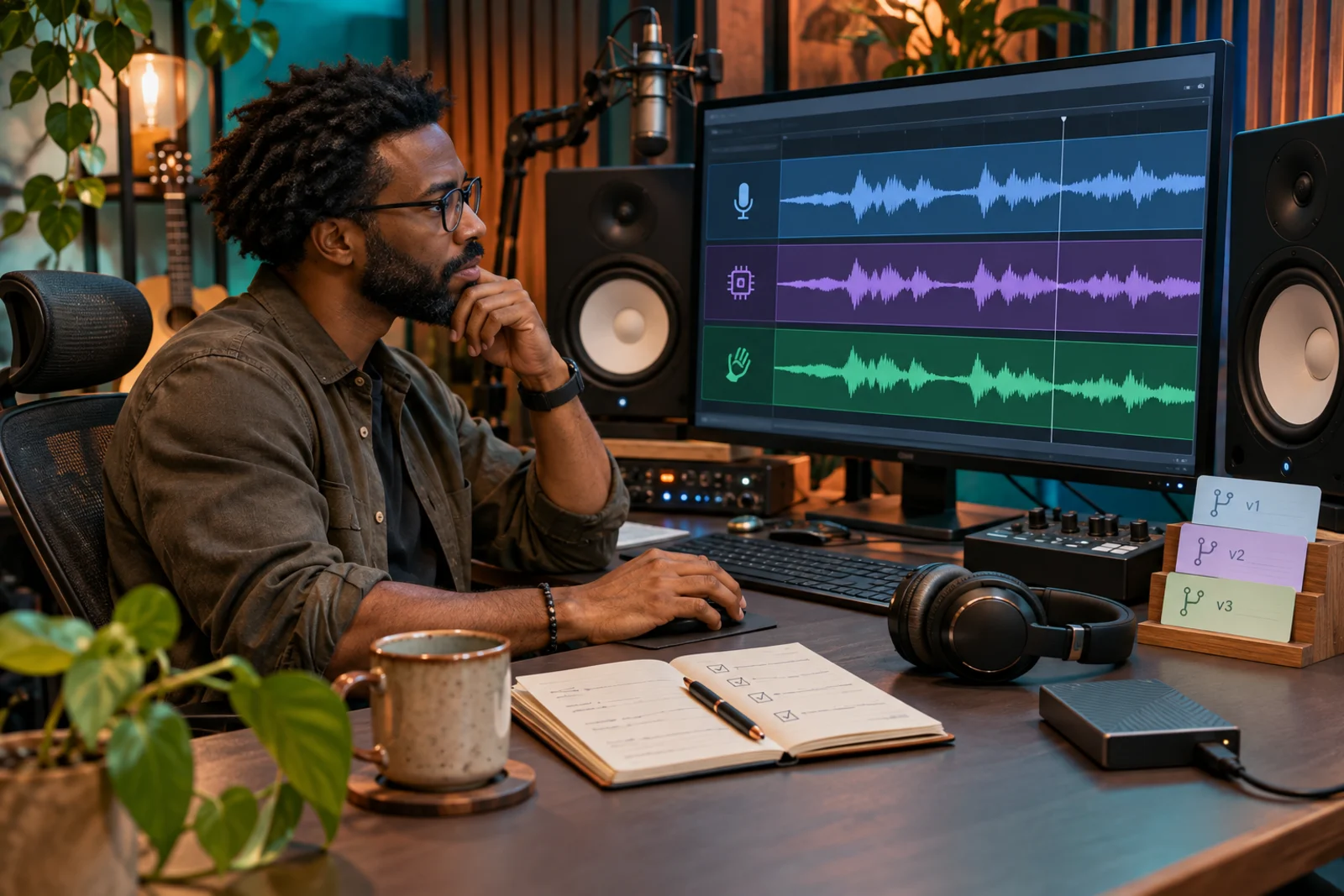
Responsible AI music workflow · 9 min read05
Prepare an AI-assisted audio edit so the original, settings, output, human decision, and non-AI fallback remain recoverable before the result enters a mix or release package.
Read the story ↗
Rap and R&B listening · 8 min read06
Recognize the shared moment where one musical phrase finishes as the next begins, without confusing every pickup, overlap, crossfade, or breathless delivery for an elision.
Read the story ↗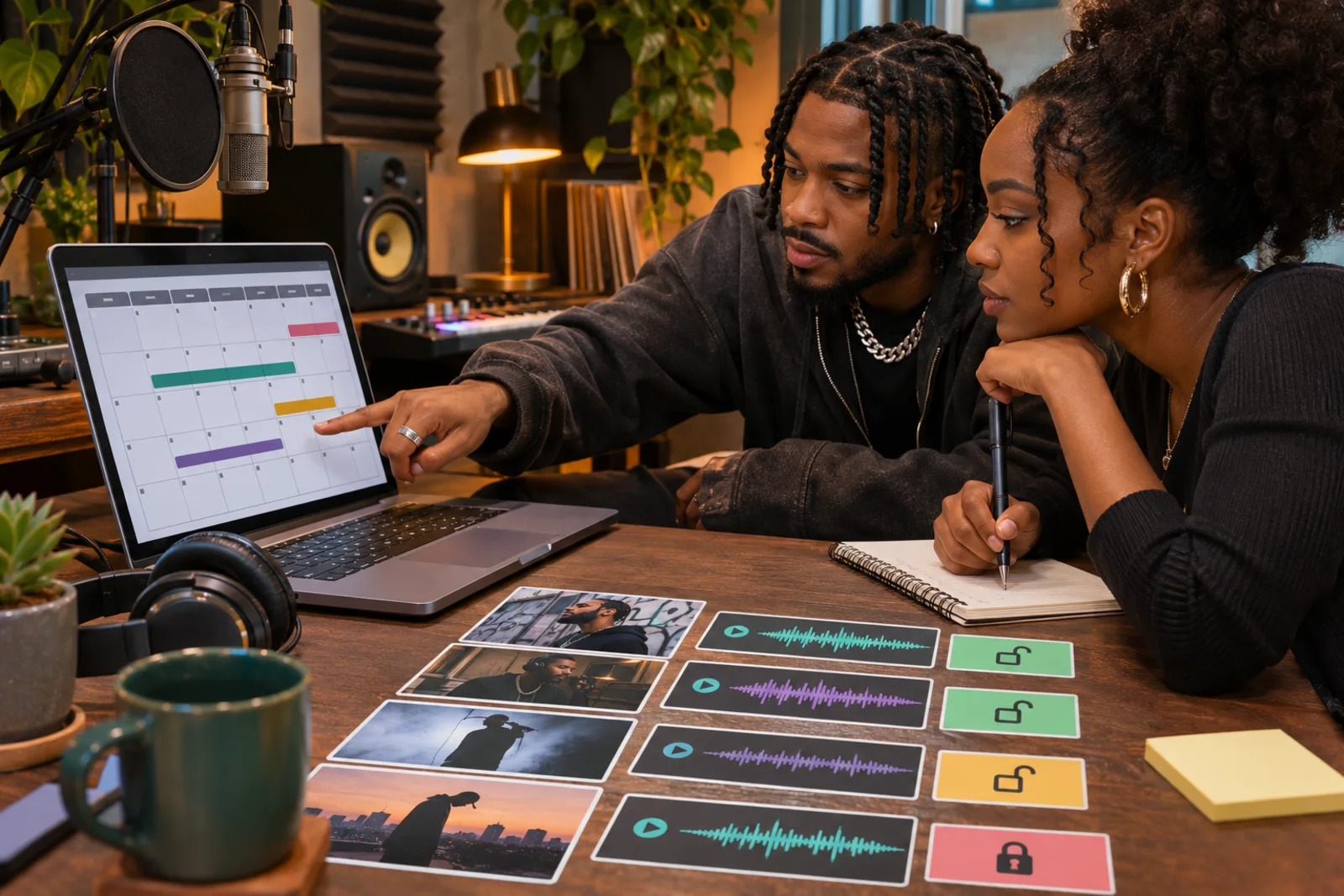
Independent release workflow · 9 min read07
Track who controls each photo, clip, recording, graphic, and quote; where it may appear; when permission starts or ends; and what must be replaced before a release campaign continues.
Read the story ↗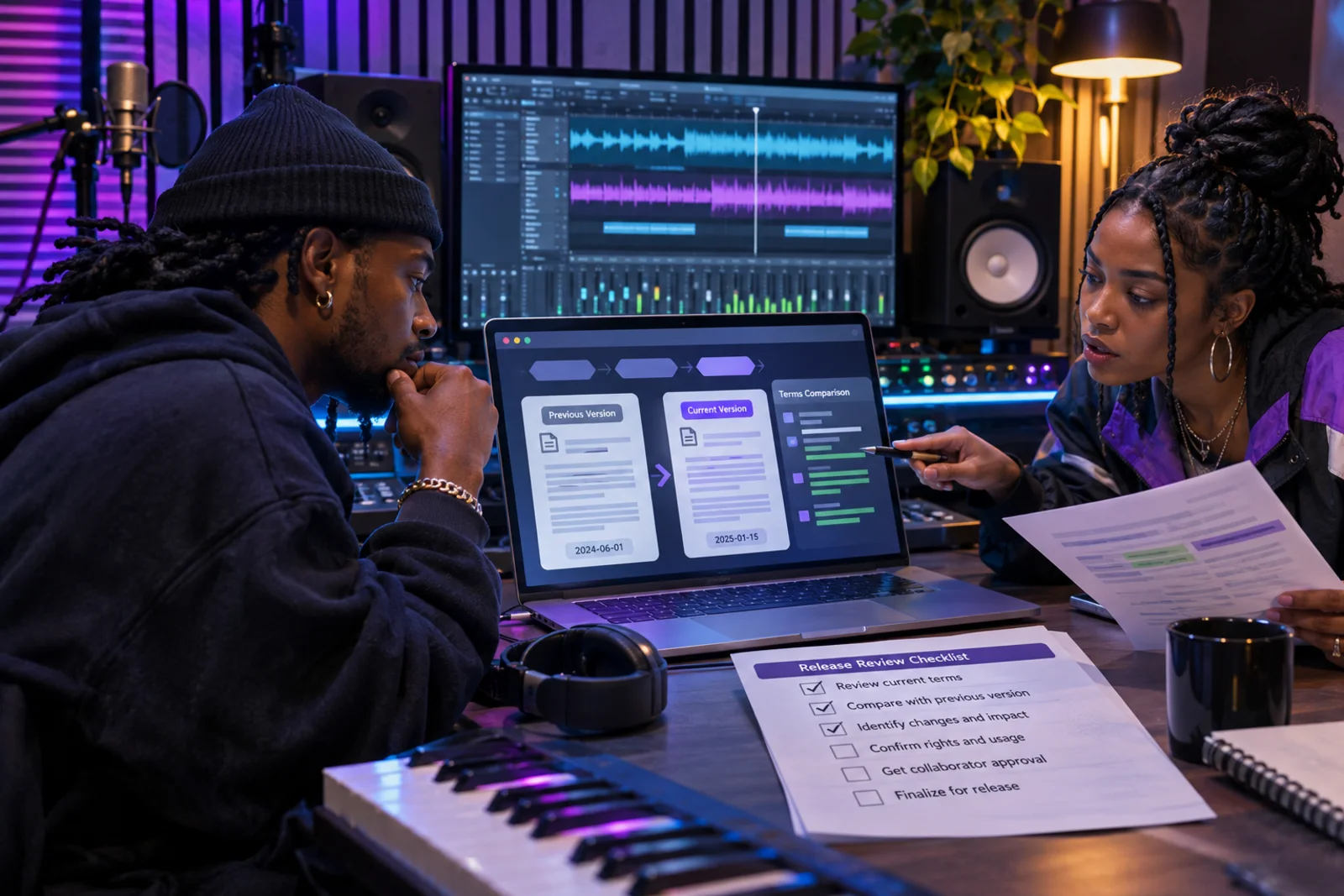
Responsible AI music workflow · 9 min read08
Compare the current terms, privacy notices, product rules, and project approvals with the version you relied on when an AI-assisted music session began.
Read the story ↗
Independent music discovery · 8 min read09
Use public grant records to find music organizations and projects, then verify the participating artists and listen through official sources without treating an award as a ranking.
Read the story ↗
Independent radio submission · 9 min read010
Give programmers a precise, version-specific map of language and sensitive-content moments without quoting lyrics, guessing at policy, or pretending a clean edit has been reviewed.
Read the story ↗
Responsible AI music workflow · 9 min read011
Record what an AI-assisted repair was meant to fix, what changed unexpectedly, how the issue was contained, and who approved the corrected or rejected result.
Read the story ↗
Rap and R&B listening · 8 min read012
Map musical phrases by following breath, rhyme, harmony, rhythm, response, and arrival points before using bar counts as a check instead of the definition.
Read the story ↗
Independent radio submission · 9 min read013
Give radio programmers one reliable map of your main, clean, instrumental, performance, and alternate files with exact names, durations, formats, identifiers, and approval status.
Read the story ↗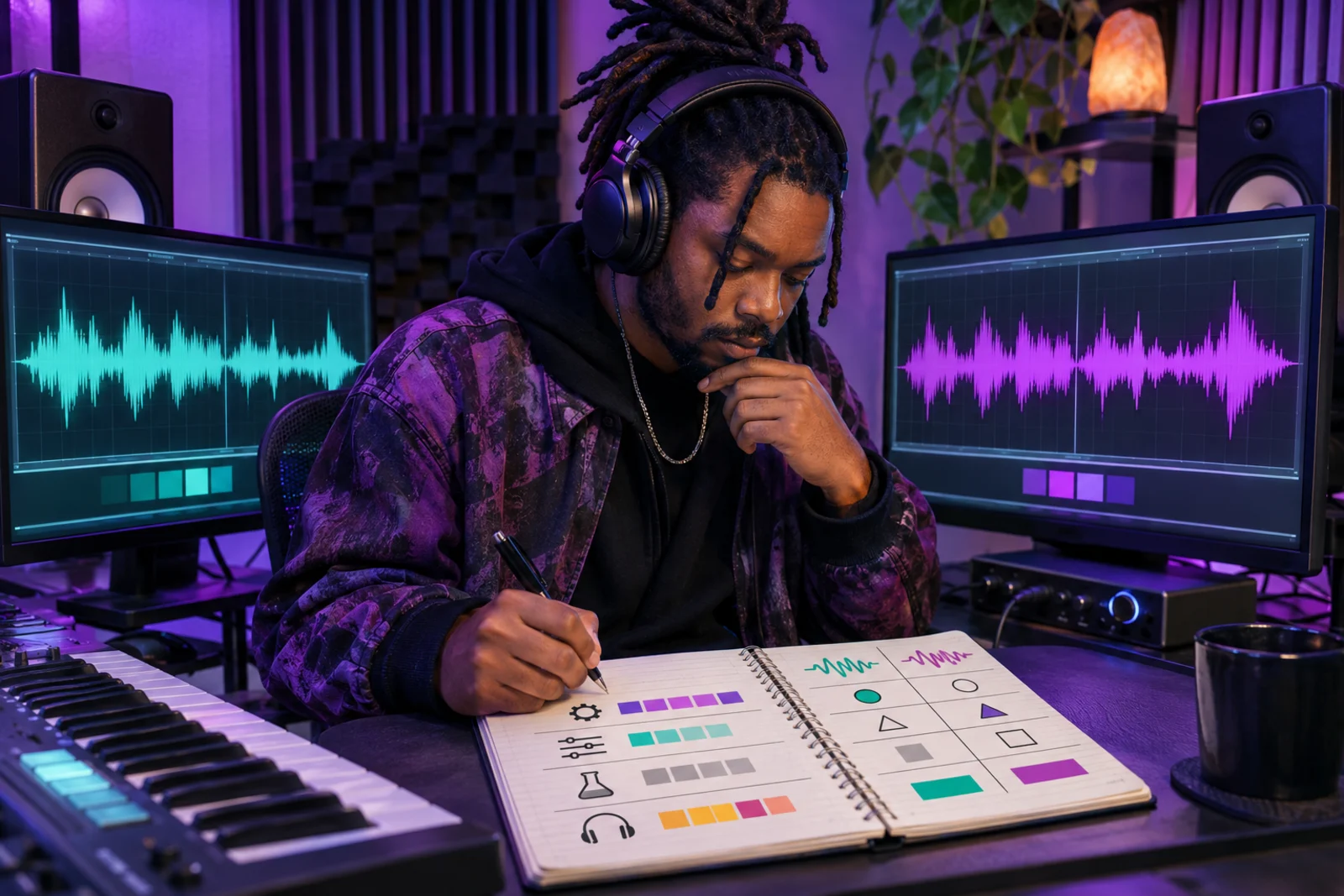
Responsible AI music workflow · 9 min read014
Test whether an AI-assisted edit can be understood or repeated by preserving the source, tool version, settings, conditions, outputs, differences, and human decision.
Read the story ↗
Rap and R&B listening · 8 min read015
Find a short recurring pitch, rhythm, contour, or timbre idea, then track how it changes across verses, hooks, beats, vocals, and transitions without overlabeling it.
Read the story ↗
Independent artist workflow · 9 min read016
Turn scattered credits, versions, permissions, and sign-offs into one release-ready matrix that shows who must review what, by when, and against which file.
Read the story ↗
Responsible AI music workflow · 9 min read017
End an AI-assisted session by reconciling uploads, outputs, temporary files, access, retention settings, deletion requests, approvals, and the evidence worth preserving.
Read the story ↗
Listening guide · 8 min read018
Identify a refrain by tracking the repeated phrase inside a verse or larger section, then separate it from a full chorus, post-chorus, ad-lib, and recurring instrumental cue.
Read the story ↗
Independent music discovery · 8 min read019
Separate same-name artists by comparing official profiles, releases, credits, locations, collaborators, dates, and stable identifiers before saving or recommending music.
Read the story ↗
Responsible AI music workflow · 9 min read020
List every stem, recording, lyric, prompt, reference, setting, permission, exclusion, and transformation before an AI-assisted music session begins.
Read the story ↗
Rap and R&B listening · 8 min read021
Hear rhythmic pocket by comparing pulse, attack placement, dynamics, timbre, space, bass, drums, and vocal phrasing instead of labeling every feel early or late.
Read the story ↗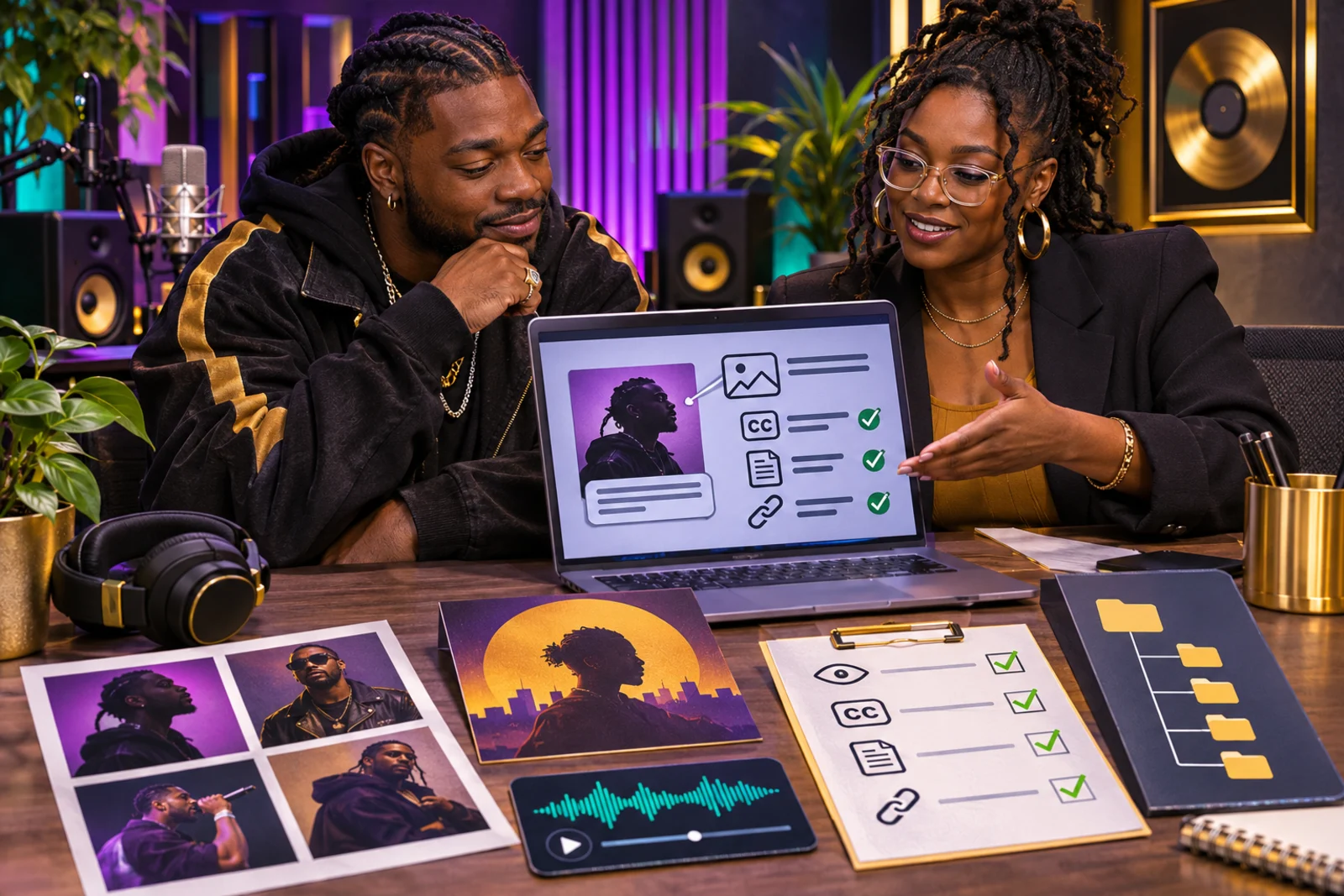
Artist presentation and accessibility · 9 min read022
Make an artist media kit easier to navigate with purposeful alt text, captions, transcripts, descriptive links, clear filenames, and an approved accessibility handoff.
Read the story ↗
Responsible AI music workflow · 9 min read023
Compare an original mix and an AI-assisted mastering preview at matched perceived loudness, then review dynamics, peaks, tone, transients, and documented settings.
Read the story ↗
Rap and R&B listening · 8 min read024
Track the stable groove, phrase boundary, and short drum variation or silence that prepares a verse, hook, bridge, or other section change in rap and R&B.
Read the story ↗
Independent radio craft · 8 min read025
Give a radio host the exact artist, track, version, pronunciation, timing, and verified context needed for a clean, accurate back-announcement after the song plays.
Read the story ↗
Responsible AI music workflow · 9 min read026
Record who approved an AI-assisted vocal use, the source audio, tool, permitted output, limits, review checkpoints, storage plan, and stop conditions before release.
Read the story ↗
Rap listening practice · 8 min read027
Keep one steady pulse while the backbeat and subdivisions feel broader or denser, then distinguish half-time and double-time feel from an actual tempo change.
Read the story ↗
Independent artist workflow · 8 min read028
Keep each independent release recording tied to the right permanent ISRC, version name, owner, source file, and delivery status without confusing mixes, formats, or compositions.
Read the story ↗
Rap and R&B listening · 7 min read029
Follow one repeating rhythmic or melodic pattern while the beat, harmony, vocals, and arrangement change around it, then describe its role without forcing a label.
Read the story ↗
IHHR community · 7 min read030
Write a specific, respectful IHHR shout-out without posting links, contact details, private information, copied lyrics, or unsupported claims, then understand what review means.
Read the story ↗
Independent artist workflow · 8 min read031
Turn a phone-recorded song idea into a clear, privacy-conscious collaborator handoff with a stable audio file, section map, decision notes, and version control.
Read the story ↗
R&B listening · 7 min read032
Follow a note that lingers across a chord change, hear the tension it creates against the new harmony, and identify its delayed resolution without guessing the artist’s intent.
Read the story ↗
Independent music discovery · 8 min read033
Use official independent-music nominee and winner archives as a transparent discovery map, then verify releases, categories, years, labels, and listening notes before recommending anyone.
Read the story ↗
Responsible AI music workflow · 8 min read034
Compare separated vocals, drums, bass, and other material with the authorized source, mark spill and artifacts, document settings, and approve only the audio that survives a full review.
Read the story ↗
Rap and R&B listening · 7 min read035
Find a vocal or instrumental phrase that begins before beat one, count where it enters, and compare how its timing launches a verse, hook, or repeated section.
Read the story ↗
IHHR community practice · 7 min read036
Move an artist-workflow question from the fast live chat into a reviewed forum discussion with a clear title, bounded context, one answerable question, and no private material.
Read the story ↗
Independent release metadata · 8 min read037
Keep original, clean, instrumental, live, remix, and performance files consistent with an approved title system, version ledger, and distributor-ready review.
Read the story ↗
Rap and R&B listening · 7 min read038
Recognize the harmonic motion that points back to the beginning of a loop or section, then compare its bass, melody, rhythm, and sense of return.
Read the story ↗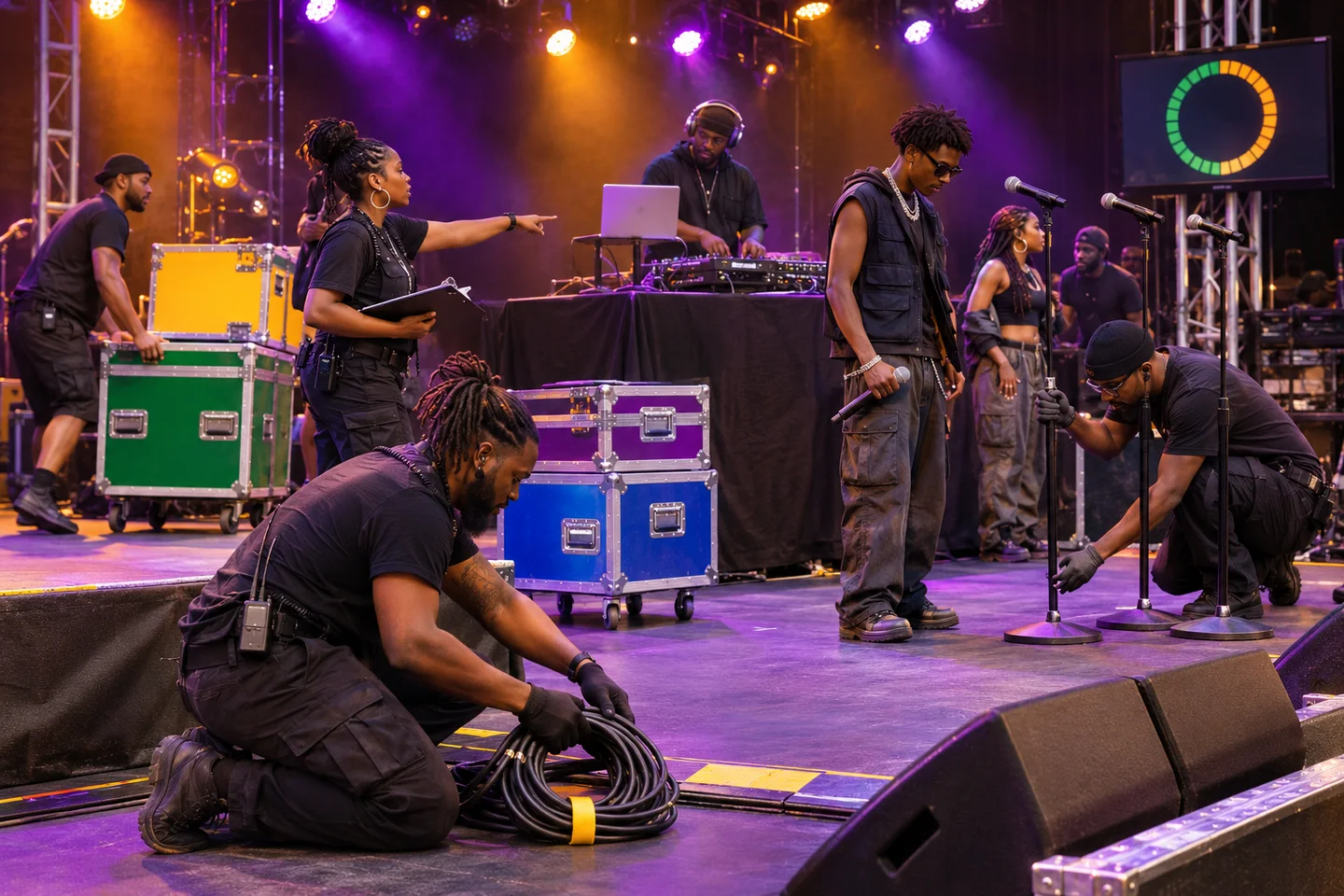
Live performance operations · 8 min read039
Move safely between rap acts with a timed stage map, playback labels, cable and microphone handoffs, line checks, clear ownership, and a rehearsed fallback.
Read the story ↗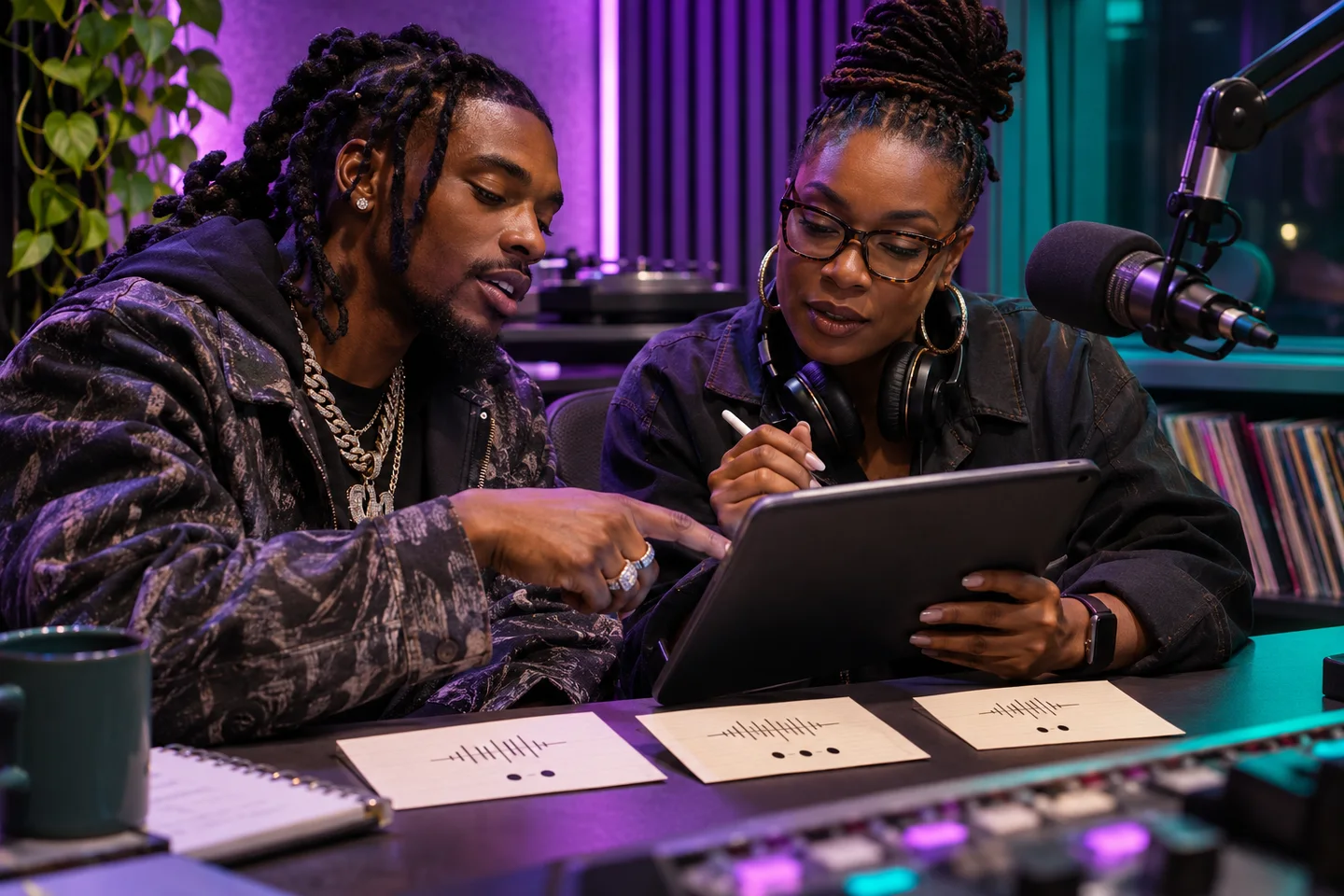
Independent artist press practice · 8 min read040
Create an artist-approved pronunciation guide with a clear respelling, a clean audio reference, source notes, version control, and respectful delivery for hosts and editors.
Read the story ↗
Rap and R&B listening · 7 min read041
Learn to follow a held or repeated pitch beneath changing harmony, separate it from a bass riff or drone, and describe how a pedal tone shapes tension and focus.
Read the story ↗
Independent music discovery · 8 min read042
Use official video descriptions, end credits, platform music data, and verified creative roles to discover artists without turning incomplete metadata into fact.
Read the story ↗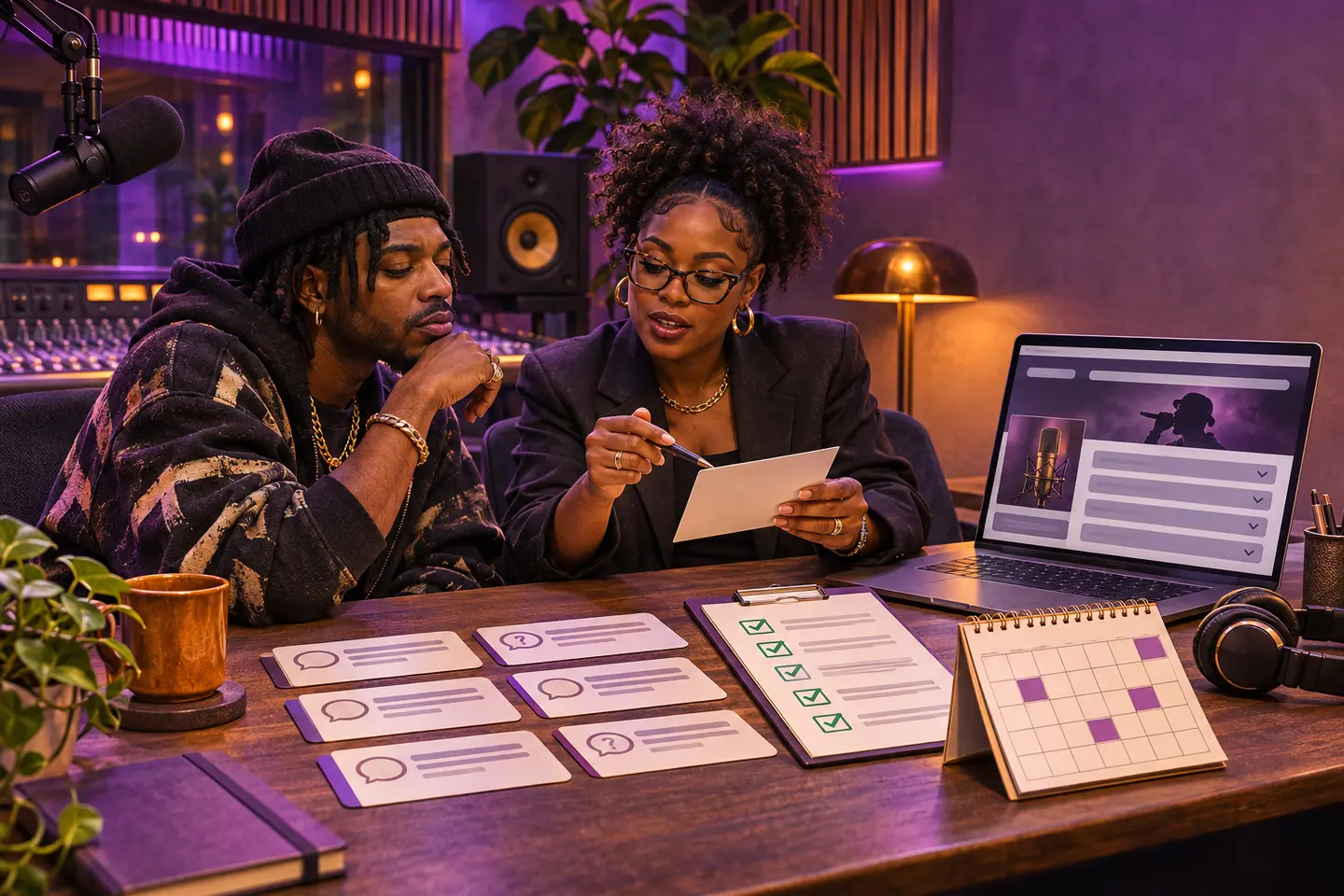
Independent artist storytelling · 8 min read043
Create a useful artist FAQ with verified facts, direct answers, accessible structure, clear boundaries, and an update owner instead of hype or stale claims.
Read the story ↗
Rap and R&B listening · 7 min read044
Follow movement between low, middle, and high pitch areas, compare sections, and describe how register reshapes focus without confusing it with volume or tone color.
Read the story ↗
Responsible AI music workflow · 8 min read045
Compare an AI-assisted music revision against its approved source so changes to arrangement, voice, lyrics, credits, permissions, and provenance do not slip through unnoticed.
Read the story ↗
Independent radio craft · 8 min read046
Turn a recorded artist interview into an accurate, consent-aware transcript with speaker labels, meaningful sound notes, fact checks, and an accessible publishing review.
Read the story ↗
Rap and R&B listening · 7 min read047
Track how quickly the harmony changes, compare sections, and hear how a slower or faster chord-change rate shapes motion without guessing the exact chords.
Read the story ↗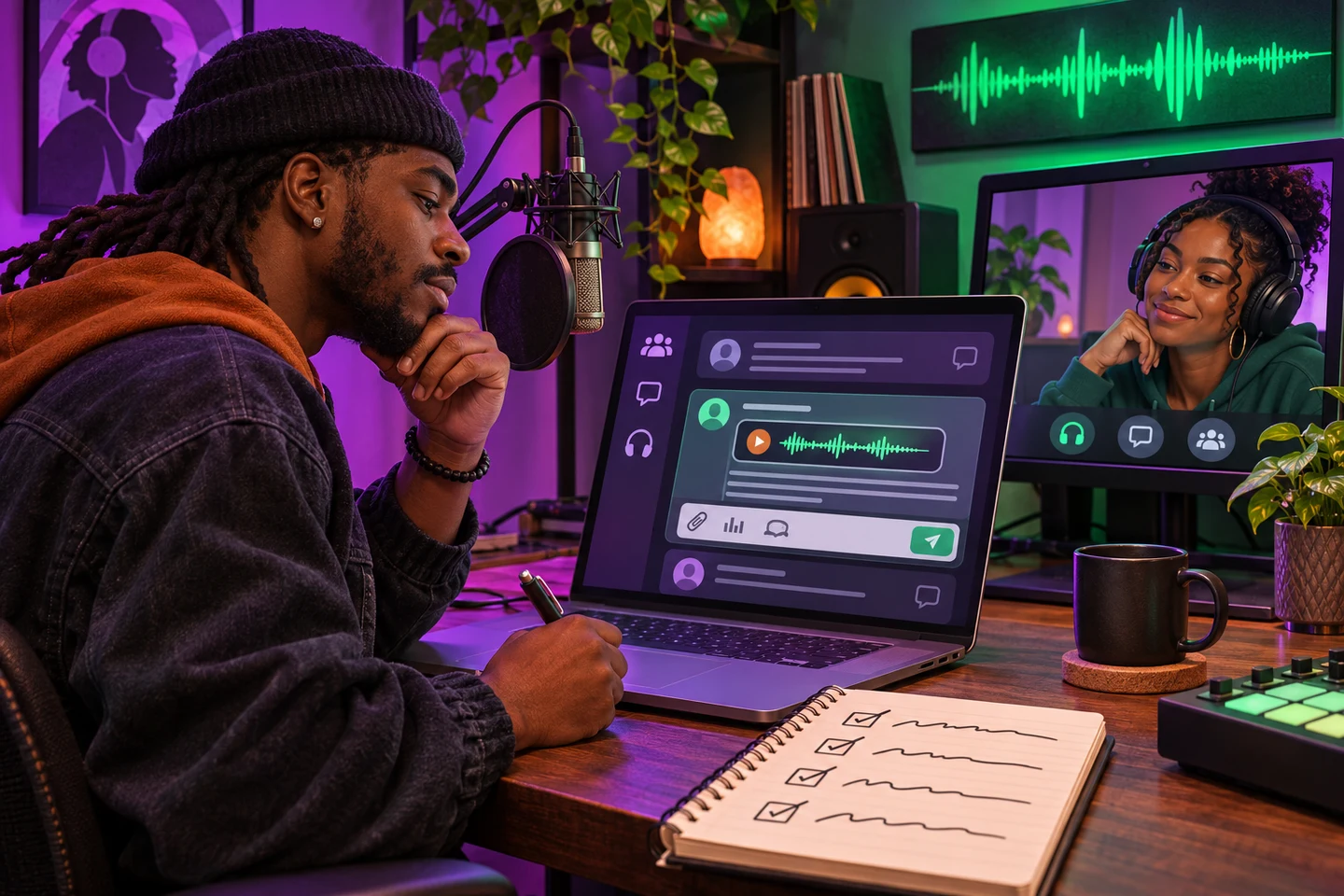
Artist community practice · 7 min read048
Post a clear, bounded feedback request with the right version, one listening question, useful context, consent, and a respectful follow-up plan.
Read the story ↗
Rap vocal production · 8 min read049
Choose a natural lead-vocal comp with stable take IDs, phrase-level listening, performance-first decisions, clean edit notes, and a reversible approval path.
Read the story ↗
Rap and R&B listening · 7 min read050
Track a repeating musical idea across a song, then identify how rhythm, contour, sound, words, harmony, or placement changes its meaning.
Read the story ↗
Music discovery · 8 min read051
Use public recorded-sound catalogs to build a careful listening trail across titles, performers, labels, dates, formats, and documented rights information.
Read the story ↗
Live performance operations · 8 min read052
Reconcile a live-show guarantee or door deal with a clear settlement sheet covering ticket totals, agreed deductions, merch, payment, and signoff.
Read the story ↗
Rap and R&B listening · 7 min read053
Hear syncopation by finding the pulse, marking attacks between expected beats, and comparing how drums, bass, vocals, and silence reshape the groove.
Read the story ↗
Responsible AI music workflow · 8 min read054
Review an AI-assisted arrangement section by section, verify sources and permissions, document human choices, and approve the final sequence deliberately.
Read the story ↗
Independent artist workflow · 8 min read055
Give a session player the musical role, exact audio version, cue map, schedule, deliverables, credits, rights questions, and review path needed for a focused recording.
Read the story ↗
Rap and R&B listening · 7 min read056
Recognize a pre-chorus by comparing repeated sections, energy, harmony, rhythm, texture, range, and the way a transition prepares the hook.
Read the story ↗
Music discovery · 7 min read057
Turn an official festival lineup archive into a careful discovery trail by verifying the year, stage, artist identity, release links, and one meaningful connection at a time.
Read the story ↗
Artist presentation · 8 min read058
Turn a full artist photo shoot into a clear selection contact sheet with stable IDs, usage roles, credits, permissions, accessibility notes, approvals, and final delivery files.
Read the story ↗
Rap and R&B listening · 7 min read059
Find a second melodic line by holding the lead in memory, tracing an independent contour, comparing rhythm and register, and testing how both lines work together.
Read the story ↗
Music discovery · 7 min read060
Use a dated radio-show playlist as a discovery map: confirm the episode, follow verified track and release details, listen beyond one spin, and preserve useful context.
Read the story ↗
Independent artist production · 8 min read061
Turn an approved song and lyric sheet into precise on-screen cues, line breaks, section markers, review states, captions, and a clean lyric-video handoff.
Read the story ↗
R&B listening · 7 min read062
Recognize an R&B key change by comparing tonal center, melody, bass, harmony, vocal register, and section function without guessing note names or studio methods.
Read the story ↗
Music discovery · 7 min read063
Use a record store’s staff picks, local shelves, listening stations, event calendar, and verified credits to build a careful independent-music discovery trail.
Read the story ↗
Independent artist workflow · 8 min read064
Prepare a focused rap or R&B co-writing session with a shared brief, clear roles, an achievable agenda, decision rules, version control, splits, and an honest handoff.
Read the story ↗
R&B listening · 7 min read065
Follow an R&B vocal run by listening for its entry, contour, rhythm, vowel, landing, and role in the song without inventing notes or studio details.
Read the story ↗
Responsible AI music workflow · 8 min read066
Run an honest A/B review between an AI-assisted music demo and a human re-recording while preserving sources, authorship records, performance consent, and version decisions.
Read the story ↗
Independent artist production · 8 min read067
Turn an independent song concept into a practical one-day music-video plan with story beats, camera setups, performance coverage, permissions, timing, backups, and a clear edit handoff.
Read the story ↗
Rap and R&B listening · 7 min read068
Listen for matching phrasing, timing spread, consonants, stereo width, emphasis, and section changes without pretending to know how the vocal layers were produced.
Read the story ↗
Responsible AI creative workflow · 8 min read069
Preserve the brief, source permissions, generated candidates, human selections, edits, approvals, provenance limits, and final credit for AI-assisted release artwork.
Read the story ↗
Independent release operations · 8 min read070
Track every approved writer, performer, producer, engineer, artwork, version, and metadata correction before an independent release reaches distribution.
Read the story ↗
Independent radio craft · 8 min read071
Build a timed, consent-aware radio interview plan with verified names, useful questions, audio checks, clean transitions, flexible follow-ups, and a documented close.
Read the story ↗
Rap and R&B listening · 7 min read072
Listen to the opening seconds for pulse, space, tonal center, texture, voice, and expectation, then compare what the first full section confirms or overturns.
Read the story ↗
Independent release strategy · 8 min read073
Document each release goal, audience, budget, channel, owner, tracking plan, approval, stop rule, and result before an independent artist commits campaign money.
Read the story ↗
Music discovery · 7 min read074
Use one college-radio chart week as a discovery map, verify the reporting system and release identity, listen beyond the rank, and follow stations and labels carefully.
Read the story ↗
Songwriting workflow · 8 min read075
Define the speaker, listener, knowledge, pronouns, tense, and section-by-section perspective so a rap or R&B song’s point of view stays intentional in performance.
Read the story ↗
Artist storytelling · 8 min read076
Organize verified bios, press photos, music links, artwork, credits, contact details, and an update log into one press kit folder that is easy to review.
Read the story ↗
Music discovery · 7 min read077
Use a verified concert lineup to find independent opening artists, confirm identities, sample full releases, and build a discovery trail beyond the headliner.
Read the story ↗
AI-assisted music workflow · 8 min read078
Preserve the generated draft, clarify the song brief, rewrite for lived perspective and performance, verify claims, test every line aloud, and log human decisions.
Read the story ↗
Independent artist operations · 7 min read079
Count shirts, vinyl, hats, bundles, comps, and sales with one show-day worksheet that gives an independent artist a checkable opening and closing total.
Read the story ↗
Close listening · 7 min read080
Track changes in vocal, drum, bass, and instrument tone color across a rap or R&B song with timestamps, comparisons, and no invented studio details.
Read the story ↗
AI-assisted music workflow · 8 min read081
Turn an approved AI-assisted instrumental into a stable, labeled recording package with a full mix, stems, tempo notes, cue map, rights log, and rollback plan.
Read the story ↗
Recording workflow · 7 min read082
Map each background-vocal role, lyric, entrance, stack, and take before recording so harmonies support the lead instead of turning into an unlabeled pile.
Read the story ↗
Close listening · 7 min read083
Build a foreground, middle, and background map for voices, drums, instruments, ambience, and effects without pretending to know the original mix session.
Read the story ↗
Music discovery · 7 min read084
Start with one accurate genre, location, or mood tag, combine filters carefully, verify official artist pages, and build a short independent-music listening trail.
Read the story ↗
Recording workflow · 7 min read085
Mark the repair, preserve context, record enough lead-in and tail, compare complete phrases, and keep every rap vocal punch-in organized for a clean decision.
Read the story ↗
Close listening · 7 min read086
Use a fixed listening position and a simple left-center-right map to hear where voices, drums, instruments, and effects sit in a rap or R&B recording.
Read the story ↗
Music discovery · 7 min read087
Follow one verified producer credit across recordings, releases, collaborators, and official artist pages to build a careful independent hip-hop discovery trail.
Read the story ↗
Release preparation · 7 min read088
Deliver a mastering engineer the approved mix, format facts, sequence, references, notes, metadata, and decision path needed to finish an independent release cleanly.
Read the story ↗
Close listening · 7 min read089
Compare verse, hook, bridge, and outro energy at a fixed listening level by tracking density, impact, space, vocal delivery, and section-to-section change.
Read the story ↗
Music discovery · 7 min read090
Use a compilation’s complete track list, credits, label context, release history, and contrasting songs to build a verified path toward unfamiliar independent artists.
Read the story ↗
Music business basics · 7 min read091
Turn a beat receipt and license into a practical release check covering the exact beat, permitted uses, limits, credits, splits, files, samples, and open questions.
Read the story ↗
Recording workflow · 7 min read092
Organize a rap cypher session with a fixed beat version, fair verse plan, consistent microphone setup, clean handoffs, file labels, and individual approvals.
Read the story ↗
Music discovery · 7 min read093
Turn small-venue calendars into a reliable discovery routine by checking complete lineups, opening acts, organizer history, access details, and post-show listening paths.
Read the story ↗
Live performance · 7 min read094
Give a venue the current inputs, playback plan, monitor needs, stage positions, contacts, and backup details needed to prepare an independent rap set.
Read the story ↗
Close listening · 7 min read095
Map where rap lines and rhymes land against the pulse using neutral marks, repeated listening, and section comparisons—without copying copyrighted lyrics.
Read the story ↗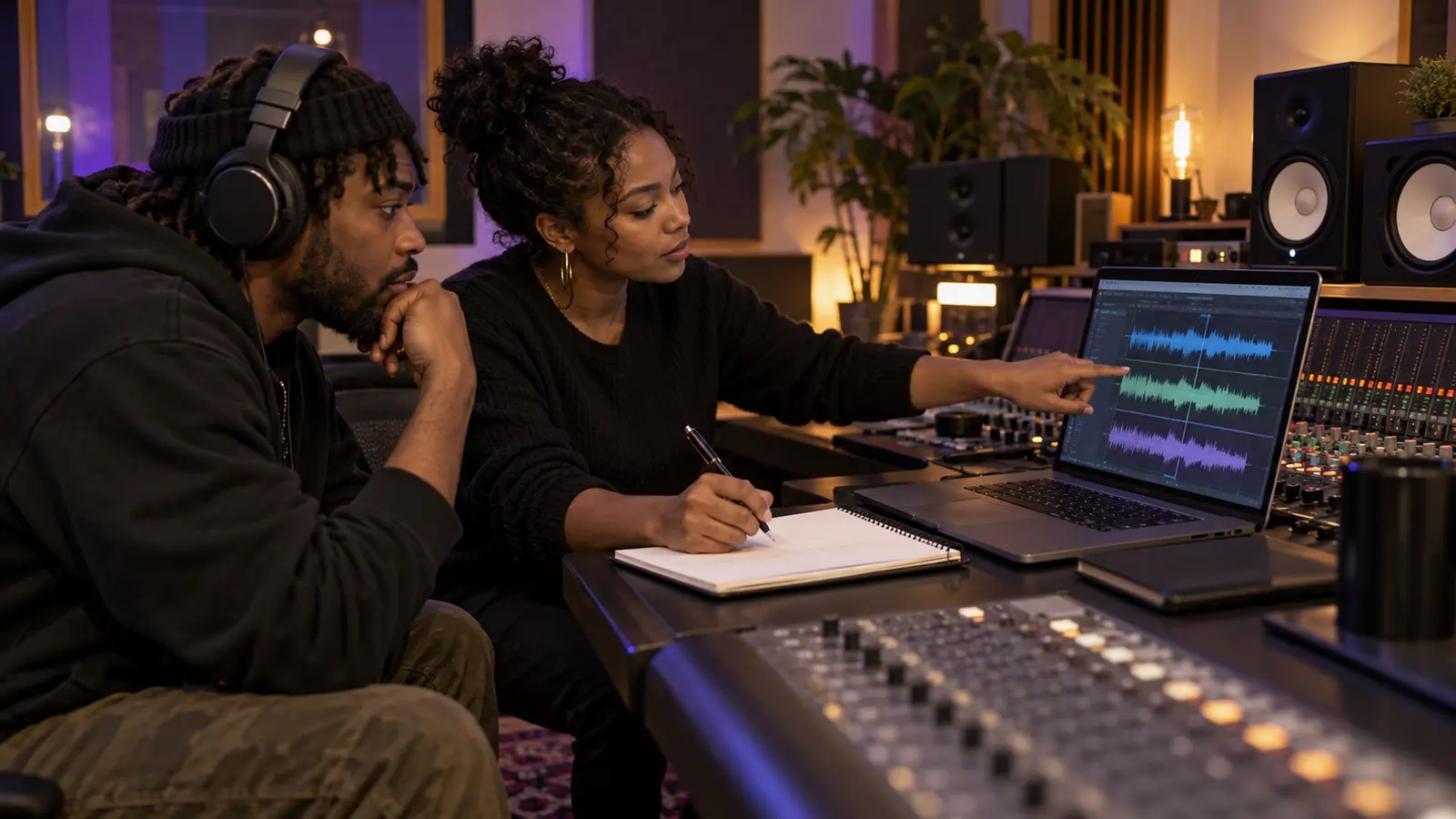
AI-created music · 7 min read096
Use a versioned brief, listening checks, decision ownership, consent review, and a final approval log to keep people—not software—in charge of an AI-assisted mix.
Read the story ↗
Music business basics · 7 min read097
Turn a vague co-writing memory into a clear conversation about contributors, roles, percentages, names, affiliations, open questions, and written confirmation.
Read the story ↗
Release preparation · 6 min read098
Deliver release artwork with a clean square master, verified permissions, readable small-size previews, stable filenames, and provider-specific export checks.
Read the story ↗
Close listening · 6 min read099
Listen across a hip-hop beat switch by marking the transition, tracking what stays and changes, and describing its effect without inventing hidden production facts.
Read the story ↗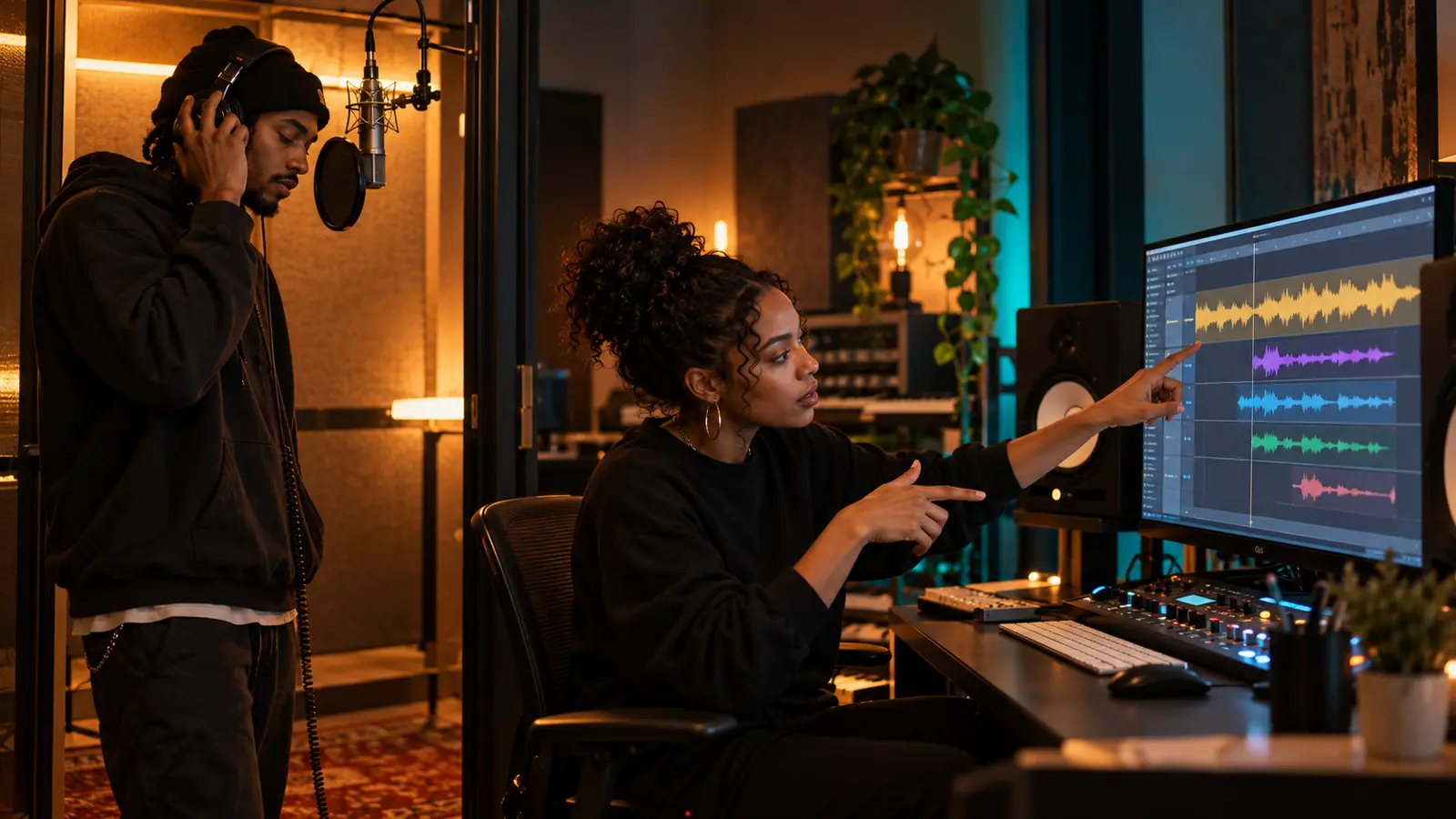
Vocal production · 6 min read0100
Build rap ad-libs around the lead vocal with clear roles, intentional gaps, section-by-section choices, and an approval pass that protects the words.
Read the story ↗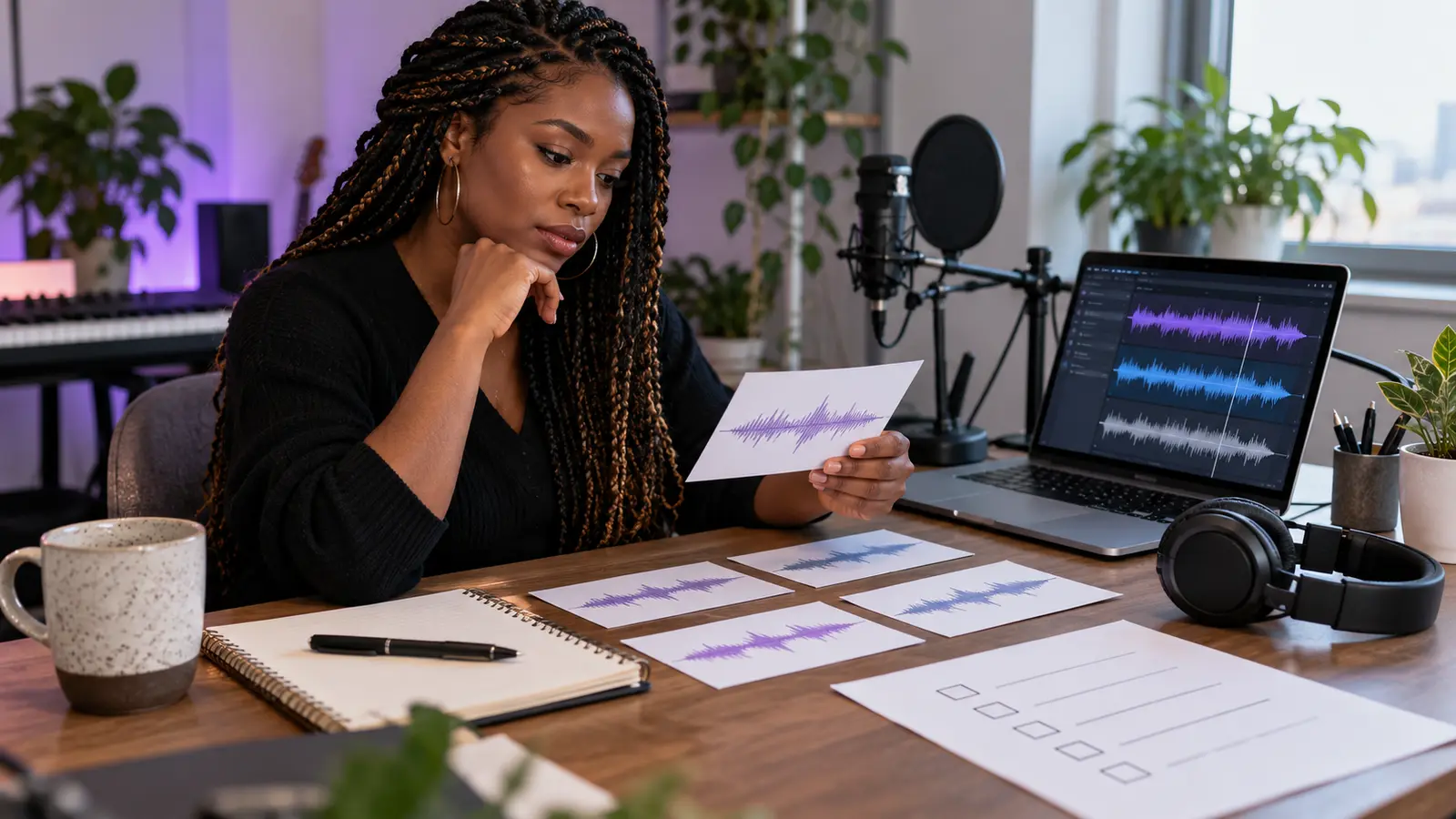
AI-assisted craft · 7 min read0101
Pause before publishing an AI-generated vocal: identify the voice, document permission, review the actual output, preserve decisions, and stop when consent is unclear.
Read the story ↗
Music listening · 6 min read0102
Listen for pauses, dropouts, rests, and thinner arrangements in hip-hop and R&B, then describe what the open space changes without guessing how it was made.
Read the story ↗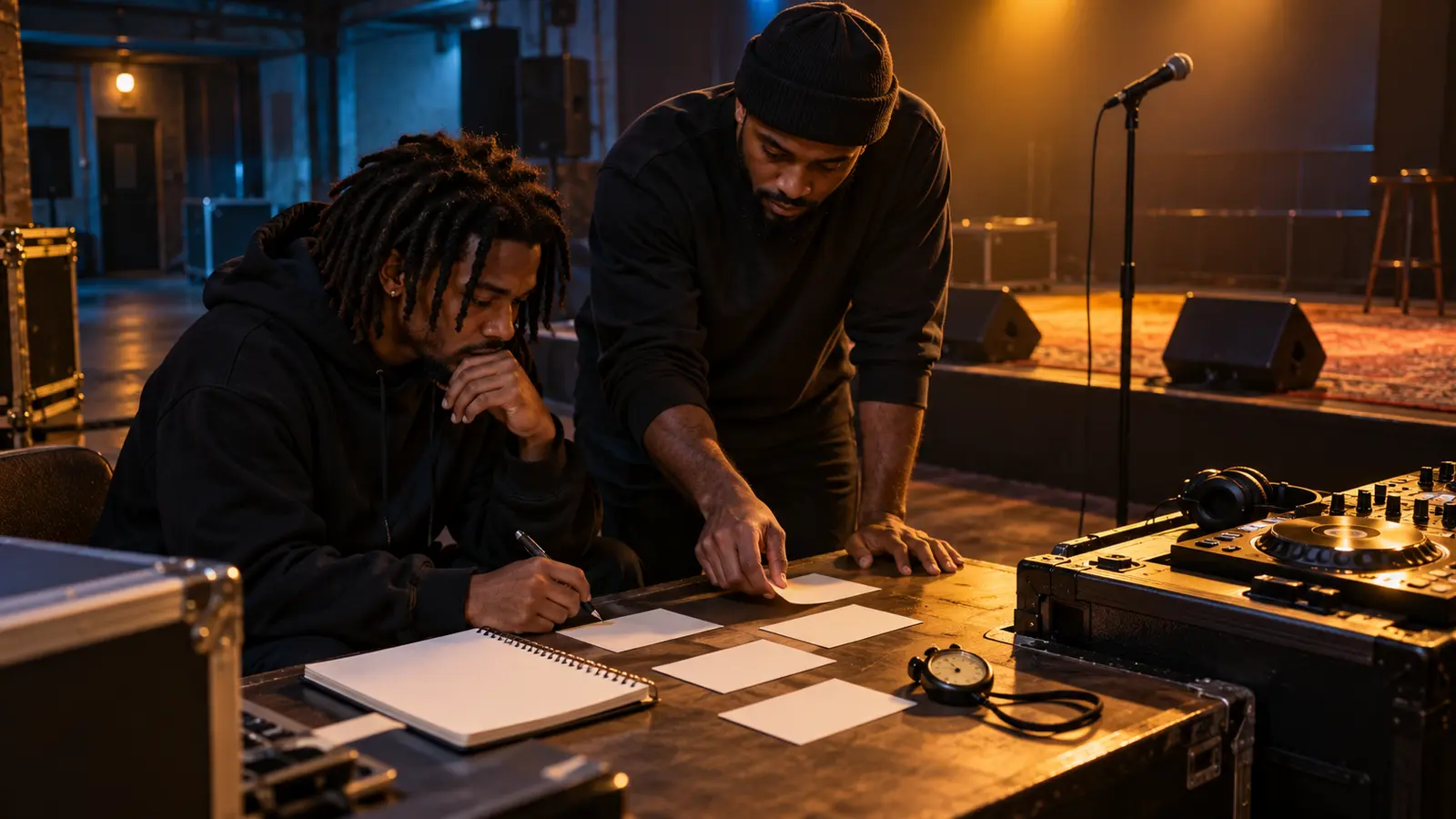
Live performance · 6 min read0103
Plan a short independent rap set with measured song versions, transitions, spoken moments, DJ cues, and a shorter fallback instead of discovering the time limit onstage.
Read the story ↗
AI-assisted craft · 6 min read0104
Choose between AI-assisted music drafts using a clear creative goal, comparable listening, specific observations, a limited shortlist, and documented human decisions.
Read the story ↗
Close listening · 6 min read0105
Listen beyond the last chorus: compare fades, final hits, vocal tags, instrumental outros, and transitions without mistaking a broadcast handoff for the recording’s ending.
Read the story ↗
Artist collaboration · 6 min read0106
Agree on the guest verse’s role, arrangement, references, delivery files, credits, and review steps before a remote collaboration becomes a pile of mismatched takes.
Read the story ↗
Artist communication · 6 min read0107
Write an accurate independent-music release announcement with the essential facts, one audible detail, clear credits, accessible artwork context, and a useful listening link.
Read the story ↗
Music discovery · 6 min read0108
Use an independent label’s official catalog as a listening map: verify release relationships, compare different artists and eras, follow credits, and keep discovery manageable.
Read the story ↗
Studio collaboration · 6 min read0109
Turn vague mix reactions into a short, prioritized revision brief with exact versions, timestamps, audible observations, and a clear approval process.
Read the story ↗
Release presentation · 6 min read0110
Check permissions, playback, mobile layout, credits, version labels, and the next step so a listening link works for someone outside your artist account.
Read the story ↗
Close listening · 6 min read0111
Follow the musical conversation between lead lines, backing voices, ad-libs, and instruments with a practical call-and-response listening exercise.
Read the story ↗
Studio workflow · 6 min read0112
Build a recoverable archive of sessions, audio, masters, credits, permissions, and release assets, then test the backup before you need it.
Read the story ↗
Release decisions · 6 min read0113
Select an EP focus track by matching audience, song readiness, artist identity, usable versions, and a clear outreach purpose—not imagined popularity.
Read the story ↗
R&B listening · 6 min read0114
Listen for contrast in lyrics, harmony, rhythm, vocals, and texture to understand how an R&B bridge reshapes the return to a chorus.
Read the story ↗
Performance craft · 6 min read0115
Rehearse a rap verse with phrase marks, rhythmic anchors, microphone consistency, and focused playback checks without flattening its character.
Read the story ↗
Artist outreach · 6 min read0116
Use a submission log, outlet-specific timing, a concise follow-up, and a clear stopping rule to keep independent music outreach professional.
Read the story ↗
Music discovery · 6 min read0117
Compare rap and R&B recording versions through groove, vocals, arrangement, space, and credits while keeping observation separate from preference.
Read the story ↗
Artist storytelling · 7 min read0118
Prepare clear, memorable interview answers with verified facts, concrete song stories, respectful boundaries, and a simple rehearsal routine.
Read the story ↗
Audio delivery · 7 min read0119
Separate the full mix, instrumental, performance backing, and clean versions so hosts, DJs, engineers, and performers receive the correct audio.
Read the story ↗
Deep listening · 7 min read0120
Follow bass rhythm, note movement, sustain, silence, and its relationship with the kick and vocal using a practical three-pass listening exercise.
Read the story ↗
Creative collaboration · 9 min read0121
Turn musical references into a clear producer brief about energy, structure, texture, vocals, and boundaries without requesting imitation.
Read the story ↗
AI music workflow · 9 min read0122
Document prompts, selected outputs, human writing, arrangement, performance, editing, credits, and approvals during an AI-assisted music session.
Read the story ↗
Music discovery · 8 min read0123
Use DJ sets, timestamps, verified tracklists, credits, and careful follow-up to turn one mix into a path toward independent rap artists.
Read the story ↗
Release planning · 9 min read0124
Turn the final two weeks before an independent single into a practical calendar for assets, outreach, clean versions, publishing, and follow-up.
Read the story ↗
Artist presentation · 8 min read0125
Package artist press photos with accurate captions, creator credits, rights notes, filenames, and accessible descriptions for professional use.
Read the story ↗
Music discovery · 8 min read0126
Turn scattered independent rap and R&B discoveries into a short, intentional listening queue with context, variety, notes, and a stopping point.
Read the story ↗
Release planning · 9 min read0127
Plan an independent rap release budget around the song, essential assets, promotion, contingency, and measurable goals without buying empty hype.
Read the story ↗
Artist workflow · 8 min read0128
Build an accurate, readable lyric sheet with version labels, section cues, credits, clean-edit notes, and a disciplined approval process.
Read the story ↗
R&B discovery · 8 min read0129
Use live-session videos to discover independent R&B voices by listening for arrangement, performance choices, credits, and official release paths.
Read the story ↗
Artist outreach · 8 min read0130
Create a clear one-page release brief with verified credits, useful context, working links, and no unsupported hype.
Read the story ↗
Mix review · 8 min read0131
Use a repeatable playback-check routine to find vocal, bass, balance, and translation problems before approving a rap mix.
Read the story ↗
Music discovery · 8 min read0132
Share an independent rap or R&B discovery with accurate context, verified links, specific listening cues, and honest disclosure.
Read the story ↗
Recording workflow · 8 min read0133
Prepare organized, aligned rap vocal stems that give a mix engineer clear choices without losing the character of the performance.
Read the story ↗
R&B listening · 8 min read0134
Hear how lead vocals, doubles, harmonies, ad-libs, space, and arrangement choices shape an R&B performance.
Read the story ↗
Listener community · 8 min read0135
Plan a focused independent-release listening session with permission, clear roles, useful prompts, and respectful feedback.
Read the story ↗
Artist identity · 8 min read0136
Turn verified details, creative purpose, and musical context into a clear independent artist bio for radio, press, and listeners.
Read the story ↗
Release craft · 8 min read0137
Shape a focused five-track rap EP by assigning each song a job, testing transitions, managing contrast, and earning the ending.
Read the story ↗
Deep listening · 8 min read0138
Listen closely to kick, snare, hi-hat, swing, velocity, space, and variation so hip-hop drum programming becomes easier to describe.
Read the story ↗
Artist craft · 8 min read0139
Build a clean version of a rap or R&B track that protects the meaning, pocket, energy, and technical quality of the original.
Read the story ↗
Artist outreach · 8 min read0140
Send a concise, useful independent-music submission email with the right audio, credits, context, links, and expectations.
Read the story ↗
Deep listening · 8 min read0141
Hear sequencing, narrative, production, features, and transitions by giving an independent rap album one focused front-to-back listen.
Read the story ↗
Release preparation · 8 min read0142
Organize track titles, contributors, versions, ownership notes, and recording identifiers before an independent release leaves the studio.
Read the story ↗
R&B discovery · 7 min read0143
Turn one R&B song into a deeper discovery path by following featured singers, writers, producers, background vocalists, and collaborators.
Read the story ↗
Listener community · 7 min read0144
Use IHHR’s live stream and community spaces to host a focused one-hour listening club built around discovery, discussion, and respect.
Read the story ↗
Listening well · 7 min read0145
Protect your hearing without flattening the experience: set a sensible level, take useful breaks, and build a safer IHHR listening routine.
Read the story ↗
AI & artist practice · 8 min read0146
Document the human work, AI tools, permissions, collaborators, and release credits behind an AI-assisted track before you publish it.
Read the story ↗
Artist craft · 7 min read0147
Use a three-pass listening method to give independent rappers, singers, and producers specific feedback they can actually apply.
Read the story ↗
Listener community · 5 min read0148
A practical guide to the IHHR live chat: start listening, introduce yourself, talk about the music, and keep the conversation welcoming.
Read the story ↗
Shout-outs · 5 min read0149
Send a thoughtful IHHR shout-out to friends or family, share where you are listening from, and understand how station review works.
Read the story ↗
For artists · 6 min read0150
Use the IHHR artist forum to start a useful collaboration discussion, describe what you can bring, and find the correct route for station inquiries.
Read the story ↗
Start listening · 4 min read0151
A direct guide to listening to IHHR and discovering independent hip-hop, underground rap, original music, and AI-created tracks.
Read the story ↗
Music discovery · 5 min read0152
Practical ways to find underground rap artists: listen deeply, follow credits, explore scenes, and use independent radio as a discovery tool.
Read the story ↗
The music mix · 5 min read0153
IHHR plays original and AI-created hip-hop, rap, and R&B. Explore what to listen for and how to think about creativity, attribution, and discovery.
Read the story ↗