
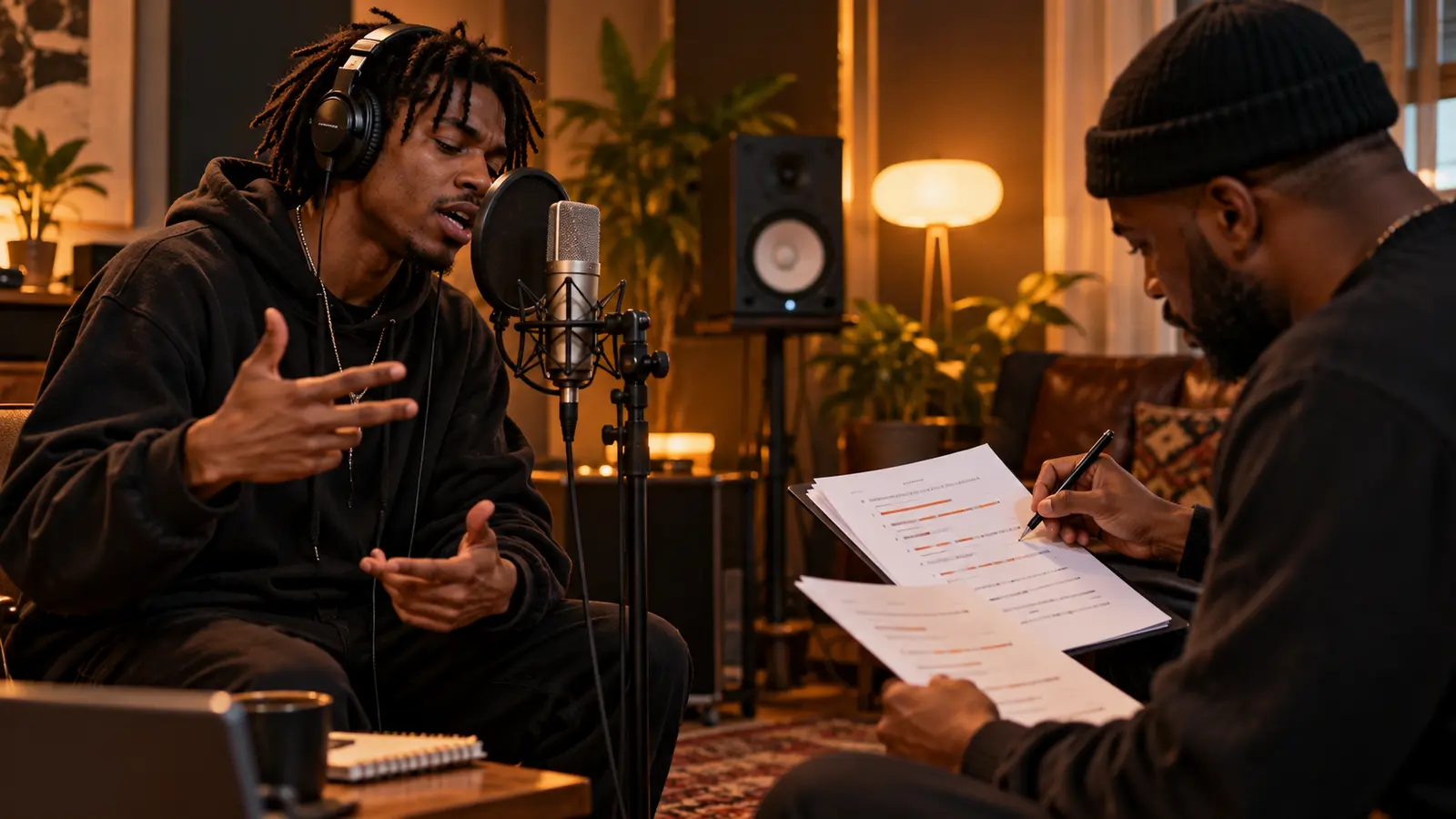
Clear delivery does not mean pronouncing every syllable the same way. A rap verse can be conversational, loose, dense, melodic, sharp, or deliberately blurred and still communicate its point. Rehearsal helps you choose which words must land, where the rhythm bends, and where the performance needs space.
Work on one verse at a time. Use the exact beat arrangement you expect to perform over, an approved lyric sheet, a simple recorder, and a comfortable monitoring level. The goal is a repeatable performance, not a perfect-looking waveform.
Mark meaning before rhythm
Read the verse without the beat and underline the words carrying the story. Choose a few important images, rhyme turns, or changes in attitude. Then mark where one thought ends and the next begins. A written line break is not always the end of a spoken phrase.
Keep the artist's dialect and intentional wording intact. If a line is hard to follow, ask whether the problem is the wording, an accent choice, the rhythm, or a competing sound. Do not rewrite a personal voice into generic formal speech just to make the page tidy.
Choose rhythmic anchors
Play the beat and identify one dependable landmark in each phrase: a rhyme landing, a pause before the snare, a word that enters early, or a held syllable across the bar. Practice arriving at that landmark while allowing the words before it to move naturally.
If a dense phrase keeps rushing, isolate it with the phrase before and after it. Slow playback only when your equipment allows it without making the exercise confusing, then return to the real tempo. Do not rehearse a difficult line alone so often that you can no longer connect it to the verse.
Plan space rather than forcing the line
Mark comfortable places to pause or reset between thoughts. Test whether an ad-lib, shortened word, arrangement gap, or alternate phrasing gives the performance room. A crowded bar does not become expressive merely because you can survive it once.
Rehearse at a manageable intensity. If speaking or performing becomes painful or uncomfortable, stop rather than pushing through repeated takes. This is a craft routine, not a medical or vocal-treatment program.
Keep the microphone relationship consistent
Make a short test at your normal performance position, then listen. Turning your head or repeatedly moving closer can change level and tone. Shure's recording guidance describes microphone position, plosives, and proximity effect as practical factors in vocal capture; the right position depends on the microphone and the sound you want.
Use the engineer's instructions when one is present. Do not solve an unclear performance by simply raising gain. First check whether the words, position, accompaniment, and monitoring allow you to hear what you are actually doing.
Record three purposeful passes
- Meaning pass: preserve the story and important words, even if some rhythm remains rough.
- Pocket pass: focus on the chosen rhythmic landmarks and the spaces between them.
- Performance pass: bring the two together at the energy you intend to use.
Do not choose the best pass from loudness alone. Listen at comparable levels and note where an important word disappears, a phrase speeds up unintentionally, or the emotion becomes less specific. Pick one improvement for the next attempt instead of changing everything.
Check against the actual backing
A full commercial vocal can hide a missed line during practice. Rehearse with the correct instrumental or agreed performance backing, then run the whole verse without stopping. The audio version-pack guide explains why an instrumental and a performance backing may contain different material.
For the next listening pass, compare how the original and an alternate version support delivery using the original-versus-remix listening method. A different drum placement can change how the same vocal feels without changing the words.
Finish with a repeatable cue sheet
Save the approved lyrics, a few phrase marks, the correct backing filename, and the strongest reference take. If the rehearsal is preparing a radio submission or appearance, follow the requested process rather than sending unfinished takes; our radio follow-up guide helps keep the later communication focused.
Bring general performance questions to the reviewed artist forum without private files or contact details. Find more craft guides in The Signal, or listen live to IHHR and follow one performer's phrasing through a full verse.
Reference: Shure, Three Reasons Why Mic Placement Matters, checked October 16, 2026.
Press Play above to hear IHHR or visit the official Live365 station page.