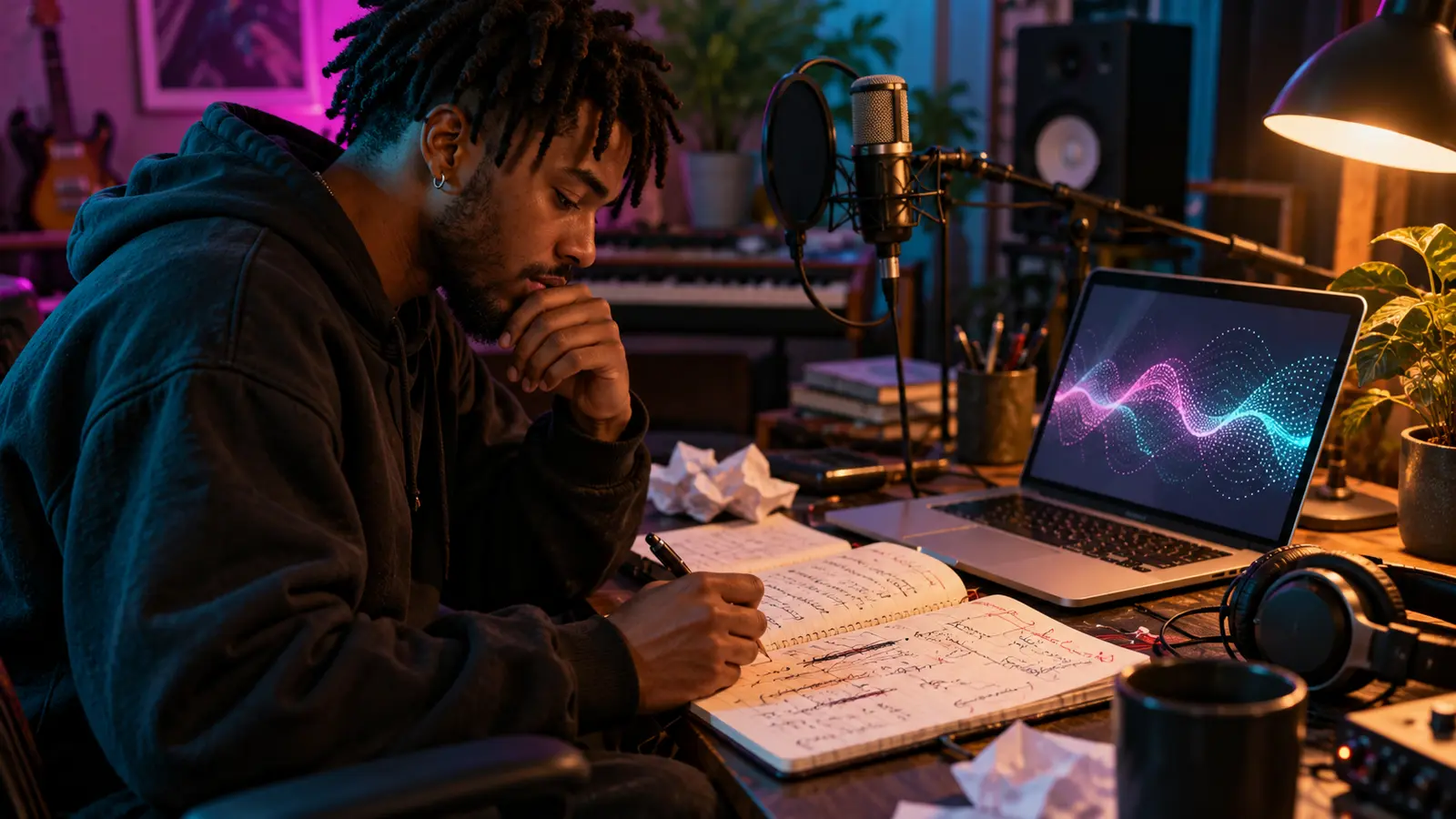
An AI-assisted lyric draft is not ready for the microphone simply because it rhymes and fits a verse shape. A human editing pass must decide what the song means, whose perspective it represents, which details are true, how the language belongs to the performer, and whether every line can be delivered naturally.
This workflow is creative and operational guidance, not legal advice. Review the tool’s current terms, disclose and document material as required, obtain collaborator approvals, and consult qualified counsel for ownership, clearance, or registration questions.
Freeze the generated draft before rewriting
Save the original output with the tool, date, version, prompt or control notes you are permitted to retain, uploaded source material, and account or license information. Do not overwrite it. Create a separate human-edit version so the decisions remain visible.
Use the AI music session log to record inputs, outputs, selections, and later changes. A clean history is more useful than trying to reconstruct the process after release.
Write the song brief in human language
Before editing individual bars, state the speaker, listener, situation, emotional turn, time frame, and one thing the song refuses to say. Identify the hook’s job and the ending’s destination. If the draft cannot be measured against a brief, it will drift toward generic lines that merely sound song-like.
Mark any real person, event, location, brand, statistic, quotation, or biographical claim. Verify it or remove it. Never let a generated line invent an artist fact, visitor activity, private confession, endorsement, or quote.
Separate keeper ideas from keeper wording
Highlight the concepts that belong in the song, then decide whether the actual phrasing deserves to stay. A useful image may need a complete rewrite in the performer’s vocabulary. A clean rhyme may still be wrong for the perspective.
Do not preserve a line only because replacing it breaks the rhyme scheme. Rewrite the setup, the rhyme, or the whole section if that is what the song requires. Human editing is not a cosmetic pass over machine-selected expression.
Check voice, perspective, and consent
Read every line as the performer. Ask whether the artist would say it, whether the details reflect lived or intentionally fictional perspective, and whether the pronouns, relationships, and emotional claims remain consistent. Remove imitation of a living artist’s signature phrasing or identity cues.
If the draft draws on collaborator notes, demos, messages, or private stories, confirm permission and scope. Do not paste protected or confidential material into a tool without authorization, and do not quote visitor or community posts.
Test rhythm with the actual instrumental
Speak and rap or sing every line over the approved instrumental. Mark breath points, stressed syllables, consonant clusters, pickups, held vowels, and words that collide with drums. Replace tongue-twisters that do not serve the performance.
Record a scratch take before final approval. A line that looks balanced on the page can rush, drag, or flatten the emotional turn. Use the rap verse rehearsal guide to test breath, meaning, and consonants without confusing speed with clarity.
Run a distinctiveness and source check
Compare memorable phrases against the human source materials used in the session and search unusually distinctive wording when appropriate. Treat similarity tools and web searches as leads, not guarantees of originality or clearance. Replace language whose source or permission is uncertain.
Keep notes about what was retained, rearranged, rewritten, or removed. The U.S. Copyright Office’s current AI report says copyrightability depends on sufficient human-authored expressive elements and can include human selection, arrangement, or creative modification, while prompts alone generally do not supply that authorship. Application requirements remain case-specific.
Approve the lyric with the people who own the decision
Have the performer and relevant writers review the final text, contribution record, credit wording, and any split discussion before the session. A producer or engineer should not silently rewrite authorship records while fixing a performance issue.
Save the approved lyric with a version number and date. Keep the generated draft, human revisions, scratch take, approval notes, and final recording linked but distinct. The new press kit folder guide can later help the artist describe the release accurately without exposing private working files.
Record the song, not the draft
Once approved, print or display only the current lyric in the booth. Keep earlier versions available to the producer but out of the performer’s main view. If a line changes during recording, pause, document the change, and confirm the new version with the writers.
Bring general workflow questions to the reviewed artist forum without posting private drafts or copyrighted lyrics. Find more responsible AI-assisted music guidance in The Signal.
References: U.S. Copyright Office, AI Report Part 2 announcement; U.S. Copyright Office, Copyright and Artificial Intelligence, Part 2; U.S. Copyright Office, Registration Guidance for Works Containing AI-Generated Material. Checked October 29, 2026.
Press Play above to hear IHHR or visit the official Live365 station page.