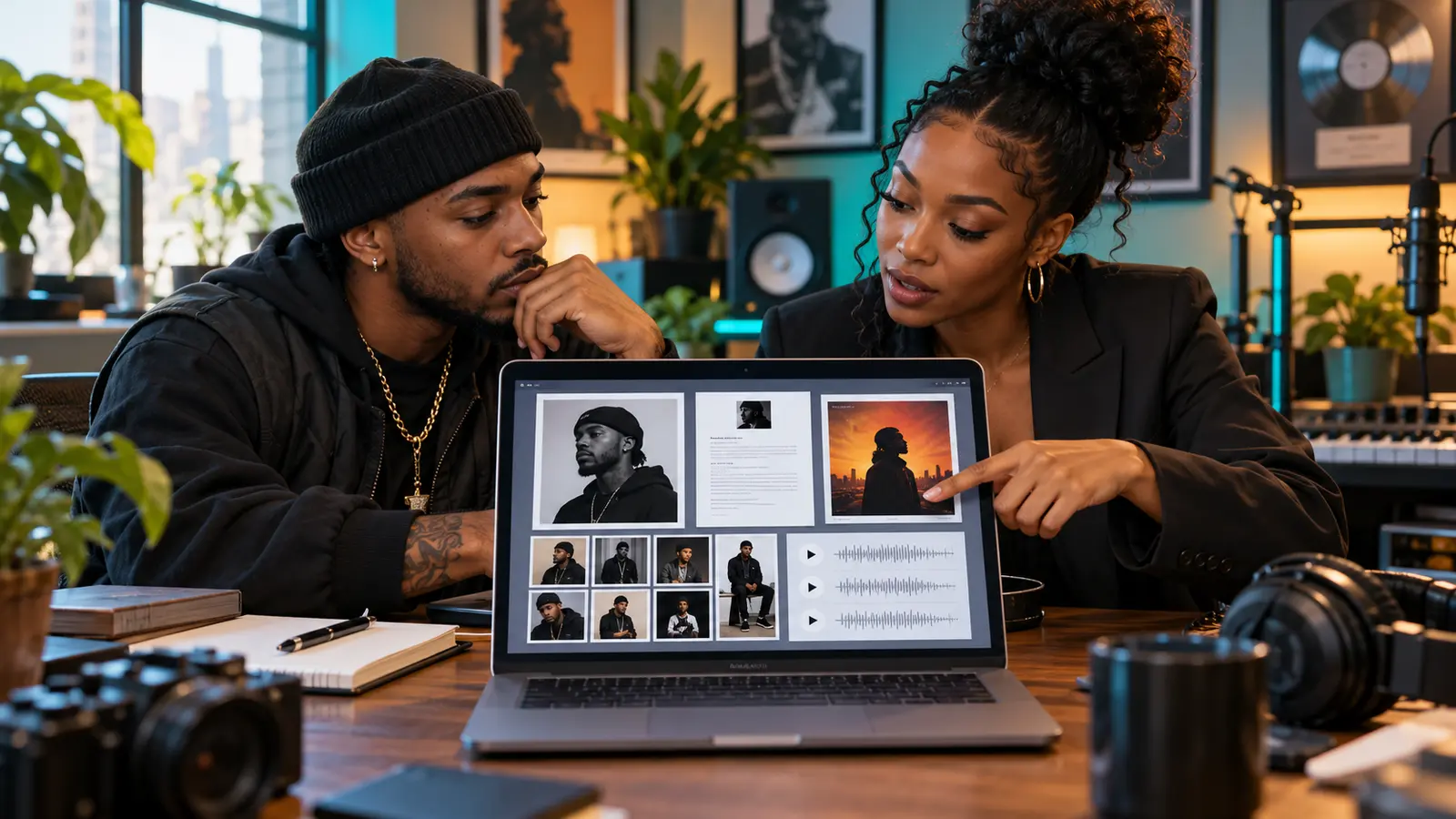
A press kit should help a promoter, editor, station, venue, or collaborator understand the artist without hunting through old posts and mismatched attachments. The strongest folder is not the one with the most files. It is the one whose facts, images, links, credits, and contact details agree.
This guide is an organization workflow, not a promise of coverage, bookings, radio play, rankings, sales, or listener totals. Only include materials the artist owns or has permission to share, and keep private masters, identity documents, contracts, and personal addresses outside the public kit.
Start with one current folder and one archive
Create a clearly dated current folder and a separate archive for superseded materials. Inside the current folder, use stable sections for biography, one-sheet, photos, artwork, music links, video links, credits, contact information, and permissions. Do not leave several files named “final.”
Add a simple index that names the approved file in each section, its date, and its intended use. The index should tell a second person which bio, headshot, cover, and link are current without opening everything.
Build short and long bios from the same verified facts
Keep a one- or two-sentence introduction, a short paragraph, and a longer biography. Check artist name styling, location language, genre description, collaborators, release titles, dates, awards, and press references against reliable records. Remove old claims instead of stacking new ones on top.
Berklee’s current career guidance recommends multiple bio lengths, periodic updates, professional review, and evidence instead of hype. Use IHHR’s independent artist bio workflow to separate a useful story from unsupported superlatives.
Prepare photos people can actually use
Include a small selection of horizontal and vertical images at useful resolution. Give every file a descriptive name and include the photographer, required credit line, caption facts, usage limits, and permission status. Keep the untouched original separate from cropped social versions.
Do not grab a compressed image from a social feed and call it a press photo. Berklee’s musician website guidance recommends beginning with quality source material and obtaining necessary permission. IHHR’s press-photo caption and credit checklist gives a practical handoff format.
Use listening links instead of a mystery attachment pile
Provide one tested public release link and, when appropriate, one clearly labeled private review link with an expiration plan. State whether the recording is released, forthcoming, clean, explicit, instrumental, or a performance version. Do not email large audio files unless the recipient asks for them.
Test every link in a signed-out browser and on a phone. Record the test date in the index. If a link requires permission, explain the access step and name the person responsible for renewing it.
Make the one-sheet agree with the folder
The one-sheet should summarize the artist, current release, strongest verified context, key links, and professional contact. It should not introduce a release date, credit, quote, or achievement that appears nowhere else in the kit.
Use the independent music one-sheet guide, then compare its facts line by line with the bio, artwork, metadata, and release page. If something conflicts, fix the source record before sending the kit.
Document creative provenance without turning it into a slogan
If the release used AI assistance, samples, guest writing, or commissioned visual work, keep accurate internal notes about sources, permissions, and human contributions. Share the level of detail appropriate to the opportunity, but never invent a “fully human” or “fully AI” label when the process was mixed.
For an AI-assisted lyric workflow, the new human editing pass shows how to preserve the draft, revisions, and approvals before describing the song publicly.
Package the opportunity, not the artist’s whole history
Create a share copy for the specific recipient: current bio, two or three approved photos, the relevant one-sheet, tested music and video links, credits, and contact information. Keep the master folder private and send a read-only copy or controlled page when possible.
IHHR’s sponsored Artist Spotlight page explains the paid storytelling package and its submission scope without promising editorial endorsement, rankings, streams, royalties, sales, or listener totals. Choose it only if that paid offer fits the artist’s goal.
Run a monthly truth check
Once a month and before every pitch, open the kit as a stranger. Confirm names, dates, credits, rights, links, contact routing, image permissions, and the current release focus. Move outdated files to the archive and record what changed.
Artists can discuss general press-kit organization in the reviewed artist forum without uploading private files. Continue through The Signal for more practical artist workflows.
References: Berklee Career Center, Promote Your Services; Berklee, Musician Websites 101; Berklee, Music Marketing: Practical Strategies for Independent Artists. Checked October 29, 2026.
Press Play above to hear IHHR or visit the official Live365 station page.