
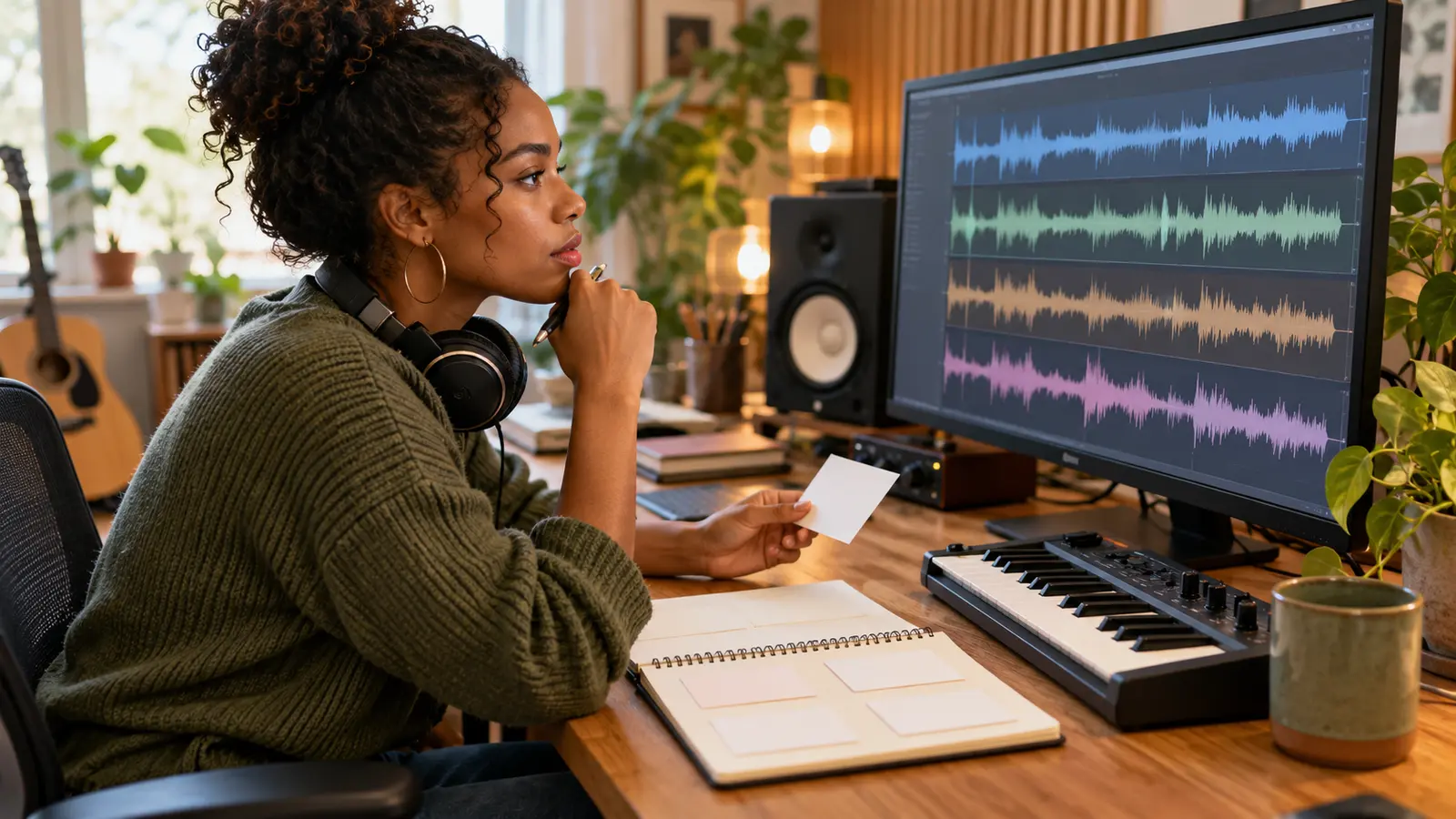
Generating another version is not the same as improving a song. When every new output becomes the favorite for a few minutes, the project can drift away from the idea that made it worth starting. A selection routine helps you decide what advances the song and what is merely different.
The method below is an editorial workflow suggestion. It does not evaluate a particular provider, guarantee a tool's behavior, or settle rights, authorship, or licensing questions. Check the actual service terms and permissions separately before using material.
Write the brief before the next comparison
Describe the song's purpose, intended mood, lyrical point of view, arrangement needs, and the space reserved for human performance. Choose a small number of essentials. “Leave enough room for a conversational verse and finish with a resolved final phrase” is more actionable than “make it professional.”
Separate essential qualities from optional experiments. If the project needs an instrumental bed for a rapper, an attractive generated lead vocal may be an obstacle rather than an improvement. The brief should help you reject an impressive output that solves the wrong problem.
Make a small shortlist
Select two or three candidates for a deliberate comparison round. Keep stable filenames and the associated inputs or settings, but do not turn the listening session into a tour of every abandoned generation.
Use the AI music session log to preserve version relationships and human decisions. A selection note explains why a file advanced; it is not proof of ownership or a substitute for clearance.
Compare at comfortable, roughly similar levels
Play each candidate in full before comparing selected moments. Keep the playback setup consistent and avoid choosing only from the loudest hook. If levels differ substantially, make a listening adjustment without silently changing the source files.
Write down the opening, main section, transition, and ending you heard. A convincing ten seconds does not establish that the rest of a draft supports the intended arrangement. Resist filling missing quality with imagined future edits that nobody has agreed to perform.
Judge the result, not the prompt's promise
- Fit: does the draft serve the written musical goal?
- Space: is there room for the planned vocal or instrument?
- Continuity: do sections connect in a way you can use?
- Detail: are there unclear words, distracting textures, or abrupt changes to resolve?
- Work remaining: can you explain the edits or performances still needed?
Describe observations plainly: “The second transition changes the rhythm before the verse has finished” gives the team something to evaluate. “The model understood my vision” does not identify an audible result.
Separate a favorite moment from a viable candidate
You may like one candidate's introduction and another's ending. Record that preference without assuming they can be combined cleanly. Check the musical relationship and the practical editing work before choosing a composite plan.
Ableton's Learning Music describes arranging as putting sections together into a full song. Use that whole-song perspective here: a collection of appealing fragments is not yet an approved arrangement. Listen to the join and the surrounding passage, not just the fragments in isolation.
Make the ending part of the decision
Ask whether the last section finishes the thought, fades before an important word, repeats without purpose, or stops where a performance would need another cue. Use the ending-listening exercise to describe the difference.
If a version is intended for a live show, compare its actual length and cues against the timed setlist plan. A studio favorite and a usable stage arrangement may require different decisions.
Choose an action, not endless comparison
At the end of the round, choose one candidate to develop, retain one reference, or reject the shortlist and revise the brief. Name the reason and the next human task. Do not invent a numerical score that predicts streams, acceptance, or popularity.
Preserve the selected source before editing, document what a person writes, performs, rearranges, or replaces, and review the finished result again. Share general process questions in the reviewed artist forum, not private prompts, credentials, or files. Explore more craft in The Signal, or listen live to IHHR.
Reference: Ableton Learning Music, Play with song structures, checked October 20, 2026.
Press Play above to hear IHHR or visit the official Live365 station page.