
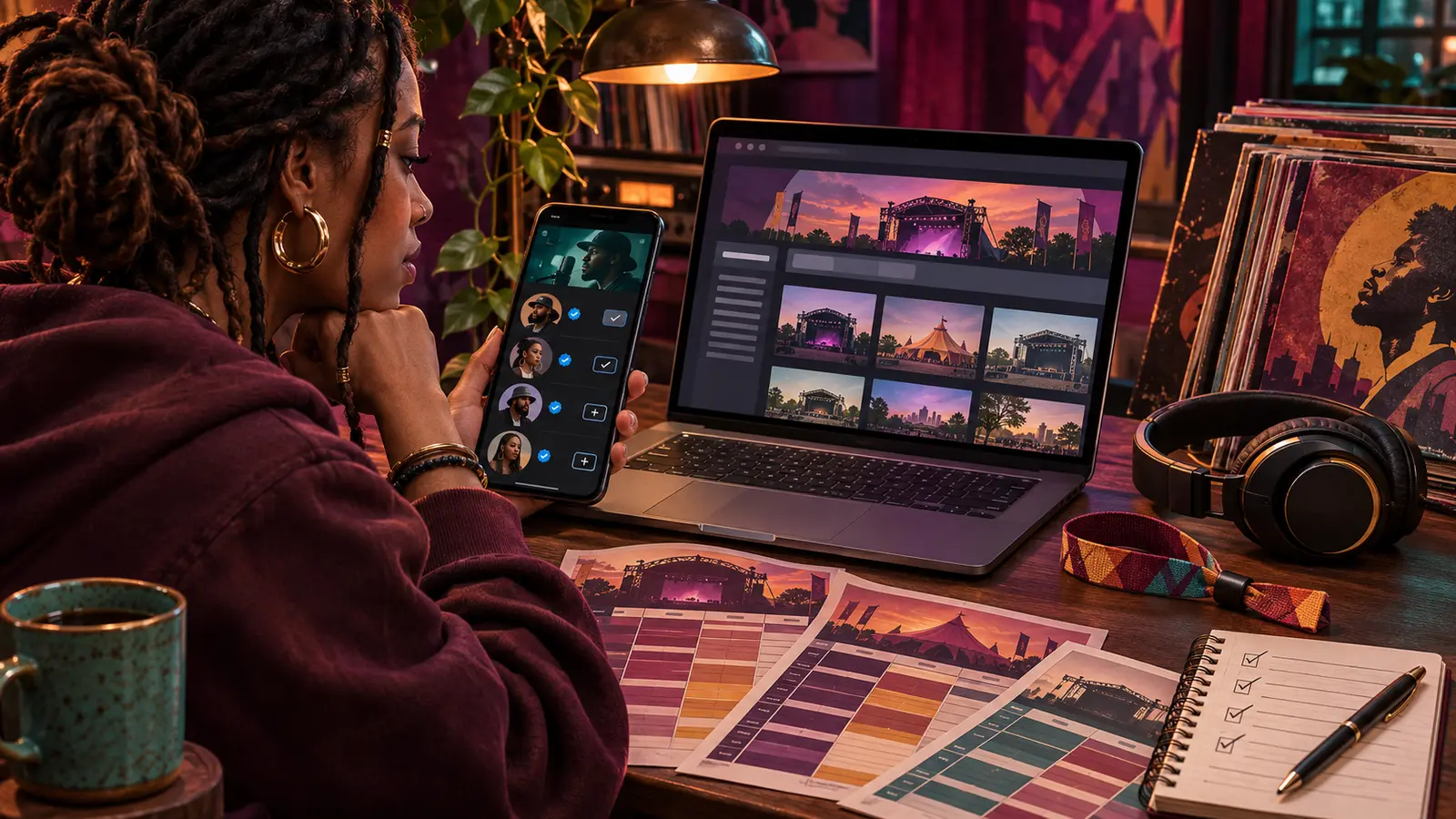
A past festival lineup can be more than a poster full of names. When the festival preserves an official schedule, artist directory, or alumni page, the archive can show which performers shared a year, city, venue, stage, or program. That context creates a useful discovery path without pretending the billing order measures artistic value.
Lineups change, archived pages can be incomplete, and names can be shared by different artists. Treat every listing as a lead to verify. Do not turn a festival appearance into a claim about audience size, endorsement, career rank, or current activity.
Start with the official year
Choose one festival and one past edition. Prefer the organizer's official lineup, schedule, program PDF, or alumni page over a reposted graphic. Record the festival name, city, dates, archive URL, and the date you checked it.
SXSW's official Music Festival page, for example, preserves named alumni with appearance years and points listeners to an official prior-year playlist. That combination can support a discovery trail, but the current page is not a complete historical database.
Pick a small, neutral sample
Choose one stage, showcase, venue, day, region, label event, or genre-adjacent block. Avoid starting only with the largest type on a poster. A local opener, afternoon showcase, or side-stage artist may provide a more focused path into independent music.
Write down five names exactly as listed. Do not add genre, hometown, identity, or career status unless an official artist source supports it.
Resolve each artist identity
Search for the festival's artist page first, then an official artist or label site and an authorized listening page. Match spelling, city, members, release title, photo, and linked accounts. If two artists share a name, keep the entry unresolved until the evidence agrees.
Save one current official listening link and one release that existed near the festival date. The historical release helps explain what the audience could have heard then; the current link shows where the artist's work can be found now.
Listen beyond the promotional clip
Play one complete track from an authorized source, then one contrasting track or release. Note a specific musical feature, the source, and one question. If a transition catches your ear, try the new guide to hearing pre-chorus function in rap and R&B rather than relying on a genre label.
Stop if the identity remains uncertain or the only available upload looks unofficial. A short verified queue is more useful than a large list built on mistaken matches.
Follow one relationship at a time
Choose a documented collaborator, producer, label, venue, showcase curator, featured artist, or neighboring act from the same schedule block. Verify the connection through credits or official pages before following it. The point is to build a traceable path, not to imply every performer at a festival belongs to one scene.
Compare another year only after finishing the first. Ask which artists returned, which stages or showcases changed, and which names lead to active catalogs. Do not interpret absence from a later archive as a career judgment.
Keep the archive context attached
Use columns for festival, edition, date, stage or showcase, listed artist, verified identity, festival source, official artist source, authorized track, listening note, and next connection. Keep the original spelling in one field and any verified correction in another.
If the page disappears, retain your citation and access date, but do not republish the organizer's entire directory or poster as your own. Respect site access rules and image rights.
Turn discovery into a listening habit
Limit each session to three fully checked artists. Revisit one after a week, subscribe through an official channel if you genuinely want updates, and remove dead ends from the queue. Continue with IHHR's listener newsletter signup for station updates; signup requires consent and the published confirmation process.
References: SXSW, Music Festival & Conference. Checked November 5, 2026. The page identifies selected alumni by appearance year and links an official prior-year showcasing-artist playlist; IHHR used those features only as examples of archive-led discovery.
Press Play above to hear IHHR or visit the official Live365 station page.