
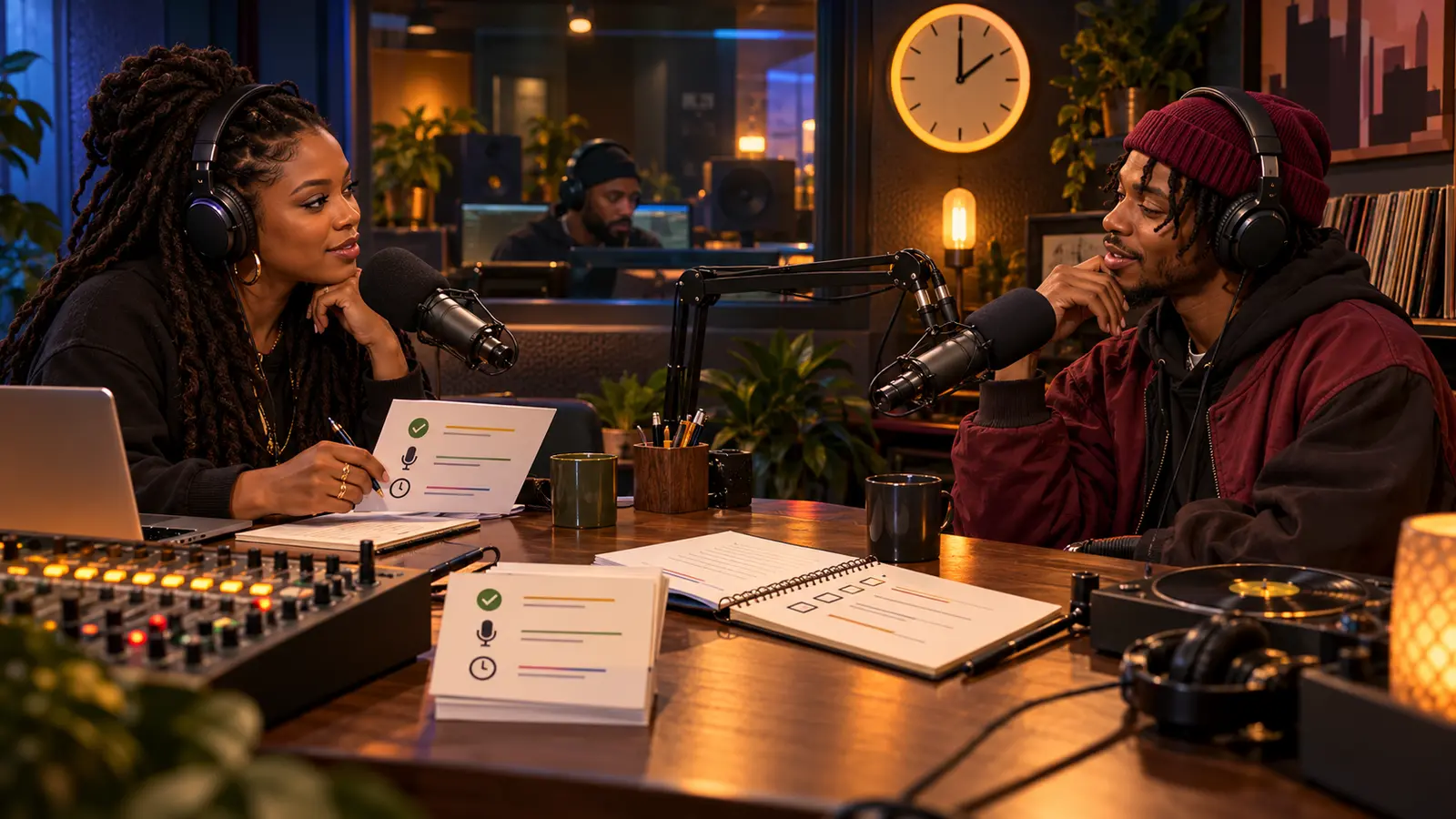
A run-of-show gives a radio interview shape without turning the guest into a scripted prop. It tells the host and producer what the segment is for, how long each part can take, which facts must be verified, what the guest has agreed to discuss, and how the conversation will return to music on time.
This is a general production workflow, not a description of an IHHR booking, submission review, or promise of airtime. The IHHR community's artist forum is a reviewed discussion space; it is not a public file uploader or an automatic path to an interview.
Write the segment promise in one sentence
State what a listener should understand by the end: how an artist developed a performance practice, what changed during a release, how a local scene shaped the work, or what a specific creative decision sounds like. Avoid a vague goal such as “promote the artist.” A useful promise guides research and protects the conversation from becoming a list of claims.
Add the planned date, format, live or prerecorded status, total window, target edited length, host, producer, guest, pronunciation, and verified public links. Separate confirmed facts from questions. Never turn an unverified press-kit line into the host's introduction.
Conduct a pre-interview without spending the best story
Use a short pre-interview to confirm the topic, pronunciation, preferred introduction, boundaries, recording format, and whether the guest can explain the subject clearly. Transom's radio-production guidance describes the pre-interview as a way to assess fit and prepare a guest for the pace of the real conversation.
Do not demand a polished performance in advance or promise that every answer will be used. Note possible story paths, then save the fullest telling for the recorded interview. Tell the guest whether the segment is live, edited, streamed, archived, or republished.
Build the clock backward from the hard out
Start with the final second the segment must end. Reserve time for the host introduction, guest identification, two or three topic blocks, one music transition if authorized, a closing question, required disclosure, and the sign-off. Add a recovery margin for a connection drop, restart, or shorter answer.
Write target durations rather than second-by-second dialogue. A five-minute block can contain a goal, a lead question, two possible follow-ups, and a warning time. The host needs room to listen; the producer needs a visible point at which to tighten or move on.
Research facts and write open questions
Confirm names, release titles, dates, collaborators, locations, and public claims through reliable sources. Ask questions that invite scenes, choices, processes, or reflection: “What changed after the first rehearsal?” is more useful than “Was the rehearsal good?” Keep sensitive topics out unless they are relevant, responsibly researched, and within the guest's informed agreement.
BBC Academy teaching material recommends preparing questions, double-checking sources, and listening closely enough to follow the answer. Put essential questions first, optional questions second, and emergency short questions near the hard out.
Record consent and practical boundaries
Before recording, restate who is recording, the topic, where the segment may appear, whether it is live or edited, and what will happen with music excerpts. Confirm the guest is ready. Consent to an interview is not automatic permission to use any unreleased song, private message, community post, photograph, or third-party recording.
If the artist's story needs a structured public presentation rather than a journalistic interview, IHHR's sponsored Artist Spotlight page explains its paid storytelling scope and disclosure. It does not promise editorial endorsement, streams, rankings, royalties, sales, or listener totals.
Check the room, signal, and recorder
Choose the quietest available space, silence avoidable devices, monitor with headphones, and test the real conversation level. Record a guest identification and name spelling for a prerecorded segment. The BBC's interview guidance recommends checking levels, sound quality, and that the input is actually recording before the conversation proceeds.
For remote audio, write the connection method, backup contact path, local recording plan when available, file-delivery owner, and restart rule. Never collect account passwords in the run-of-show. If the connection fails, say what happened rather than pretending damaged audio is clean.
Use cues, not a script cage
Mark the opening, disclosure, topic changes, music or station transitions, time warnings, final question, and close. Keep host language brief enough to leave the guest room. During the answer, listen for the next useful question instead of racing to the next printed line.
Transom advises clarifying the interview's topic and destination with the guest and making it clear that a prerecorded answer can be restarted. Build that flexibility into the plan, while never implying that a guest can control independent editorial decisions that were not actually offered.
Close, verify, and archive
Ask whether the guest needs to clarify a factual point, then confirm the approved public destination for listeners. Stop recording only after the producer confirms the file exists. Save the run-of-show, research links, consent notes, raw recording, edit decisions, music permissions, final export, and publication record together with controlled access.
For artist-side preparation, use IHHR's independent artist interview guide. General discussion can continue in the reviewed artist forum, but do not post private audio or quote another visitor without permission.
References: Transom, The Art of the Pre-Interview; Transom, Share the Script?; BBC Academy, Interviewing: Asking the Right Questions; BBC Academy, Researching and Writing Questions. Checked October 31, 2026.
Press Play above to hear IHHR or visit the official Live365 station page.