
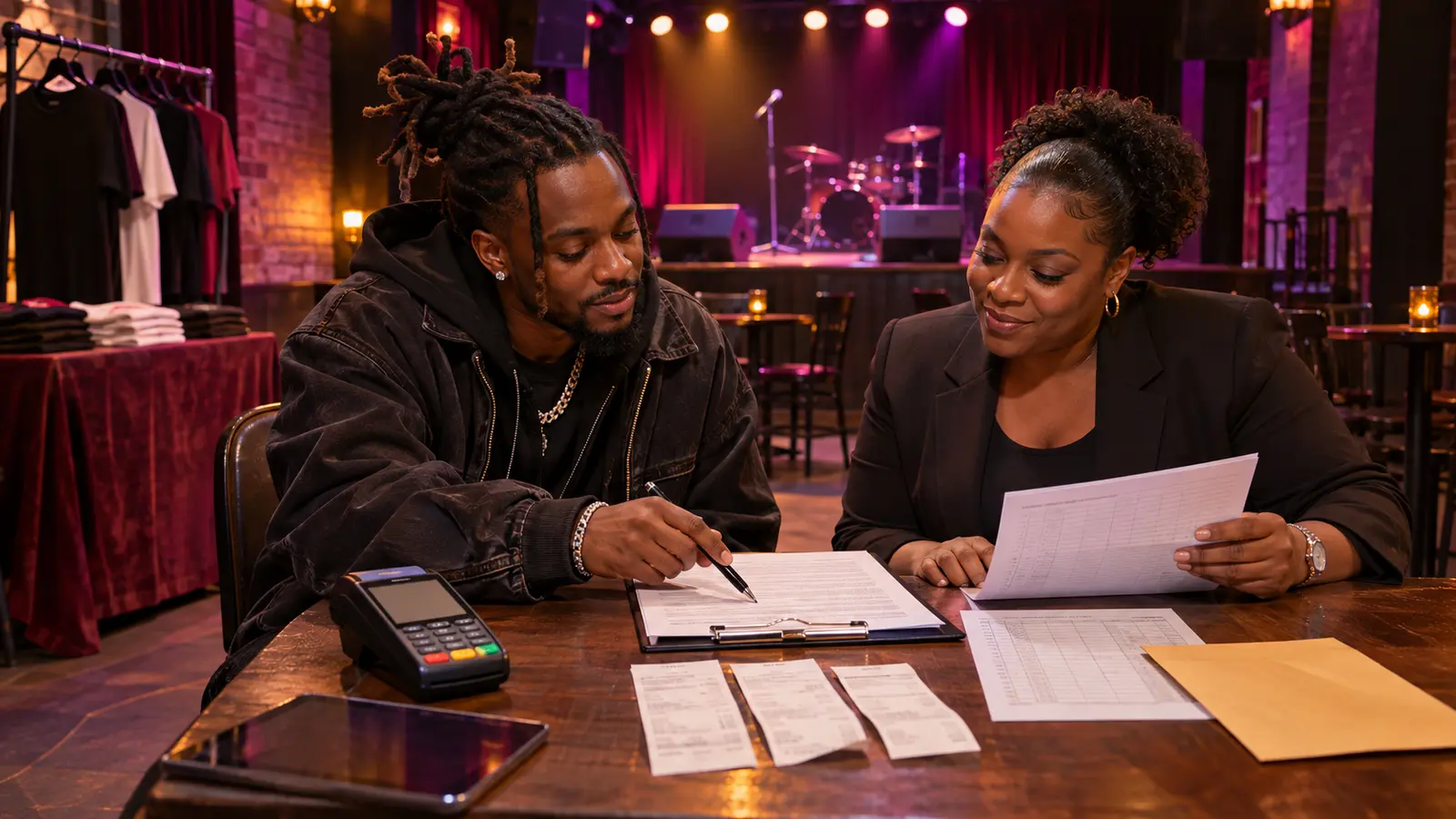
A live-show settlement sheet is the shared calculation that turns the agreed deal into the amount paid after the performance. It should let the artist representative and venue follow every number from the contract, ticket report, and permitted expenses to the final balance.
Build the sheet before show day, then fill it with verified figures afterward. This workflow is a bookkeeping aid, not legal or tax advice. The signed agreement controls; if the wording or calculation is unclear, pause and get appropriate professional guidance instead of inventing a formula at the table.
Copy the deal exactly
At the top, record the artist, venue, city, event date, promoter, capacity, age restriction, settlement contact, and contract version. Then write the compensation structure exactly as agreed: fixed guarantee, percentage of an agreed ticket basis, guarantee plus percentage, the full door, or a defined profit split.
Do not shorten “80 percent after agreed expenses” to “80 percent.” Name the gross base, threshold, percentage, cap, tax treatment, and every allowable deduction. The Musicians' Union notes that live deals can use several structures and warns artists to clarify deductions such as production or promotion costs in advance.
Build the ticket reconciliation
Use separate rows for advance paid tickets, walk-up sales, guest-list admissions, complimentary or promotional entries, refunded tickets, and any ticket type with a different price. For each paid category, record quantity, face value, fees included or excluded under the deal, and extended total.
Attach or reference the box-office report rather than retyping an unsupported total. Compare tickets issued, scanned, refunded, and reported at the door. A variance is a question to resolve, not an accusation. Note the explanation and who confirmed it.
Separate gross, deductions, and artist pay
Give each allowed deduction its own row with amount, source document, and contract clause. Do not add a room rental, sound engineer, lighting, hospitality, advertising, card fee, ticketing fee, or tax merely because it commonly appears at other shows. If it was not part of this agreement, flag it for discussion.
Show the math in stages: agreed gross basis, total permitted deductions, net basis, artist percentage, guarantee comparison, bonuses, deposits already paid, and balance due. If the agreement pays the greater of a guarantee or percentage, calculate both visibly and label the selected result.
Keep merchandise separate
Reconcile merchandise on its own section or companion sheet. Record the opening count, additions, closing count, units sold, price, gross sales, documented refunds, venue percentage if contractually agreed, card-versus-cash totals, and who received the proceeds. The IHHR show-day merch count workflow provides a practical inventory trail.
Do not mix merch revenue into ticket settlement unless the contract explicitly does so. A separate subtotal makes both sides easier to audit and keeps a ticket dispute from obscuring inventory.
Confirm payment and signoff
Record the final amount, currency, payment method, payee, transfer reference or receipt number, payment time, and any remaining due date. Both representatives should review the calculation and sign or approve the same version. A signature acknowledges the recorded settlement; it should not be used to conceal a disputed line.
If a figure remains unresolved, mark it as disputed, state the amount, identify the supporting document needed, and set a named follow-up owner and date. Keep the contract, ticket report, invoices, settlement sheet, payment confirmation, and revised sheet together in a dated folder.
Run a five-minute closeout
Before leaving, verify the event name and date, recount the ticket categories, recheck formulas, match deposits, confirm the payee, and export a locked PDF. Send the same copy to both sides. Never rely on a photographed screen when the underlying report can be attached.
For a process question that can help other performers, share the general workflow—not private deal terms or financial documents—in the reviewed IHHR artist forum.
References: Musicians' Union, Standard Contracts; Musicians' Union, Live Engagement Standard Contracts; Musicians' Union, Live Engagement Rates of Pay. Checked November 6, 2026.
Press Play above to hear IHHR or visit the official Live365 station page.