
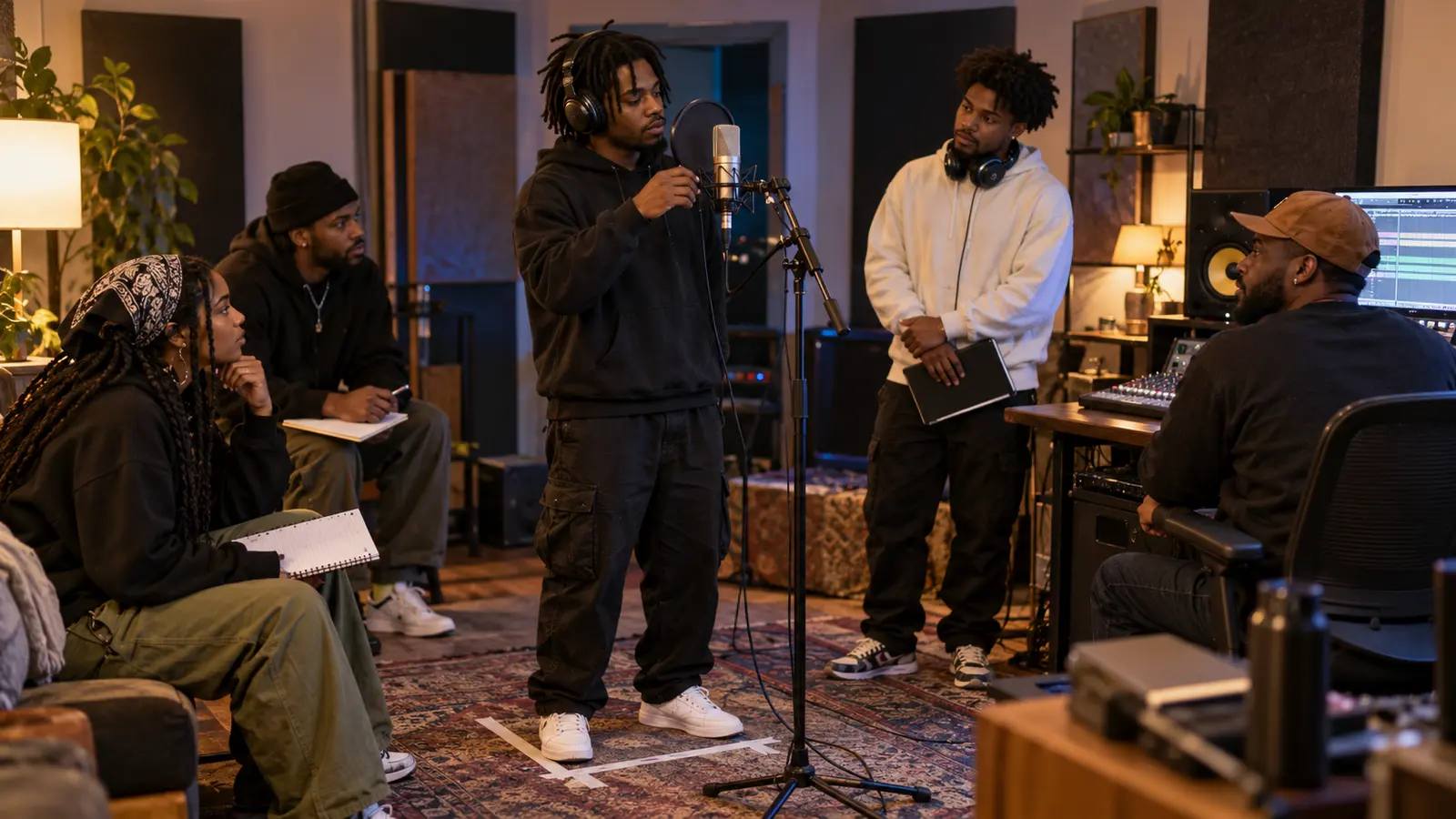
A cypher can sound spontaneous while still benefiting from a precise session plan. The goal is not to flatten each rapper into the same performance. It is to give every voice a dependable beat, microphone position, handoff, file record, and approval moment.
Lock the session version before anyone records
Name the beat file, arrangement, key if known, tempo if confirmed, sample rate, bit depth, and count-in. Decide whether the recording will be one continuous performance, separate verse takes assembled later, or a documented combination of both.
If the beat came from a producer or store, complete the beat-license release check before treating it as cleared. Do not invite several artists onto material whose permitted use, composition terms, or sample status is still unknown.
Write a fair running order
List every performer in order with a target verse length, entrance cue, planned handoff, and any shared hook or closing section. Decide how an absence, late arrival, or requested rewrite will be handled before the clock is running.
Fair does not always mean identical bar counts, but differences should be visible and agreed. Do not quietly shorten one person’s section during editing or add an unapproved performer after the session.
Use one repeatable microphone position
Mark the vocalist’s starting position with floor tape and note the microphone, polar pattern, pop filter, input chain, gain range, and headphone mix. Shure’s current vocal-recording guidance emphasizes preparation, microphone choice, and technique; its SM7B guide, for example, gives a one-to-six-inch working range for that specific microphone. Follow the manual for the microphone actually in the room rather than copying a distance from unrelated gear.
Ask each rapper to deliver a short level-check passage at performance energy. Adjust for that voice without asking the performer to imitate the previous person. Preserve headroom and listen for plosives, room noise, clipping, headphone bleed, and clothing or jewelry noise.
Choose a take policy everyone understands
Set a practical first-pass limit, then reserve time for pickups. Name takes aloud or in the session notes so the engineer and performer agree on what was captured. A useful callout identifies performer, section, and take number without recording private commentary into the session.
When comping is allowed, state whether the artist approves individual line edits, a complete comp, or both. Keep an untouched full take. Do not use an offhand warm-up, voice imitation, or background conversation as releasable material.
Plan transitions as performances
Record a clean lead-in and tail around each verse. If one rapper finishes a phrase that another answers, rehearse the overlap and capture a joint pass when possible. Decide whether ad-libs belong to the current verse, the next entrance, or a separate group layer.
Use a simple cue sheet with time or bar location, performer, main take, pickup, and transition note. This keeps the session musical without forcing the engineer to remember every decision.
Separate files and approvals by performer
Label tracks with performer, role, section, microphone or chain when useful, and take status. Export aligned files from the same start point when the project moves to another mixer. The rap vocal-stem guide explains how to preserve dry, processed, lead, double, and ad-lib choices without losing alignment.
Before anyone leaves, confirm name spelling, performer credit, songwriting discussion status, preferred contact route, and whether another approval pass is required. A session attendance list is not a split agreement, and a recorded verse is not automatic permission for every future edit or use.
End with a five-minute playback and recap
Play the full sequence at a comfortable level. Each artist should identify missing words, unwanted noise, transition problems, or the wrong selected take. Log fixes and the person responsible; do not promise a final mix while unresolved pickups remain.
Share collaboration opportunities—not private session files—in IHHR’s reviewed artist forum. Continue through The Signal, join the IHHR newsletter, or return to the live stream.
References: Shure, How to Record and Mix Vocals; Shure SM7B User Guide. Checked October 24, 2026.
Press Play above to hear IHHR or visit the official Live365 station page.