A beat purchase is not finished when the audio download arrives. Before release, connect the exact instrumental to the exact agreement, identify what that agreement permits, and resolve every blank or conflicting detail with the producer.
This is an organization checklist, not legal advice or an interpretation of a particular contract. Licenses vary, platform summaries can be incomplete, and a lawyer may be appropriate when ownership, samples, exclusivity, or a meaningful commercial release is involved.
Match the agreement to the exact beat
Record the beat title, producer name, store or direct-sale source, purchase date, receipt, agreement version, and delivered filenames. Keep the original PDF or downloaded terms rather than relying on a product-page screenshot that may later change.
Confirm that the instrumental used in the final session is the licensed version. If the producer sent a revised arrangement, stem update, or untagged file after purchase, ask whether the same agreement covers it and save the answer with the project.
Read the granted uses, not just the license label
Do not assume “non-exclusive,” “unlimited,” or “exclusive” has one universal meaning. BeatStars’ current guidance says producers manage their own contract terms and that specifics can vary. Its general description distinguishes non-exclusive licenses, which allow use under stated terms while the producer can continue licensing the beat, from exclusive agreements that address transferred rights and the underlying composition separately.
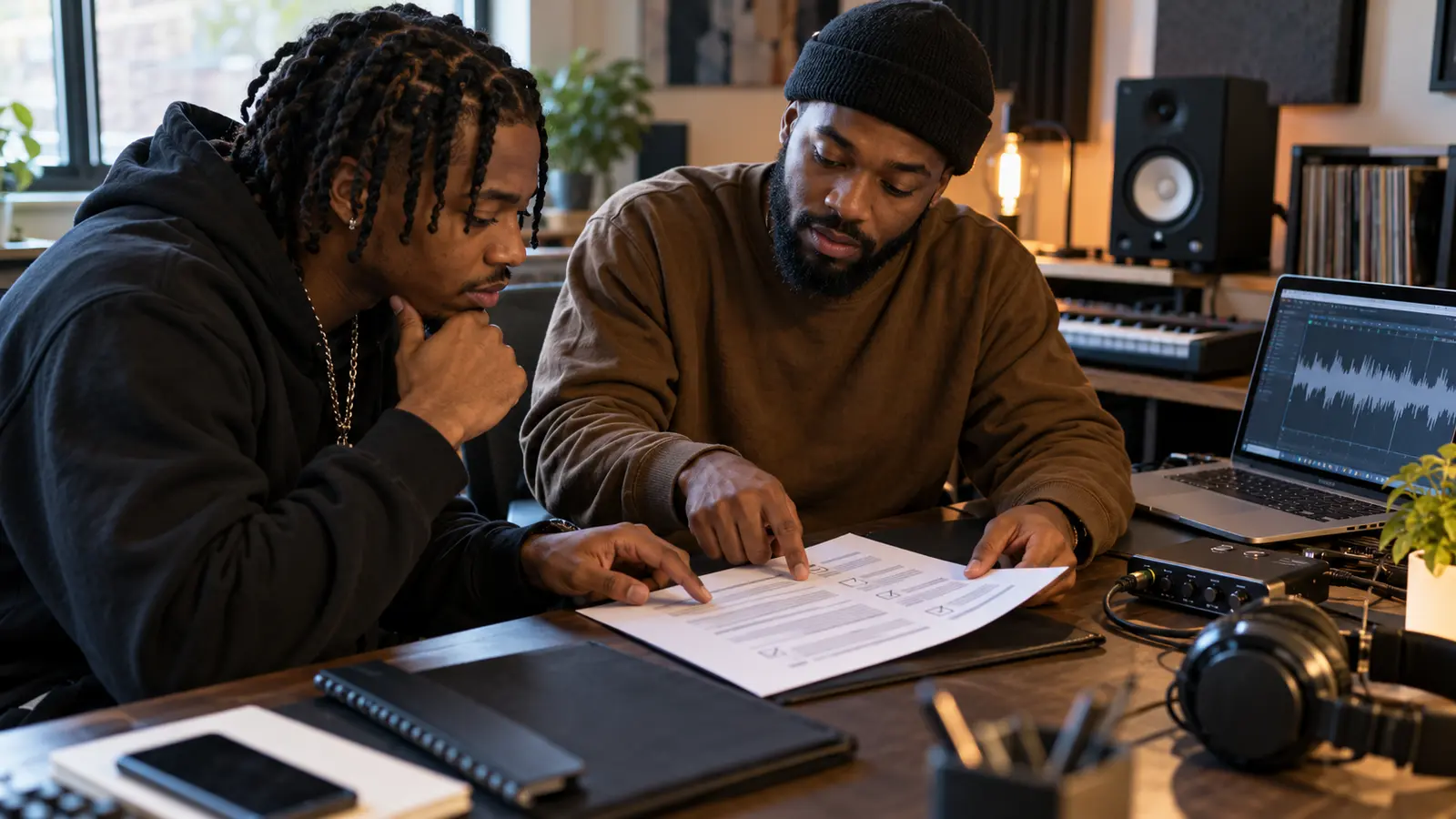
Read the operative document for permitted distribution, streaming, downloads, video, live performance, broadcast, monetization, synchronization, and promotional use. Write “yes,” “no,” “limited,” or “unclear” beside each use your release plan actually needs.
Pull every limit into one page
List numerical caps, territory, term length, renewal rules, upgrade paths, and any restriction tied to a platform or release type. Add a reminder well before a term ends or a measurable limit approaches. Do not depend on a distributor dashboard to warn you about a private contract limit.
If a phrase is undefined or two clauses conflict, ask the producer or seller in writing before release. Do not rewrite the agreement in your notes; keep your plain-language summary beside the original and mark unresolved questions clearly.
Separate the composition from the recording
The U.S. Copyright Office explains that the musical work—music and lyrics—and the sound recording are separate protected works that can be owned and licensed separately. A beat arrangement can involve composition terms even when the vocalist is creating a new master recording.
Record the agreed songwriting share, publisher information if applicable, master terms, producer credit, and any royalty or revenue participation exactly as stated. Compare the names with the songwriting-split conversation guide before anyone submits registration or release metadata.
Ask directly about samples and collaborators
Do not treat “licensed beat” as proof that every sample, loop, musician, or co-producer issue is cleared for your use. Ask the seller what third-party material is present, what permission exists, and what the buyer must still handle. Save factual responses without turning them into promises the producer did not make.
If another performer joins the record, use the rap cypher recording-session plan to keep the beat version, performer order, files, and approval path consistent during the session.
Verify files, credits, and release metadata
Check whether the delivery includes the promised MP3, WAV, track stems, or alternate versions. Open every file, compare its duration and sample rate, and keep the producer’s original filenames in the archive even if the working session uses shorter copies.
Put the approved producer credit, legal or professional name, composition details, and contact route into the project’s metadata sheet. Do not invent a role because a distributor menu demands one; ask which credit and spelling the producer approved.
Close the check before promotion
Create a one-page release record: exact beat and agreement, uses needed, limits, term, credits and splits, delivered files, sample answers, unresolved items, and the person responsible for each next step. Mark the check complete only when the release plan fits the written permission.
When the rights and delivery materials are clear, IHHR’s sponsored Radio Promotion page explains available campaign packages; it does not promise rankings, listener counts, royalties, or sales. Ask general workflow questions in the reviewed artist forum, continue through The Signal, or listen at IHHR’s live player.
References: BeatStars, Content Licenses (Contracts) FAQs; U.S. Copyright Office, What Musicians Should Know about Copyright. Checked October 24, 2026.
Press Play above to hear IHHR or visit the official Live365 station page.