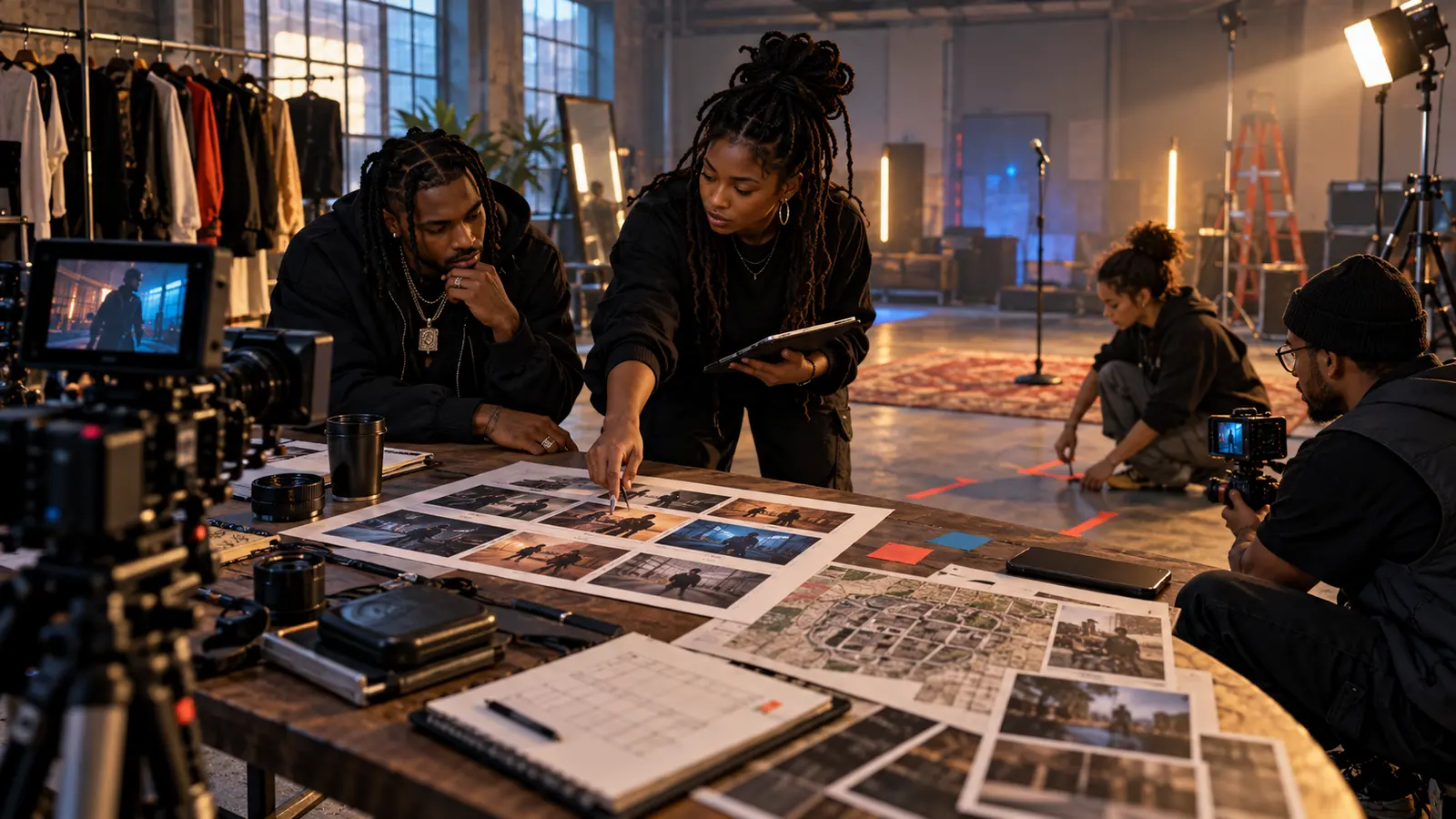
A one-day music-video shoot becomes expensive when the concept exists only as a mood and the crew discovers the coverage plan on location. A shot list translates the song, treatment, and schedule into specific camera setups the director can capture and the editor can actually use.
This workflow does not guarantee views, press, playlisting, radio play, sales, or audience growth. Confirm location, appearance, music, artwork, vehicle, prop, and brand permissions for the real production, and obtain qualified legal or safety advice when the shoot requires it.
Write the video's job before its images
Start with one sentence: introduce the artist's performance identity, tell a compact story, visualize one emotional turn, document a live moment, or create reusable release assets. Add the audience, destination, master aspect ratio, planned alternate crops, song version, and release deadline.
Adobe's current production guide describes preproduction as the stage for goal setting, concept development, storyboarding, scheduling, budgeting, locations, and hiring. On a small music video, those same questions still matter even when one person fills several roles.
Lock the exact audio version
Give the playback file a stable name and record its duration. Mark intro, verse, hook, bridge, beat switch, and outro timestamps. If a clean version or shortened edit will be used, decide before building the list. A crew cannot synchronize performance coverage to a moving target.
Keep the final master and performance playback distinct using the performance-track version guide. Test the playback device, cable, speaker, offline backup, and battery plan before leaving for the location.
Break the concept into story beats
Write one visual action for each meaningful section: arrival, setup, first performance, conflict, reveal, change of location, final image. Do not assign a new location to every musical change. One controllable space can feel different through blocking, lens choice, lighting, wardrobe, and camera position.
Sketch a basic storyboard for moments that depend on composition or continuity. Adobe defines a storyboard as a visual translation of a script and emphasizes that even simple drawings work when they communicate the production information and emotion clearly.
Create one row per camera setup
Use columns for shot ID, song time, scene, location, subject, framing, angle, movement, action, playback need, props, wardrobe, lighting, audio note, estimated setup time, priority, and status. Add a thumbnail or storyboard reference only when it makes the row easier to scan.
Adobe's shot-list guidance recommends recording scene and shot numbers, location, shot type, camera angle, movement, description, and audio notes. Keep the list usable under pressure; a paragraph of vague visual adjectives is not a camera instruction.
Secure minimum performance coverage first
For each performance location, plan a complete master take, a medium take, and selected close coverage for important sections. Then add deliberate details, movement, cutaways, and experiments. The master gives the editor continuity; details give the sequence pace and emphasis.
Do not assume a beautiful close-up can replace the missing transition into a hook. Mark which shots must cover an entire section and which exist for only a bar, gesture, or prop interaction.
Group shots by setup, not song order
Arrange the day around location, lighting, wardrobe, camera position, and performer availability. Capture everything possible from one setup before moving lights and rebuilding. Adobe notes that planning by camera setup can reduce repeated moves and help the crew leave a location with complete coverage.
Create a call time, setup window, performance blocks, meal and rest plan, location cutoff, breakdown time, and travel buffer. Give the hardest or least replaceable setup an early slot. A sunset shot cannot be moved to midnight because earlier coverage ran long.
Mark priority and the safe fallback
Label shots A for essential, B for strong support, and C for optional. For every difficult move, weather-dependent exterior, special prop, or guest appearance, write a simpler fallback that serves the same story beat. The fallback should be shootable with the confirmed people, gear, time, and location.
If the project needs a budget cap or package comparison, set that limit before hiring and use IHHR's goals-and-budget campaign finder only as a disclosed sponsored-service selection aid. It does not predict outcomes, and checkout remains disabled.
Protect people, property, and continuity
Assign one person to track releases, location rules, hazards, weather, first-aid access, transport, batteries, media cards, and data backups. Do not plan unsafe traffic shots, weapons, rooftops, pyrotechnics, drones, or restricted-property access without lawful permission, qualified operators, and appropriate controls.
Photograph wardrobe, props, hair, lighting, and performer positions between setups. Continuity notes should identify what the editor needs, not collect unrelated personal information.
Log takes and hand the editor evidence
During filming, mark the take number, camera file, usable song range, focus or performance issue, director's preference, and whether the essential setup is complete. Back up cards to two verified destinations before formatting anything. Preserve the original media and create editing copies separately.
Deliver the locked audio, shot list with take notes, media map, project settings, permissions, graphics, credit spellings, crop requirements, and deadline. Pair the finished visual story with the current press-kit workflow. IHHR's sponsored Artist Spotlight is a separate paid storytelling offer with disclosure and no promise of endorsement, rankings, streams, royalties, sales, or listener totals.
Discuss general production planning in the reviewed artist forum without posting private footage or contact details. Continue through The Signal for more independent-artist operations guides.
References: Adobe, Video production: A beginner's guide; Adobe, How to make a shot list; Adobe, How to get started on storyboarding. Checked November 1, 2026.
Press Play above to hear IHHR or visit the official Live365 station page.