
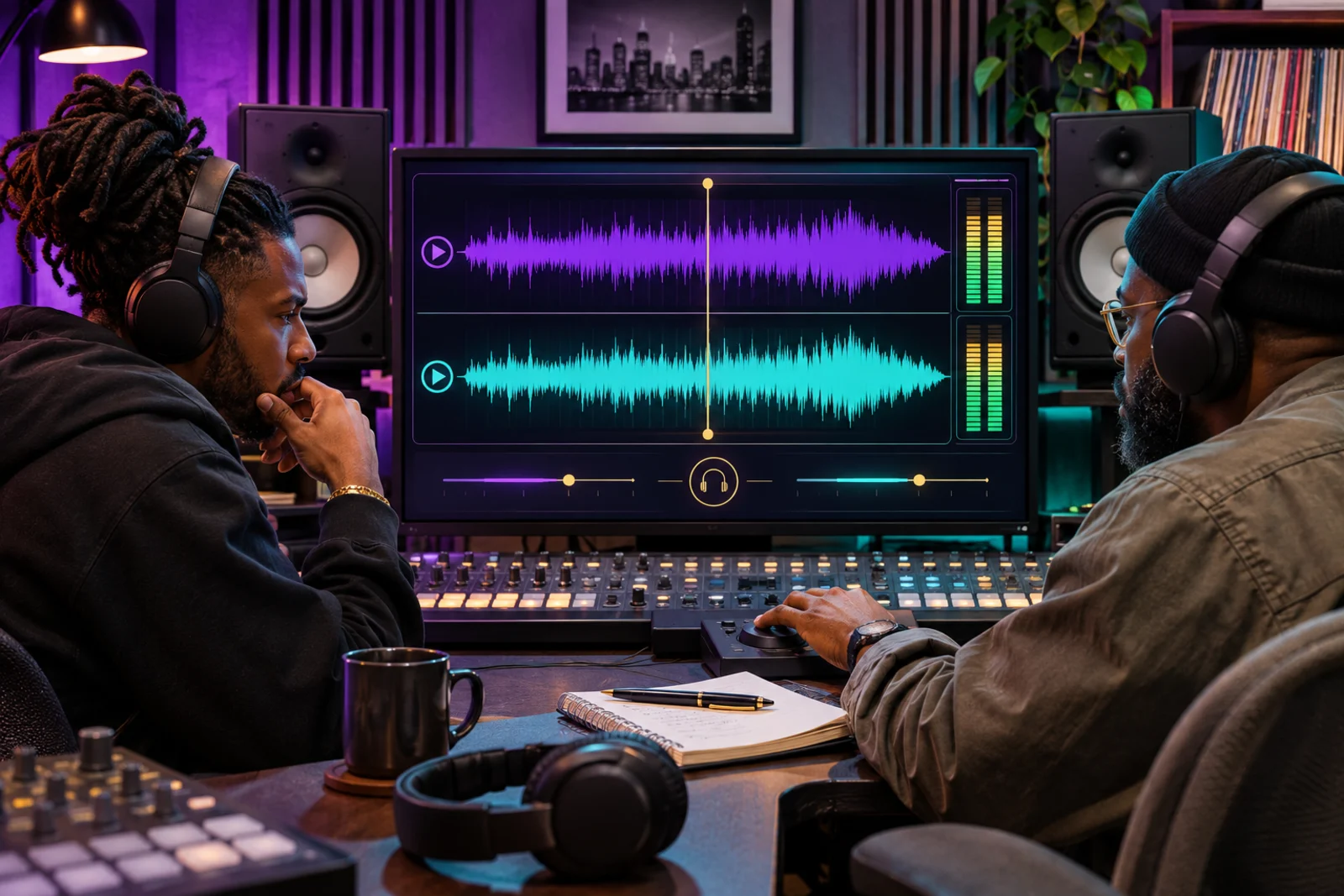
A louder preview can seem more exciting even when it is not the better master. Before choosing an AI-assisted mastering result, compare it with the original mix at a similar perceived loudness. The aim is not to make the files identical or to pick a universal loudness number. It is to reduce level bias so you can hear changes in balance, dynamics, transients, distortion, space, and emotion.
Keep the unmastered mix, every preview, and all measurements as separate files. Adjust only the audition gain for the comparison; do not overwrite or normalize the source exports.
Start with the same source mix
Confirm that every candidate came from the exact approved mix, sample rate, bit depth, channel layout, and start time. Compare duration and file identity. If the vocal, limiter, fade, edit, or mix revision changed before one candidate was made, the test is no longer isolating mastering.
Use the IHHR mastering handoff checklist to lock the source, notes, headroom, filenames, and approval route before generating previews.
Align the files before listening
Place the original and preview on separate tracks with their starts aligned. Check for added silence, trimmed attacks, changed fades, polarity differences, or processing delay. Match the same musical passage and avoid comparing a quiet verse in one file with a hook in another.
Bypass all extra plug-ins on the comparison bus. Route both tracks through the same monitoring path and switch between them without overlap. If the system introduces clicks or delay when switching, render a safe comparison session or use a tool designed for blind A/B playback.
Measure integrated loudness, then match by audition gain
Measure the full comparable program with a meter based on ITU-R BS.1770. Note integrated loudness and true peak for each file. Calculate the approximate difference, lower the louder candidate in the comparison path, and remeasure the monitored output. Preserve the original file unchanged.
The European Broadcasting Union's R 128 recommendation uses a -23 LUFS broadcast target, Loudness Range, and maximum permitted true peak. That is useful technical context, not a universal target for every music master or platform. The appropriate delivery specification depends on the release destination, genre, artistic intent, and distributor requirements.
Use your ears to finish the match
Meters make a repeatable starting point, but two tracks with the same integrated value can still feel different because of spectrum, transients, density, and arrangement. Switch between candidates at a moderate listening level and make small audition-gain adjustments until neither consistently wins just by sounding louder.
Turn away from the screen or randomize the file labels when practical. Repeat short comparisons rather than listening until fatigue makes every difference feel important. Keep the switch interval long enough to hear the musical consequence, not only the first impact.
Compare musical consequences in a fixed order
- Vocal: intelligibility, sibilance, depth, and stability against the beat.
- Low end: bass note definition, kick relationship, and unwanted pumping.
- Transients: snare, percussion, consonants, and attacks that may be softened or exaggerated.
- Tone: harshness, dullness, midrange crowding, and stereo balance.
- Dynamics: verse-to-hook contrast, microdynamics, and breathing room.
- Artifacts: clipping, distortion, noise changes, phase effects, or unstable imaging.
- Ending: fade, reverb tail, and any silence trimmed by processing.
Check at least one revealing passage, one dense passage, and the quietest meaningful section. Then listen from start to finish without switching. A master that wins a five-second impact test can still flatten the song's long-form movement.
Check several playback systems without chasing all of them
Use trusted monitors or headphones first, then a small speaker, phone, car, or another familiar system. Keep notes about translation rather than remastering independently for every device. If a problem appears everywhere, return to the mix or mastering decision. If it appears on one unusual system, investigate before compensating.
Document the AI-assisted step and human approval
Record the service or tool, version, date, selected style or reference, settings, source checksum, output name, loudness and true-peak readings, audition-gain offset, reviewer, and decision. The IHHR AI music session log provides a structure for keeping the transformation and approval trail together.
Do not treat a meter, model score, or provider label as final approval. Confirm rights, disclosure needs, data handling, and delivery specifications separately. If the comparison reveals that the original mix is not ready, fix the mix and create new previews from the new approved source instead of stacking corrections onto an obsolete master.
References: ITU-R BS.1770, Algorithms to measure audio programme loudness and true-peak audio level; European Broadcasting Union, R 128; Audio Engineering Society, Loudness Project. Checked November 16, 2026.
Press Play above to hear IHHR or visit the official Live365 station page.