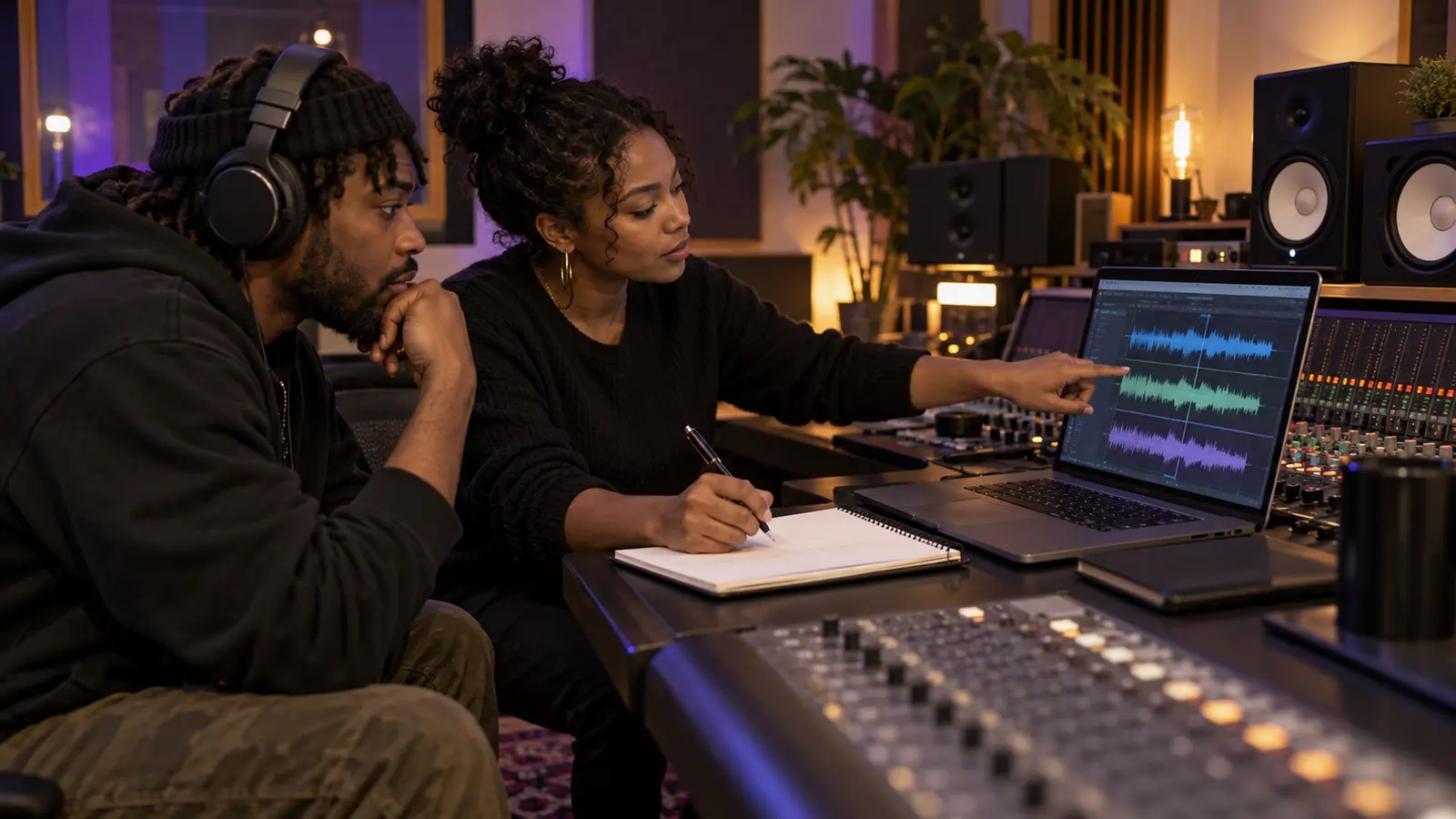
An AI-assisted mix still needs a person who can say what the release should sound like, what material was authorized, and which exact file was approved. “The tool chose it” is not a useful handoff when versions conflict or a voice, stem, or setting raises a question.
This is a project-control workflow, not legal advice and not a claim that one documentation method determines copyright ownership. Tool terms, contracts, licenses, consent, and law can all affect a release.
Write the human brief before generating options
Describe the intended vocal priority, low-end balance, dynamics, space, reference context, and delivery format in ordinary language. Identify what the tool may change and what must remain untouched. A brief should let the team judge an output, not merely record a prompt.
Define the source set by filename and date. Confirm that the session is using approved vocals, performances, samples, and stems. Do not upload a collaborator’s isolated voice or private session material to a service without authority to do so.
Assign one decision owner and named reviewers
Record who prepares versions, who gives creative notes, who checks technical delivery, and who has final approval. The final approver can consult everyone without turning a group chat reaction into accidental consent.
If a synthetic or transformed voice is involved, pause for an identity and permission review using the AI-generated voice checklist. Similarity to a real person is not just another EQ choice.
Keep each output traceable
Give every candidate a stable ID. Log the source version, tool and feature used, date, relevant settings or prompt, export format, and operator. Preserve the unprocessed input and the human-edited session separately.
The AI music session-log guide provides a compact record for inputs and decisions. Do not overwrite a rejected output with an approved filename; retain enough history to explain what the final file came from.
Compare complete passes under consistent conditions
Level-match as reasonably as possible so louder does not automatically feel better. Listen on the same monitors or headphones, at a comfortable level, and compare the same passage first. Then play every candidate from beginning to end before approval.
Check lead-vocal clarity, sibilance, low-end translation, transitions, fades, vocal effects, noise, and any section where the arrangement changes. Use the mix-revision note method to identify location, observation, desired result, and priority instead of sending vague reactions.
Record the human choice, including rejections
For each version, write accepted, rejected, or revise, followed by one reason tied to the brief. Then document any human edits after the AI step: level rides, mutes, automation, processing, arrangement changes, or restored source material.
The U.S. Copyright Office’s 2025 AI report distinguishes assistive uses from cases in which a system makes expressive choices and says copyrightability depends on the nature and extent of human contribution, assessed case by case. That legal analysis is one reason a truthful creation record can matter, but this checklist does not decide whether any particular work is protectable.
Freeze the approved master and disclosure note
The approver should name the exact filename, checksum or locked delivery location, date, and intended release version. After approval, do not silently rerun the tool or replace the file. A new output requires a new review.
Prepare an accurate internal description of how AI was used and any public credit or disclosure required by the distributor, platform, contract, collaborator agreement, or project policy. Do not call a fully generated element “human-made,” and do not exaggerate an ordinary assistive process for promotion.
Use a seven-line approval record
- Project and song version.
- Approved source set.
- Tool and feature used.
- Candidate version reviewed.
- Human edits and rejected options.
- Consent or identity checks completed.
- Final approver, filename, and date.
Discuss responsible production workflow in the reviewed artist forum without sharing private stems or personal information. Continue through The Signal, or compare the result while listening at IHHR’s live player.
Reference: U.S. Copyright Office, Copyright and Artificial Intelligence, Part 2: Copyrightability, January 2025; checked October 23, 2026.
Press Play above to hear IHHR or visit the official Live365 station page.