
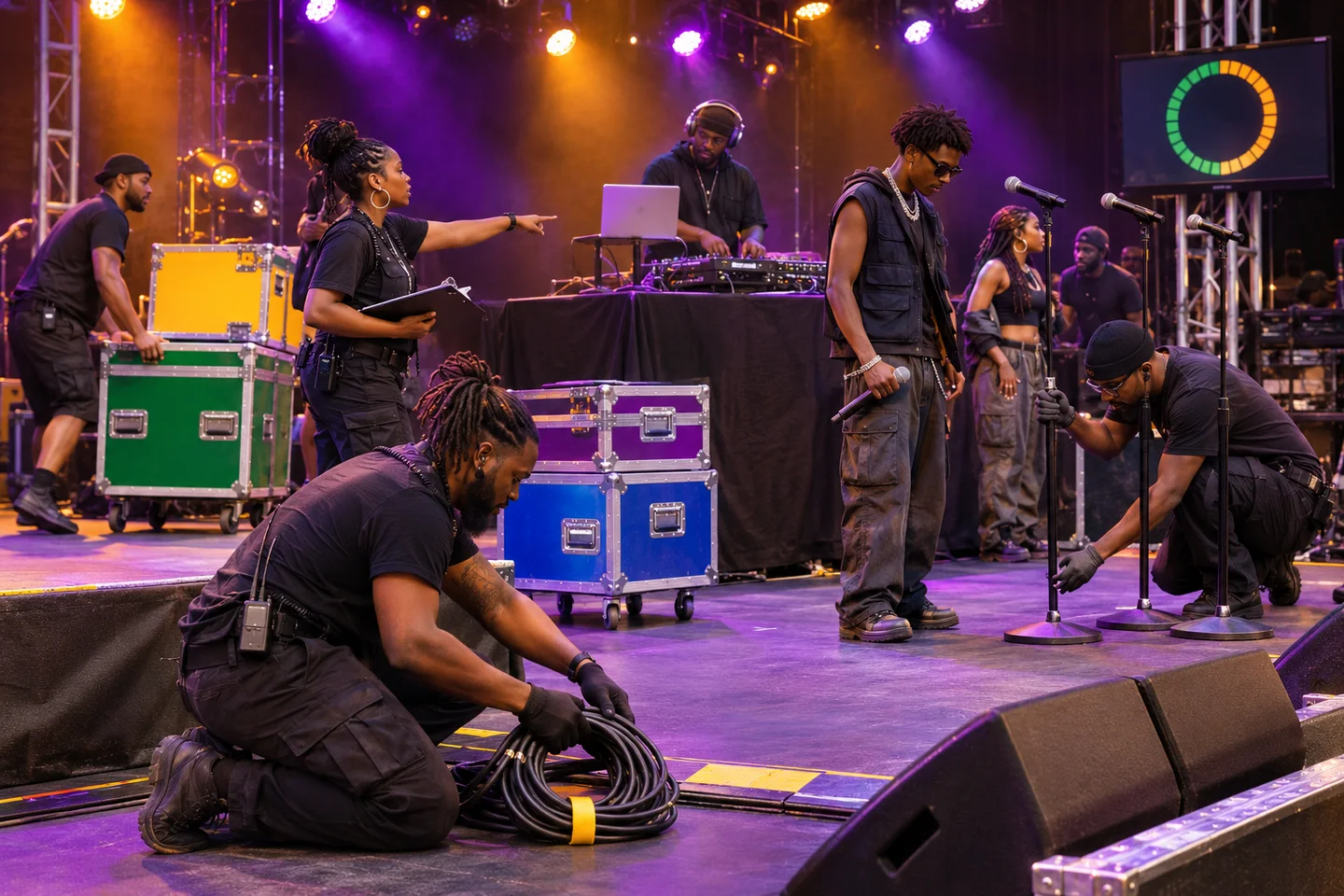
A changeover plan covers the minutes between one act leaving the stage and the next act being ready to perform. For an independent rap show, that may include a DJ or playback device, wired or wireless microphones, in-ear or wedge monitoring, guest vocalists, props, and several people trying to move through the same space.
The plan should reflect the venue's actual time, equipment, crew, and safety rules. Do not copy a festival timetable into a small room. Ask the production contact what stays in place, what must move, who controls the audio system, and how the stage will be declared ready.
Start with a shared stage baseline
Draw a simple stage map with front, rear, stage left, and stage right. Mark the house microphone positions, monitors, DJ table, power, playback connection, stairs, and the clear path for people and cases. Label what belongs to the venue and what belongs to each act.
Keep the baseline as consistent as the lineup allows. Moving the same monitor and microphone stand for every act wastes time and creates more chances for a missed cable or unsafe obstruction.
List every move in order
Create a numbered handoff rather than a pile of simultaneous instructions. For example: outgoing artist clears personal items; stage lead confirms the path; playback operator disconnects the outgoing source; microphone lead sanitizes or swaps the vocal mic; incoming DJ connects; audio lead line-checks; stage lead confirms ready.
Assign one owner to each move and one person who can call a stop. Avoid vague labels such as “team.” A task without a named role becomes everybody's assumption and nobody's responsibility.
Time the plan from the venue backward
Use the actual changeover window supplied by the promoter or venue. Reserve a meaningful portion for the line check and problem solving instead of spending the entire window arranging gear. Shure's festival-mixing guidance emphasizes knowing the time limit, prioritizing the console, preserving time for line checking, and keeping communication open with the stage.
Run the sequence in rehearsal with a stopwatch. Record the normal time, not the fastest lucky attempt. Add a small buffer and identify the task that can be simplified first if the schedule slips.
Standardize playback and file names
Every act should identify the primary playback source, connection type, backup source, output level owner, and exact file or session. Use stable titles that distinguish the full mix, performance track, clean edit, and emergency two-track. Never test a mystery file through the main system with the room open.
The playback labels should match the approved release and show documents. Pair this plan with the IHHR track-title/version style guide before creating show exports so the performance file cannot be mistaken for the master.
Build a minimum line check
Write the shortest safe check that still confirms every live path: playback left and right, DJ output, each vocal microphone, guest microphone, monitor feed, and any instrument or talkback path. The audio lead should call each source; performers should answer with consistent test material at performance distance.
A line check confirms signal and routing. It is not a full rehearsal. If the act needs detailed monitor balancing or a scene rebuilt from scratch, schedule that work before doors rather than hiding it inside the changeover.
Protect the physical handoff
Give cases a parking zone away from exits and audience paths. Coil removed cables immediately, tape only with venue-approved materials, and keep drinks away from power and playback equipment. No artist entrance is worth a dark stair, loose cable, or rushed lift.
Confirm how wireless microphones and in-ear systems are coordinated. Do not power up an unapproved transmitter or change a house frequency during the handoff. Follow the venue audio lead's instructions and the equipment documentation.
Prepare a fallback state
Define the simplest version of the set that can begin safely: one tested playback source, one confirmed vocal microphone, and no nonessential prop or guest input. The stage lead—not a crowd countdown—decides when that state is ready.
If the primary source fails, stop and switch deliberately. Do not connect several devices at once or keep an unknown hot cable in hand while the system is open. Record what failed after the show so the next plan changes.
Run a final handoff review
- Confirm the stage baseline and clear paths.
- Name the owner of every disconnect, move, connection, and check.
- Verify primary and backup playback files.
- Practice the minimum line check.
- Rehearse the fallback state.
- Give every act the same written call and ready signal.
Settle inputs, monitors, stage positions, contacts, and backups with the venue before show day. General workflow questions can go to the reviewed IHHR artist forum, but keep private contact details, venue credentials, contracts, and unreleased files out of public posts.
A fast changeover is not frantic. It is a rehearsed sequence with fewer surprises, clear authority, and a safe minimum state. When the audience sees the next act begin on time, the invisible preparation has done its job.
Reference: Shure, Bryony October's Five Tips for Mixing at Festivals. Checked November 11, 2026.
Press Play above to hear IHHR or visit the official Live365 station page.