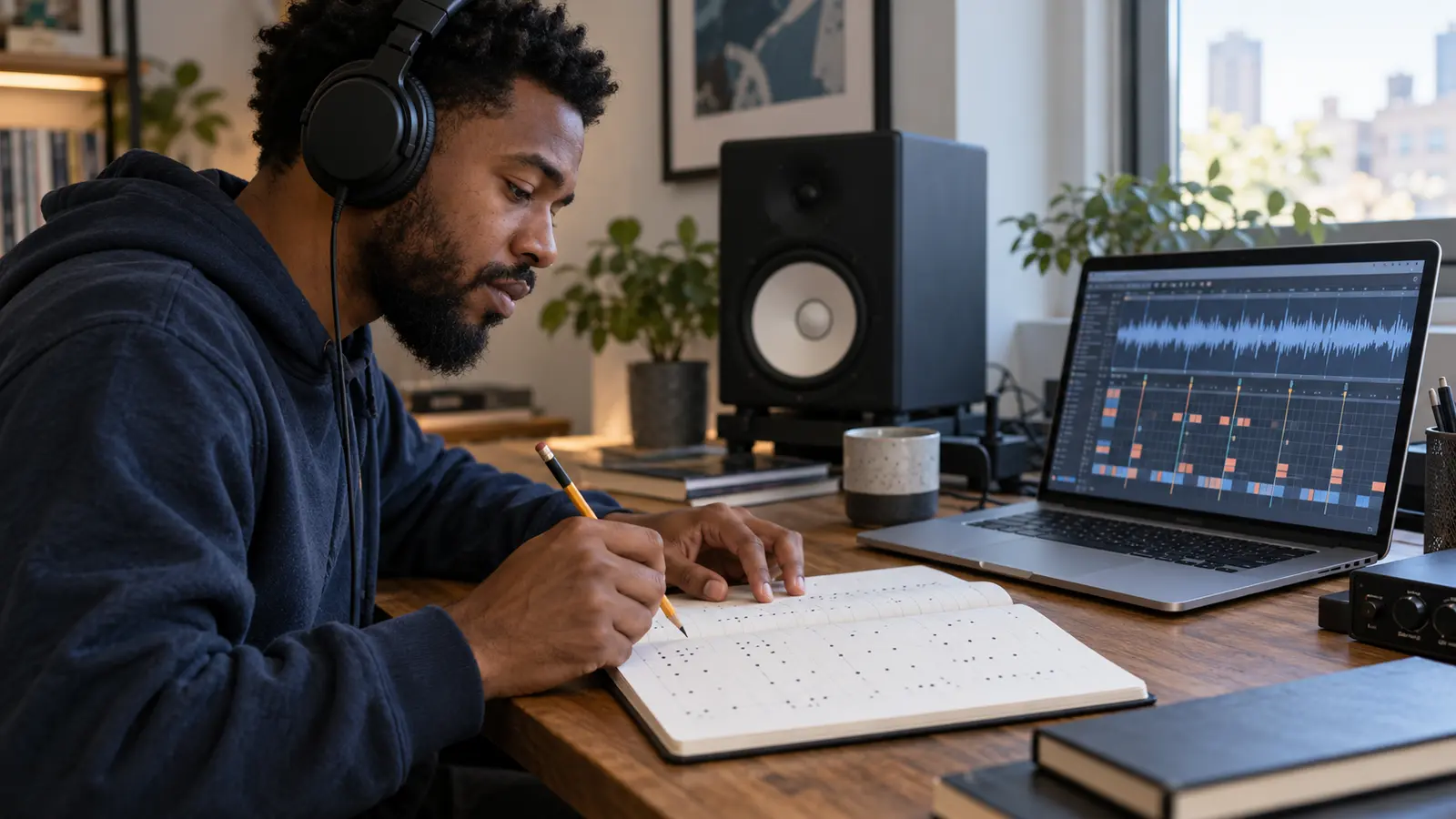
You do not need a lyric transcript to hear how a rapper shapes time. A small map of entrances, stressed endings, repeated sound locations, and silence can show whether a verse leans ahead, sits behind, or keeps changing its relationship to the beat.
This exercise analyzes placement in a lawfully accessed recording. Use dots, lines, and neutral syllables rather than copying lyrics. Do not guess at words you cannot hear or present your listening marks as an official transcription.
Find the pulse before following the voice
Play a short verse once while tapping the regular underlying pulse. Ableton’s Learning Music guide distinguishes a drum pattern from the repeating pulse listeners also call the beat, and defines tempo as the speed of that pulse in beats per minute. You do not need to calculate BPM here; you need a pulse you can return to.
If the pulse feels hidden, follow one stable drum or bass event for several bars. The drum-programming listening exercise helps separate the repeating pattern from small changes that can distract the ear.
Make a no-lyrics timing grid
Draw four boxes for a bar and repeat the row four times. Use a vertical mark when a line begins, a circle where a strong rhyme sound lands, and a dash for an audible rest. If you hear a rhyme inside a line and another at the end, give them different circle styles.
The page should not reconstruct the words. Its purpose is to preserve relative timing: early or late in the bar, clustered or spread out, repeated or displaced. Add an approximate playback timestamp so you can find the same passage again.
Track line openings before rhyme endings
On one pass, ignore the rhyme and mark only entrances. Does each new line begin in the same position, alternate between two positions, or spill across the bar line? On the next pass, mark the clearest repeated sound locations.
Comparing these two layers prevents a common mistake: assuming every line begins where its end rhyme lands. A performer can keep a consistent rhyme point while varying the pickup, or repeat an entrance pattern while shifting the rhyme deeper into the next bar.
Listen for space around the rhyme
Mark whether a repeated sound is followed by silence, an ad-lib, another syllable cluster, or the start of the next line. The empty space can make the rhyme feel heavier because the listener has time to register it. Use the negative-space guide to describe what remains when the voice thins or stops.
Do not treat density as skill by itself. A sparse pattern can create anticipation; a packed pattern can create momentum; either can lose clarity if the surrounding arrangement fights the voice.
Compare two sections from the same recording
Map four bars from an early verse and four from a later verse or post-switch section. Keep the same symbols. Ask what changes in entrances, rhyme positions, phrase length, and rests. If the backing changes, first use the beat-switch listening method to separate the new musical frame from the vocal response.
Write the comparison in audible terms: the second passage starts more lines before the downbeat, moves the strongest rhyme later, or leaves less space after each ending. Avoid claims about intention unless the artist has explained it in a reliable source.
Check your map at two speeds of attention
First replay the passage normally and follow the whole shape. Then loop a short section and verify individual marks. If the player offers slower playback, use it only to check placement; return to normal speed before describing feel, because speed changes the experience.
A useful final note has five lines: recording version, passage timestamp, entrance pattern, rhyme-location pattern, and effect on your listening. It says what you heard and where another listener can test it.
Share observations—not copied lyrics—in IHHR’s live chat. Browse more exercises in The Signal, join the IHHR newsletter, or return to the live stream.
Reference: Ableton Learning Music, Beat and Tempo, checked October 23, 2026.
Press Play above to hear IHHR or visit the official Live365 station page.