
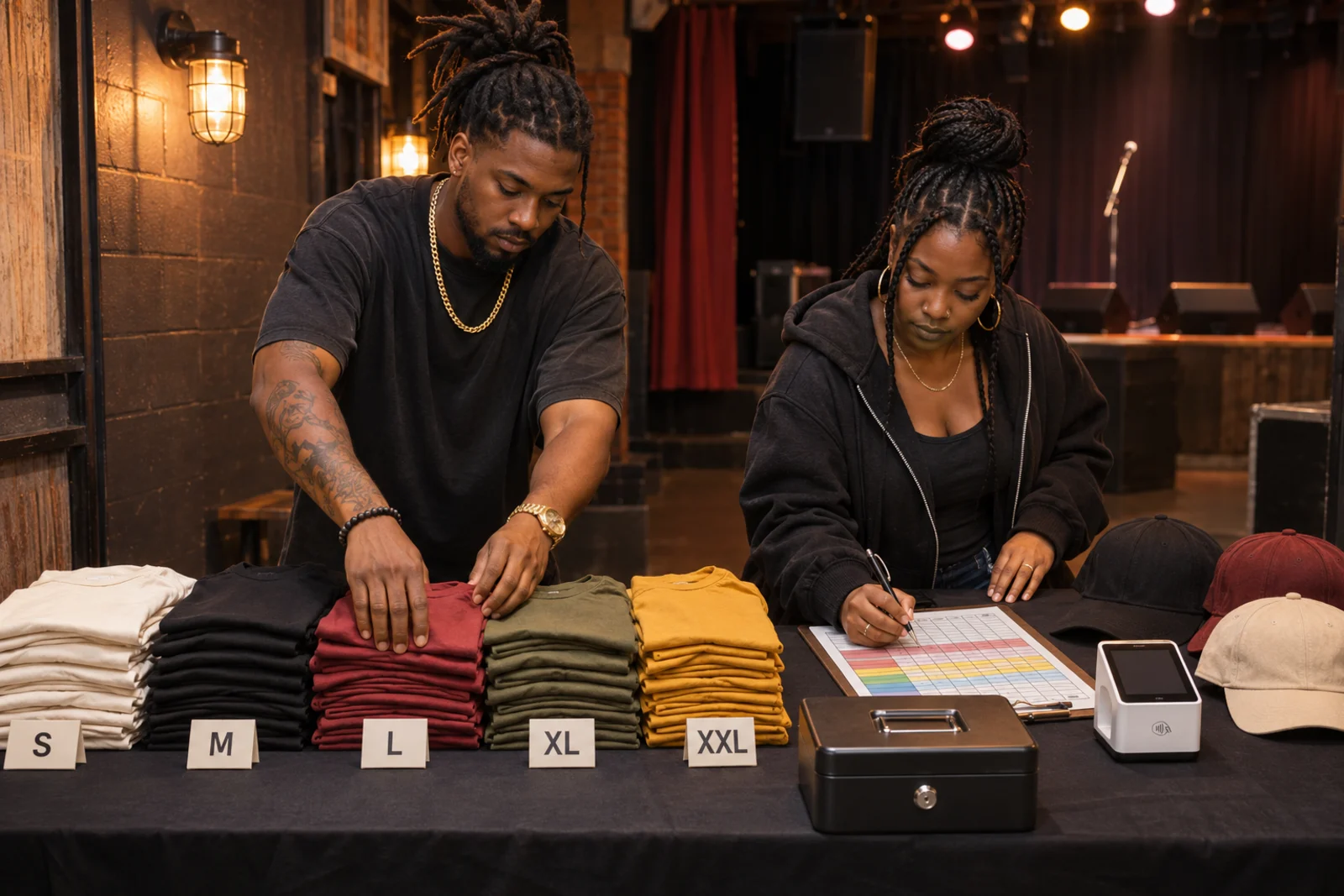
A merch table can look simple from the crowd: choose an item, pay, and go. Behind the table, one black hoodie in medium is not interchangeable with a black hoodie in large, a tour shirt, a signed copy, or a two-item bundle. If the team records only “shirt sold,” the count, price, and final settlement can separate from the physical stock.
A show-day SKU and price sheet gives each sellable variation one stable name and one approved price. It is an operations record, not tax, accounting, or inventory-platform advice. Use the payment, tax, refund, and recordkeeping rules that apply to the artist, venue, and location.
Define one sellable variation per row
Start with the exact choice a buyer receives: product, design or edition, color, size, format, and bundle contents. A blue small shirt and a blue medium shirt need different rows because one can sell out while the other remains. Square's item-options guidance likewise treats size and color combinations as item variations that can carry separate prices and SKUs.
Do not create rows for combinations the table does not actually stock. Mark display-only samples, artist holds, damaged goods, and giveaways separately so they cannot be mistaken for saleable inventory.
Assign a stable internal SKU
Build a short code the team can read under show pressure, such as product family, design, color, and size. Keep the pattern consistent and give every variation a unique code. Never recycle a sold-out SKU for a different item; an old sales record should still identify what the buyer received.
A SKU is the artist's internal stock identifier. It is not automatically a universal product code. Square distinguishes SKUs from manufacturer-assigned GTINs. Independent artists do not need to invent a GTIN just to make a useful show sheet; if a legitimate GTIN already exists, store it in a separate field.
Lock the price before doors
Give each row a base price, the currency, and a clear note about whether the displayed amount is tax-inclusive where that distinction applies. Record authorized bundles and discounts as their own rows or written rules. “Two for less” is not operational until the exact eligible items, price, and person authorized to approve an exception are defined.
Match the sheet, price board, point-of-sale catalog, and verbal table script. If a last-minute change is approved, date it, name the approver, and update every surface. Do not let the paper sheet show one price while the card reader shows another.
Connect the starting count
Copy each opening quantity from the IHHR show-day merch count sheet. Have two people verify high-value, signed, limited, or easily confused items. Record transfers from storage to the table instead of silently adding pieces mid-show.
Keep a separate count for comps, holds, replacements, and damaged items. Those movements reduce sellable stock but do not represent sales revenue. A short reason code makes the final difference easier to explain.
Record the sale at the variation level
Use the SKU on every cash tally, manual receipt, or point-of-sale item. If the device is offline, use a numbered fallback log with time, SKU, quantity, price, payment type, and operator initials. Never write full card numbers, security codes, or other payment credentials on the sheet.
Track voids, refunds, exchanges, and discounts as their own movements. An exchange from medium to large is not “no change”: one variation returns and another leaves. Record both sides so the closing count remains explainable.
Use checkpoints without stopping the table
Choose a low-traffic moment for a quick count of limited items and fast-moving sizes. Compare physical stock with the opening count minus logged movements. If the difference is material, pause that SKU, recount, and correct the record with initials rather than erasing the earlier entry.
Keep cash, card, and any other approved payment totals separated. The SKU sheet explains what moved; the payment totals explain how money arrived. They should reconcile, but they answer different questions.
Close the table into settlement
At close, count each variation, calculate units sold from documented movements, and multiply by the actual selling price—not automatically the base price when an approved bundle or discount was used. Reconcile gross sales, refunds, documented adjustments, payment totals, and cash on hand.
Carry the verified merchandise total into the IHHR live-show settlement sheet. Preserve the original show sheet, point-of-sale export, numbered fallback pages, and signed correction notes together. Do not rewrite the night into a cleaner story after the fact.
Run the ten-field table check
- Variation: exact item, design, color, size, format, or bundle.
- SKU: unique, stable internal identifier.
- Status: saleable, display, hold, comp, damaged, or sold out.
- Price: approved amount, currency, and display rule.
- Opening: verified starting quantity.
- Movement: sales, transfers, comps, exchanges, and refunds logged.
- Payment: approved method recorded without sensitive credentials.
- Checkpoint: limited and fast-moving stock rechecked.
- Closing: physical count and difference explained.
- Settlement: merchandise and payment totals reconciled and preserved.
The strongest sheet is not the most complicated. It lets a substitute seller identify the right item, charge the approved price, and leave the artist with a count that can still be understood the next morning.
References: Square Support, Create and edit item options and variations; Square Support, Automatically generate SKUs. Checked November 23, 2026.
Press Play above to hear IHHR or visit the official Live365 station page.