
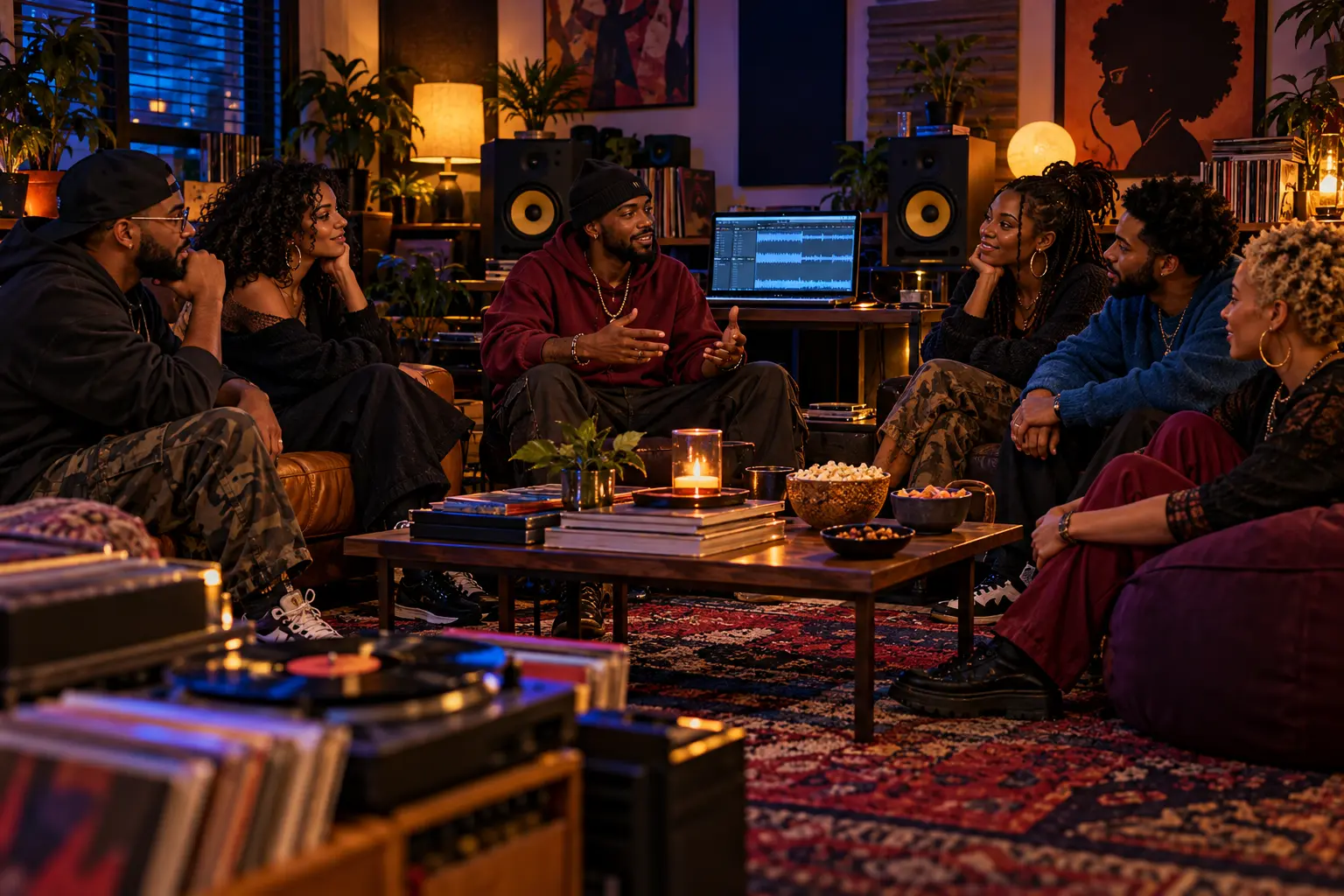
A useful listening session gives a release enough attention to be heard as a complete work. It can help an artist gather focused feedback before launch or help listeners understand an already released project more deeply. The difference between a session and background playback is structure: everyone knows why they are there, what they will hear, and when discussion begins.
Decide first whether the session is private artist feedback, a public release event, or a listener-led discussion of music already available. Those formats have different permission, playback, and feedback needs.
Get permission and define the audience
For unreleased music, ask the artist or authorized representative what may be played, who may attend, whether notes can be shared, and whether recording, screenshots, or social posts are allowed. State the boundary in the invitation and again before playback.
For released music, use an authorized source. Do not upload files, rebroadcast the session, or create clips merely because everyone can stream the record individually. The U.S. Copyright Office explains that a song's underlying composition and its particular sound recording are separate copyrighted works; questions about a public event or broadcast should be handled with the relevant rights holders or qualified guidance.
Choose one clear purpose
- Pre-release feedback: identify moments that confuse, drag, or connect before final decisions.
- Sequencing review: hear how the project opens, turns, and closes.
- Release celebration: center the artist's story without turning the room into an unsolicited critique.
- Listener study: practice hearing lyrics, production, vocal arrangement, or another agreed focus.
Put the purpose in one sentence. If participants arrive expecting a celebration and receive a critique workshop, trust disappears quickly.
Prepare the room and the playback
Use reliable speakers at a comfortable level, reduce unrelated noise, and test the exact source before guests arrive. Keep water, seating, and a visible running order available. If listening online, send the authorized link and ask each person to use their own lawful access rather than redistributing a private file.
Build a short agenda: welcome and permissions, uninterrupted playback, a quiet note minute, guided discussion, artist response if invited, and close. For an EP, one full pass may be enough. For a longer album, schedule a break so attention does not turn into endurance.
Give listeners useful prompts
Use prompts that produce evidence instead of verdicts: Where did your attention change? Which lyric or sound established the project? What changed between the first and final track? Which transition felt intentional, and what did you hear? Where did a vocal layer alter the emotion?
Ask participants to separate observation, effect, and suggestion. “The drums disappear under the final line, so the return feels bigger” is an observation and effect. “Keep the gap longer” is a suggestion. The artist can value the first without accepting the second.
Protect the artist from pile-on feedback
Use a facilitator who can invite quieter voices, stop repetition, and redirect personal judgments toward the work. One person speaks at a time. Ban comparisons that reduce the artist to a famous name, and do not diagnose motives or life experiences from a lyric.
For pre-release sessions, let the artist choose whether to answer after each track or only at the end. Silence does not mean agreement; it may mean the artist is listening. The IHHR feedback guide offers a fuller method for specific, respectful notes.
Hear the project as a sequence
Do not discuss every track so long that the group forgets the whole. After playback, ask for the beginning, turn, and ending. Our guide to hearing an independent rap album as a complete project can structure that conversation; artists building a shorter release can use the five-track EP sequencing guide.
If vocal arrangement is the focus, use the R&B vocal-production listening guide. If a mix handoff is still ahead, the artist can review the rap vocal-stem checklist after the session.
Close with ownership and next steps
Return notes to the artist in the agreed format. Do not publish quotes, reactions, screenshots, or attendance claims without permission. Thank participants, restate confidentiality when relevant, and let the artist decide which suggestions enter the next revision.
For an ongoing group, rotate the project and facilitator so the room does not become one person's audience. The IHHR listening-club guide can help set durable norms. Continue the conversation in the reviewed artist forum, join the current-music conversation in live chat, explore The Signal, or listen live to IHHR.
Press Play above to hear IHHR or visit the official Live365 station page.