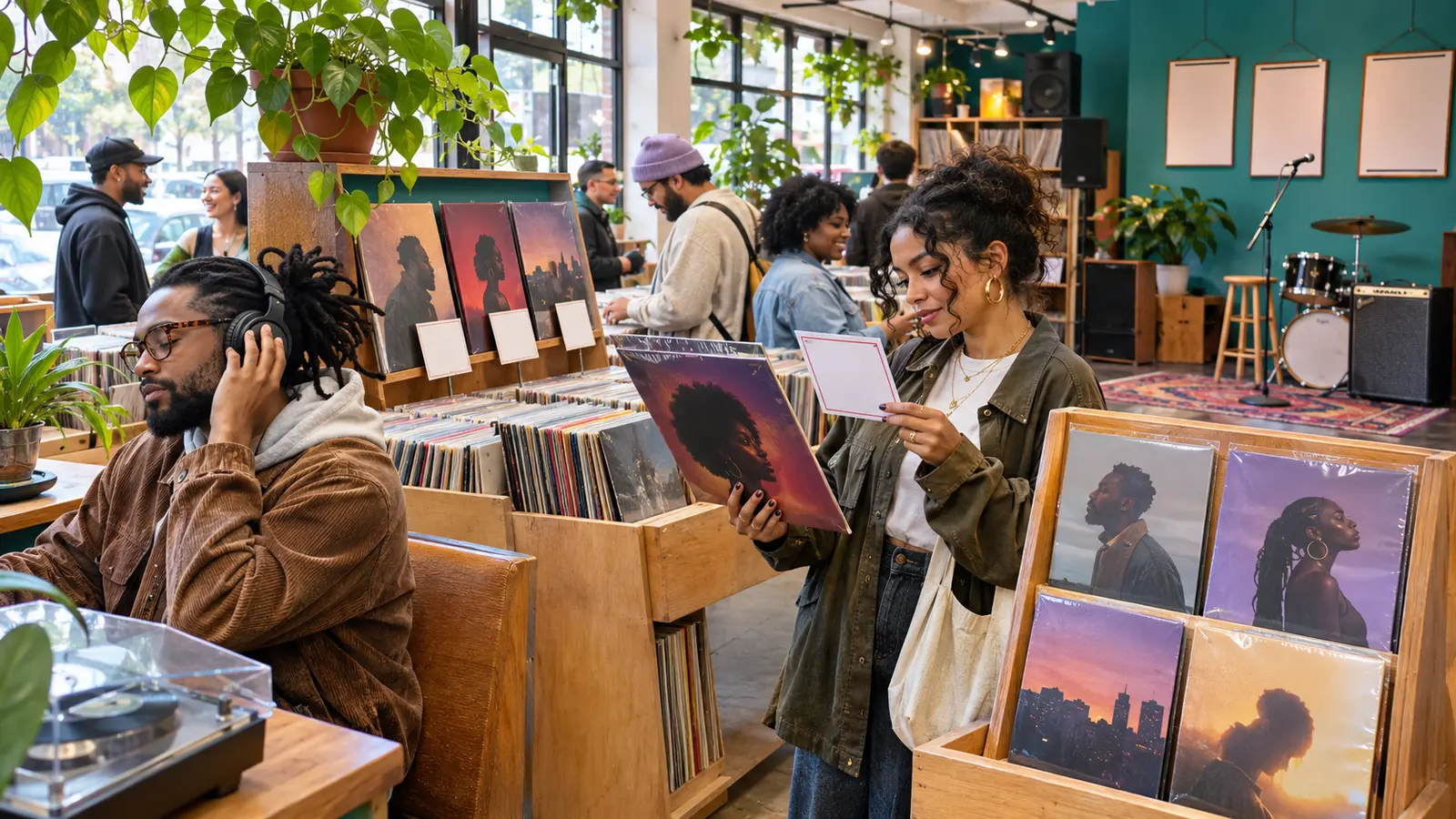
An independent record store can be more than a place to buy a release you already know. Staff picks, local shelves, listening stations, signings, DJ sets, in-store performances, and event calendars can reveal artists connected by scene, label, format, or audience rather than by an opaque recommendation feed.
Stocking a record does not prove that the store endorses it, and “independent” can describe a store, artist, label, distributor, or release in different ways. Verify each artist and release instead of turning a shelf position into a status claim.
Start with a real store and its current channels
Use an official regional Record Store Day locator, a local arts directory, or a store’s own site to identify a physical shop. Confirm the address, opening hours, accessibility information, event rules, and whether the calendar is current before traveling.
Record Store Day’s regional sites maintain store locators and describe in-store formats such as listening events, signings, live performances, DJ sets, and special events. Those categories are useful discovery prompts even outside the main annual event.
Read the programming, not only the inventory
Review the store’s next few events and note every performer, DJ, label, host, and partner named by the store. A small release party may lead to an opening act, a local producer, a cassette label, or a scene-focused DJ set that a best-seller wall will not reveal.
Do not assume an event is free, all ages, accessible, or open without registration. Use the organizer’s current listing and contact the store directly when a material detail is missing.
Use staff picks as questions
Choose one staff selection in hip-hop, rap, R&B, soul, electronic, or an adjacent style. Record the exact artist and release title, then ask what audible or scene connection placed it there. A useful question is “What local or independent release would you pair with this?” rather than “What is the best underground album?”
Staff knowledge is context, not a ranking promise. Note the recommendation accurately and do not publish a staff member’s name or comments without permission.
Check the local and consignment sections
Local shelves often mix self-released work, small labels, reissues, and established artists from the region. Inspect the sleeve, hype sticker, liner notes, catalog number, and label information without opening sealed products. Photograph only when the store permits it.
Build a short list of three releases, not a giant queue. Include one reason for each selection: production credit, event connection, neighboring label, or a staff description you can later verify.
Verify the release identity
Find the artist’s official page or the label’s release page. Compare title, year, track list, featured artists, and format. MusicBrainz documents artist credits at release, track, and recording levels and distinguishes a release from a release group, which can help prevent two similarly titled editions from being treated as the same object.
When using MusicBrainz or another community database, follow its sources and check the official release page. The database itself notes that some documentation is community-maintained; use it as a map, not unquestionable proof.
Listen beyond the event clip
Play one complete track or release through a lawful source. Note voice, groove, arrangement, mix space, and one timestamped choice rather than repeating promotional adjectives. If the music includes a harmonic lift, try the new IHHR key-change listening method to describe what actually moved.
Follow one verified credit—producer, featured vocalist, label, or songwriter—to one additional artist. Stop there for the first session. A small connected trail is easier to remember than twenty open tabs.
Return value to the store and artist
If you enjoyed the release, consider buying from the store or artist within your budget, attending a verified event, or sharing the official link. Do not promise exposure, listener counts, chart movement, or radio placement. Keep personal recommendations specific and honest.
Save the store, event date, release, source links, and listening note in a discovery log. Use the IHHR newsletter for station discovery updates, and continue exploring the full Signal archive without copying private visitor posts or store conversations.
References: Record Store Day UK, Store Locator; Record Store Day Australia, Events; Record Store Day Canada, store participation information; MusicBrainz, Artist Credits; MusicBrainz, Release. Checked November 3, 2026.
Press Play above to hear IHHR or visit the official Live365 station page.