
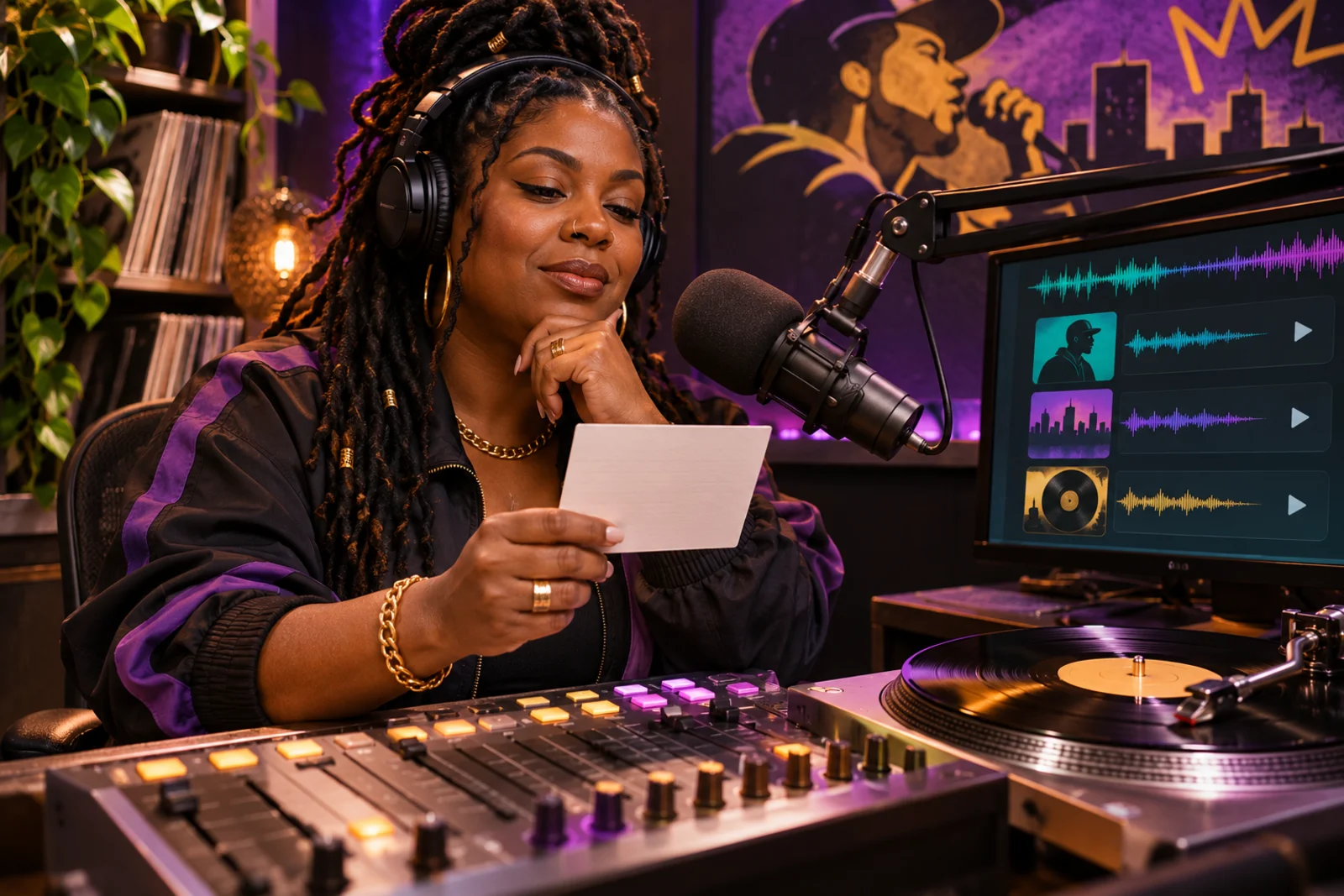
A back-announcement identifies a song after it has played. The simplest version gives the track title and artist, but a dependable host card does more: it ties those words to the exact recording in the playout system, preserves the artist's approved pronunciation, and separates verified context from promotional claims.
Routledge's Broadcast Announcing Worktext defines a back-announce as the radio technique of identifying song-title and artist information after the music. Its Radio Production companion also notes that a brief back-announcement is usual and that cue material should inform the listener. Build the card for that job—not as a miniature press release.
Start with the recording that will actually play
Open the approved audio in the station or show folder and compare it with the playout entry. Record the exact artist credit, main title, version title, duration, explicit or clean status, filename, and any internal asset ID. If the show will use a clean edit, instrumental, remix, live recording, or remaster, put that version on the card rather than copying the original release title from a search result.
Play the opening and ending. Note whether the audio starts cold, has an intro, ends cold, or fades. Write the actual duration shown by the approved file. Those details help the host recognize the correct item and avoid reading a card for another version.
Make the first line impossible to misread
Put the listener-facing identification first: track title — primary artist, featured artist, version. Use the spelling and artist order approved in the release metadata. Keep internal codes, distributor notes, and file-management language on a separate line so they do not slip into the spoken announcement.
Do not add “new,” “exclusive,” “number one,” “viral,” or “fan favorite” unless the word is accurate, current, supportable, and genuinely useful to the listener. A host can sound enthusiastic without inventing rank, popularity, audience size, or station endorsement.
Add a pronunciation cue from a reliable source
Ask the artist or authorized representative for a short spoken pronunciation whenever possible. Store the audio reference with the card and add a plain-language syllable cue that the host can scan quickly. Capitalize the stressed syllable and include a familiar comparison only when it clarifies the sound.
The VOA Pronunciation Guide was developed as a tool for announcers and pairs written guidance with recorded pronunciation. The useful principle is to hear the name, not merely guess from spelling. Use the IHHR artist-name pronunciation workflow to document the source, preferred form, and any correction date.
Choose one verified context sentence
Add one optional sentence that helps the listener understand what they heard. It might identify the project the recording belongs to, name a publicly credited producer, distinguish the clean edit from the original, or connect the selection to the next segment. Cite the source in the production note even if the citation is not read on air.
Use the artist's approved metadata, official release material, or another reliable primary source. Do not turn an unverified bio claim into station fact. If the information cannot be confirmed before airtime, leave it off the card.
Separate spoken copy from production notes
Use a clear divider. Above it, place the title, artist, version, pronunciation, and optional context sentence the host may say. Below it, place the file name, duration, intro and ending notes, source links, approval contact, last-checked date, and any instruction that should remain off air.
Write for the specific program voice, but do not script fake familiarity. A natural card might read: “That was [title] by [artist], the clean edit from [project].” The host can adapt the wording while preserving the verified identity.
Time the card aloud
Read the spoken portion at a normal pace and record the time. If it takes longer than the available link, remove the least useful context before shortening the title or artist credit. Mark an essential line and an optional line so the host knows what can be dropped when the clock is tight.
Do not cram a full biography, every contributor, social handle, or submission pitch into one break. A concise identification is more useful than a rushed paragraph that obscures the name of the music.
Run a pre-air card check
- File: play the exact approved recording.
- Identity: match artist, title, version, and duration to the playout entry.
- Pronunciation: listen to the authorized reference and read the cue aloud.
- Context: verify the one optional fact and retain its source.
- Timing: time the essential and expanded reads.
- Approval: add the checker and last-reviewed date.
For an approved release and clean edit, the paid IHHR radio-promotion page explains current campaign scope. A paid campaign does not replace accurate metadata, guarantee airplay, or promise rankings, streams, royalties, sales, or listener totals.
Archive the card with the audio version it describes. When a new edit, remaster, corrected credit, or pronunciation arrives, create a dated revision rather than silently overwriting the earlier record. The host should always be able to tell which card belongs to which sound.
References: Routledge, Broadcast Announcing Worktext glossary; Routledge, Radio Production, Cues and Links; Voice of America, Online Pronunciation Guide. Checked November 15, 2026.
Press Play above to hear IHHR or visit the official Live365 station page.